Abacus AI: Navigating the Multifaceted AI Workspace Through User Feedback and Feature Analysis

Abacus AI presents itself as a comprehensive technical workspace designed to consolidate a wide array of artificial intelligence models and functionalities into a single, cohesive platform. This ambitious endeavor aims to serve a broad spectrum of user needs, from creative content generation and complex data analysis to software development and sophisticated workflow automation. However, as with any rapidly evolving technological offering, user experiences and perceptions of Abacus AI are varied, presenting a nuanced picture of its strengths and weaknesses. This in-depth review synthesizes insights from online discussions, user testimonials, and feature analyses to provide a balanced evaluation of the platform’s capabilities, potential, and challenges.
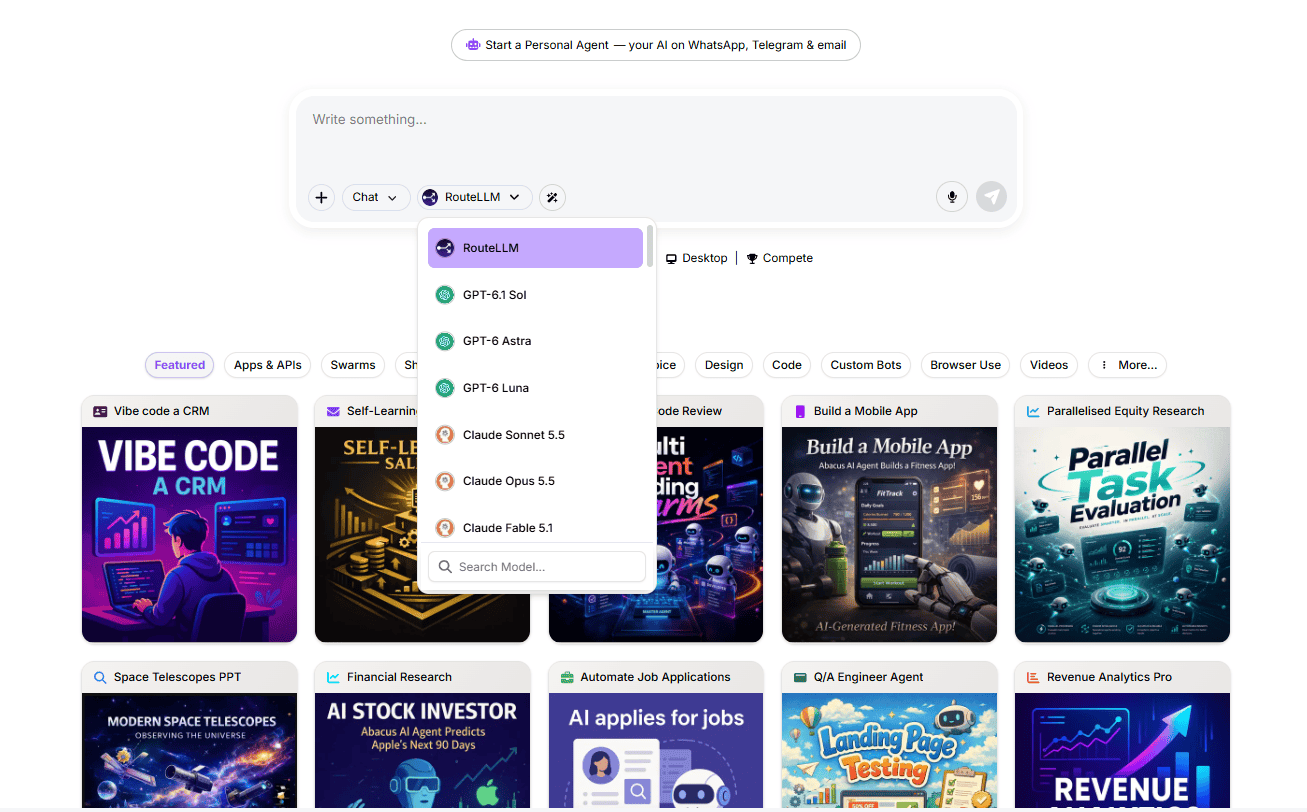
The core proposition of Abacus AI lies in its ability to aggregate diverse AI tools, including various large language models (LLMs), AI agents capable of multi-step task execution, and specialized modules for image, video, and audio creation. This integrated approach seeks to eliminate the need for users to juggle multiple applications and services to leverage different AI capabilities. For instance, its ChatLLM feature offers access to models from prominent providers like OpenAI, Anthropic, and Google through a unified interface, allowing seamless switching between them. This is a significant departure from standalone tools like ChatGPT or Claude, which are primarily focused on conversational AI. Abacus AI positions itself as a more versatile platform catering to a wider range of technical and business requirements.
The Abacus AI Ecosystem: A Suite of Integrated AI Tools
The platform’s extensive ecosystem is a key differentiator. It comprises several core products, each designed to address specific AI-driven tasks:
- ChatLLM: This foundational component provides unified access to multiple LLMs, intelligently routed by RouteLLM for optimal performance and cost-efficiency.
- Abacus AI Agent: This powerful tool is engineered for complex, multi-step actions, including research, coding, web interactions, and application development.
- Claw: An AI agent designed for persistent, context-aware interactions across messaging channels like Slack, WhatsApp, and Telegram, ensuring continuity even across sessions.
- Hermes: Another advanced AI agent capable of performing multi-step tasks and learning reusable skills from past experiences, enhancing efficiency over time.
- Abacus AI Desktop: A dedicated coding environment that supports pair programming and local file editing, catering to developers.
- Studio: A creative suite for generating images, videos, and audio using a variety of AI models.
- AppLLM / Vibe Coding: Tools that assist users in building and deploying web applications through natural language descriptions.
- SuperComputer: A cloud-based environment for running AI agents, code, and services, ensuring continuous operation beyond browser sessions.
- Agent Swarms: A feature that enables the coordination of multiple AI agents to tackle complex tasks collaboratively and in parallel.
- Abacus AI Smaug: A family of open-weight AI models specifically optimized for reasoning, coding, and agent-based workflows.
- Abacus AI Bot: An open-source coding agent and desktop application designed to facilitate user interaction with AI agents.
This comprehensive suite suggests a platform built for users who require a high degree of AI integration and automation in their professional or personal projects.
Navigating the User Experience: A Dual Perspective
Online discourse surrounding Abacus AI reveals a bifurcated user sentiment. On one hand, users who extensively leverage the platform’s breadth of AI models, agents, and cost-effective solutions often express satisfaction. They value the ability to access a diverse range of AI capabilities within a single environment, enabling them to streamline complex workflows and enhance productivity. These users frequently highlight the platform’s potential for innovation and its capacity to support ambitious projects.
Conversely, a segment of users encounters challenges, primarily related to the platform’s credit system, pricing structure, and the inherent learning curve associated with its advanced features. Issues such as confusion over credit consumption for complex tasks, unexpected credit depletion, and the intricacies of agent-based workflows are recurring themes in negative feedback.
Examining the Criticisms: A Deeper Dive
A thorough analysis of user feedback and platform documentation uncovers several key areas of concern that warrant closer examination:
1. Interface Complexity and Learning Curve
The sheer volume of tools and features within Abacus AI, while a strength, can also contribute to a steep learning curve. Some users report finding the interface overwhelming, particularly when attempting to navigate between different AI models or understand the nuances of agent configuration.
- Model Identification: The ability to switch between numerous AI models, while beneficial, can lead to difficulties in tracking which specific model was utilized for a given interaction or output, potentially impacting reproducibility and analysis.
- Advanced Features: The more sophisticated components, such as the AI agents and custom workflow creation tools, demand a significant investment in learning and experimentation. This complexity can be a barrier for users seeking immediate, straightforward solutions.
- Developer-Centric Design: While basic functionalities like ChatLLM are accessible to general users, many of the platform’s advanced tools are implicitly designed with a technical audience in mind. Users without a coding background or familiarity with AI concepts may find certain aspects challenging to grasp.
2. Pricing and Credit System Dynamics
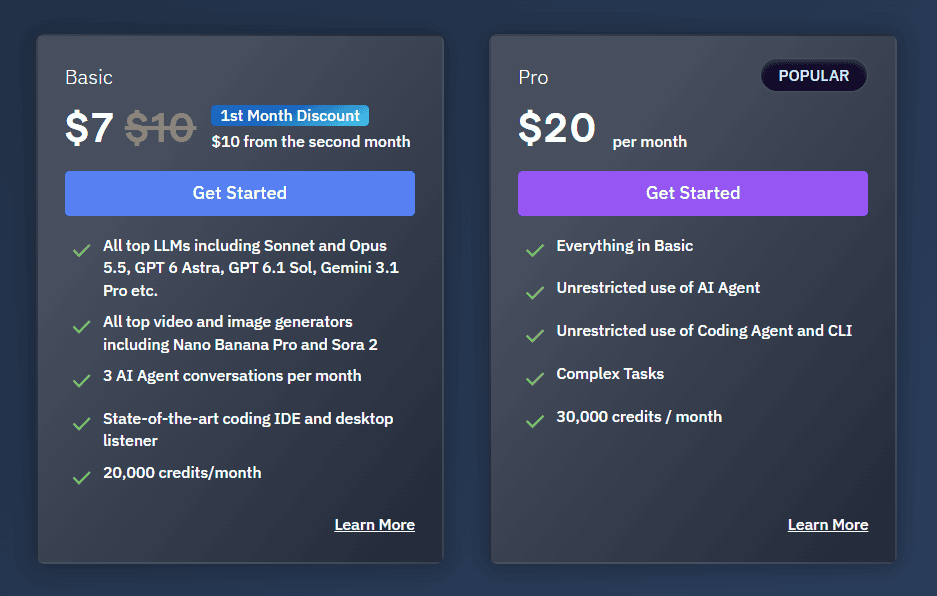
The credit-based consumption model is a central point of contention for many users. The inherent unpredictability of credit usage for complex operations often leads to budget concerns and frustration.
- Credit Consumption Uncertainty: Accurately estimating the credit cost of tasks, especially those involving intricate AI agent workflows or extensive data processing, can be difficult. This lack of transparency makes financial planning challenging for both individuals and businesses.
- Rapid Credit Depletion: Tasks requiring significant research, coding, or multi-step agent execution can consume credits at a pace that exceeds user expectations, leading to concerns about value for money.
- Usage Pacing and Budgeting: The platform’s credit pacing mechanisms, designed to manage usage throughout a billing cycle, can sometimes create limitations on access and make it harder for users to budget effectively.
- Transition from Introductory Offers: Users may experience confusion or surprise when introductory pricing transitions to standard subscription rates if they have not carefully reviewed the billing terms and conditions.
3. Workflow Reliability and Performance
The effectiveness of Abacus AI’s autonomous agents and automated workflows is crucial to its value proposition. However, user reports indicate occasional issues with task completion and consistency.
- Incomplete Tasks: AI agents may sometimes fail to complete a designated workflow or produce outputs that require significant post-processing or correction, necessitating manual intervention.
- Credit Consumption on Failures: A common concern is the consumption of credits even when an AI agent encounters an error or fails to deliver a satisfactory result, leading to a perception of wasted resources.
- Complexity of Multi-Step Tasks: Orchestrating complex, multi-step workflows often requires meticulous instruction, continuous monitoring, and troubleshooting to achieve the desired outcome, potentially diminishing the perceived automation benefits.
4. Business Features and Integration Capabilities
For organizations looking to integrate Abacus AI into their existing operations, the platform’s business-oriented features and integration potential are critical considerations.
- Integration Requirements: Businesses must verify that Abacus AI supports their existing technology stack and preferred integration points before adoption. The platform’s integration ecosystem may not be exhaustive for all specialized enterprise software.
- Limited Pre-Configured Workflows: While Abacus AI enables the creation of custom workflows, teams requiring ready-made solutions for specific functions like customer support or IT management might need to invest considerable effort in configuring these themselves.
- Analytics and Monitoring: Businesses with stringent reporting and monitoring needs should carefully assess whether the platform’s built-in analytics and oversight features align with their requirements.
- Specialization vs. Generalization: As a platform offering a broad spectrum of AI capabilities, Abacus AI might not provide the same depth of specialized functionality as tools built for singular purposes. This can be a drawback for businesses with highly specific, niche AI needs.
- Perception of Suitability: Some comparative reviews suggest that Abacus AI might be perceived as more suitable for individual developers or hobbyists rather than large enterprise teams requiring highly tailored solutions.
5. Customer Support and Billing Transparency
Feedback regarding customer support and billing processes also surfaces in user discussions, highlighting areas for potential improvement.
- Support Response Times: Some users have reported experiencing delays in customer support responses or receiving resolutions that do not fully address their issues.
- Billing and Cancellation Concerns: Online forums occasionally feature complaints related to subscription cancellations and unexpected billing, underscoring the importance of clear communication and accessible account management. It is crucial, however, to assess these individual reports within the broader context of user experiences.
- Subscription Terms Clarity: Users are strongly advised to thoroughly review all subscription terms, including renewal dates, credit allowances, plan limitations, and cancellation policies, to avoid any misunderstandings.
- Agent Hallucinations: During autonomous web search or research tasks, AI agents may occasionally retrieve or generate inaccurate information, a phenomenon commonly referred to as "hallucination." This necessitates user verification of all AI-generated data.
- Allegations of Deceptive Practices: While rare, some reviews have used terms like "scam" or "deceptive billing." These claims, while serious, should be investigated on a case-by-case basis and are not necessarily indicative of systemic issues.
Real-World Applications: Demonstrating Abacus AI’s Potential
Abacus AI showcases its capabilities through a series of real-world use cases, often accompanied by video demonstrations. These examples illustrate the platform’s potential across diverse domains:
- Stripe Integration Website: The platform can generate multi-page websites with integrated payment processing, enabling businesses to launch offers and test market demand. This extends to creating functional checkout pages that handle various payment outcomes.
- Mobile App Development: Demonstrations include the creation of fitness applications with daily objectives, workout tracking, and progress monitoring. Other examples highlight the development of tools like expense trackers and mobile games, showcasing the platform’s capacity for generating functional applications.
- Vibe Code CRM: Abacus AI can be used to construct customer relationship management systems, demonstrating its utility in building core business software. The complexity of such applications, with their intricate integrations and permission structures, underscores the need for thorough testing.
- Invoice Processing API: The platform can extract detailed information from invoices, including vendor data, amounts, and item specifics, converting this into structured data formats for further processing. This automation can significantly reduce manual data entry.
- Revenue Analytics & Business Intelligence: Tools like Revenue Analytics Pro can automate the analysis of revenue data to identify growth opportunities. The accuracy of such analytics is directly dependent on the precise definition of metrics and the quality of input data.
- Multi-Agent Code Review: Abacus AI can deploy multiple AI agents concurrently to review code for bugs, inefficiencies, and security vulnerabilities, aiming to expedite the code review process. However, resolving conflicting suggestions and ensuring patch integrity remain critical considerations.
- AI QA Engineer & Automated Software Testing: The platform can simulate user interactions to test applications, identify broken workflows, and generate test reports. This extends to form submission testing, permission validation, and UI evaluation.
- Scheduled Browser Workflows & Routine Automation: Automated browser workflows can be scheduled for tasks such as invoice downloading or data uploading. The robustness of these workflows depends on effective error handling mechanisms.
- Research, Reports & Presentations: Abacus AI can assist in generating research reports and presentation materials, such as market analysis or investment portfolios. Crucially, users are responsible for verifying the accuracy and currency of all AI-generated information.
Who Stands to Benefit Most from Abacus AI?
Abacus AI is best suited for individuals and organizations looking to move beyond basic text generation and explore the broader applications of AI. Its integrated approach to multiple models, AI agents, application development, data analytics, and workflow automation makes it an attractive option for those aiming to consolidate diverse AI functionalities on a single platform.
Ideal Candidates:
- Developers and Technical Teams: Those who can leverage the platform’s coding support, agent capabilities, and application development tools will find significant value.
- Researchers and Analysts: Users requiring sophisticated data analysis, report generation, and multi-source information synthesis.
- Product Managers and Entrepreneurs: Individuals looking to rapidly prototype applications, test market ideas, and automate business processes.
- AI Enthusiasts: Users eager to experiment with a wide range of AI models and agent functionalities.
Potential Hesitations:
- Beginners Seeking Simple Chatbots: Users whose primary need is a straightforward conversational AI might find simpler, more focused tools like ChatGPT sufficient and less complex.
- Businesses with Highly Specialized Needs: Organizations with very specific, niche AI requirements might find more value in specialized, single-purpose solutions.
- Cost-Conscious Users with Unpredictable Workloads: Individuals or small businesses with tight budgets and unpredictable usage patterns might struggle with the credit-based system if not managed carefully.
Conclusion: Assessing the Value Proposition of Abacus AI
Abacus AI offers a compelling proposition as a unified AI workspace, bringing together an impressive array of functionalities, from model access and agent deployment to coding assistance, application development, and media creation. Its primary strength lies in its versatility and the ability to integrate multiple AI tools into a single environment, fostering efficiency and innovation.
However, this breadth of functionality also introduces a learning curve, requiring users to invest time in understanding its intricacies. The credit-based payment model, while offering flexibility, necessitates careful monitoring to manage expenses, particularly for intensive agent workflows or media generation tasks. Publicly shared criticisms concerning cost unpredictability, workflow reliability, and customer support highlight areas where the platform could see further refinement.
To maximize the benefits of Abacus AI, users are encouraged to approach the platform strategically. This involves starting with the tools most relevant to their immediate needs, thoroughly testing complex functionalities before relying on them for critical tasks, and carefully reviewing subscription plans. By understanding both the platform’s considerable strengths and its acknowledged weaknesses, users can make an informed decision about whether Abacus AI aligns with their specific requirements and objectives. Ultimately, its value hinges on its ability to seamlessly integrate into and enhance existing workflows, fulfilling the promise of a truly comprehensive AI workspace.
Seeing Abacus AI in Action: Live Demonstrations
For prospective users seeking a firsthand understanding of Abacus AI’s capabilities, live demonstrations are available. These often showcase the dynamic switching between ChatLLM models, the task execution prowess of AI agents, the creative potential of image and video generation, and the operational aspects of API access, including real-time credit monitoring. Such detailed walkthroughs offer a practical glimpse into daily usage, providing a more grounded perspective than curated marketing materials.
Frequently Asked Questions About Abacus AI
1. What are the key benefits of using Abacus AI?
The platform offers a diverse range of AI functionalities, including access to multiple LLMs, AI agents for complex tasks, coding assistance, application development tools, data analysis capabilities, and media creation features, all consolidated within a single workspace.
2. Is it worth paying for an Abacus AI subscription?
The value of a subscription depends on individual usage patterns. For users who frequently leverage a variety of AI capabilities, it can be a cost-effective solution. Monthly credit allowances and the frequency of use are key factors in determining its worth.
3. What do Abacus AI credits represent?
Credits are the internal currency of the platform, consumed based on the specific actions performed. Basic text-based tasks generally require fewer credits than complex operations like extensive coding, intricate agent interactions, or media generation.
4. Is Abacus AI beginner-friendly?
Yes, basic functionalities like ChatLLM are accessible for beginners for everyday tasks such as writing and research. As users become more familiar, they can explore advanced features like agents and workflow automation, which may require further learning.
5. How reliable are Abacus AI agents?
The reliability of Abacus AI agents can vary depending on the complexity of the task, the clarity of instructions provided, the availability of necessary tools, and the inherent capabilities of the AI models. Thorough testing of intermediate and final outputs is recommended for critical applications.
6. Why do some users experience issues with Abacus AI?
User experiences are diverse. While many appreciate the platform’s extensive features, others encounter challenges with credit management, workflow execution, or customer support. These varied reviews offer valuable insights into potential limitations, but individual experiences may not be universally representative.
7. Can Abacus AI assist organizations in automating workflow processes?
Absolutely. The platform’s agents and application development tools can be instrumental in automating tasks such as document processing, research, and data analysis. Organizations should clearly define their automation requirements and conduct thorough testing, ensuring adequate security measures are in place.
8. How can one achieve the best results using Abacus AI?
Achieving optimal results involves clearly defining the task, providing comprehensive context, and breaking down complex workflows into smaller, manageable steps. Monitoring credit usage and selecting the appropriate level of effort for each task are also crucial.
9. What should users consider before choosing Abacus AI?
Key considerations include the number of AI tools required, subscription costs, monthly credit allowances, agent limitations, available integrations, and the extent of workflow analysis needed. It is particularly beneficial for organizations that require a broad spectrum of AI capabilities.
10. Who will benefit the most from Abacus AI?
Individuals and teams actively involved in creating and deploying AI applications are likely to derive the greatest benefit from Abacus AI’s rich ecosystem. Those who simply need a basic chatbot might find more straightforward alternatives more suitable.