

A Chance to Solve Their Own Problems Rethinking School Improvement Through Collective Inquiry and Adaptive Systems

The landscape of American public education has long been characterized by a phenomenon often referred to as "the reform churn." For decades, school districts have cycled through a revolving door of branded curricula, leadership frameworks, and standardized interventions, many of which are abandoned within three to five years. This cycle of initiative fatigue has prompted researchers Jal Mehta of the Harvard Graduate School of Education and Max Yurkofsky of Radford University to investigate why traditional school improvement efforts so frequently fail and what distinguishes the rare successes. Their research, culminating in the book A Chance to Solve Their Own Problems, suggests that the key to sustainable progress lies not in the "fidelity" of implementation, but in the empowerment of educators to treat their own classrooms as sites of scientific inquiry.
The Historical Context of Educational Reform Failure
To understand the necessity of Mehta and Yurkofsky’s findings, one must look at the historical trajectory of school improvement in the United States. Since the 1983 publication of "A Nation at Risk," the prevailing logic of reform has been top-down and accountability-driven. The No Child Left Behind (NCLB) era and subsequent Race to the Top initiatives emphasized standardized testing as the primary metric for success, often resulting in "canned" solutions handed down from state departments or district offices to frontline teachers.
Data from the National Center for Education Statistics (NCES) indicates that while these efforts initially sparked gains in some sectors, they often plateaued or led to unintended consequences, such as a narrowed curriculum and high rates of teacher burnout. According to a 2022 Gallup poll, K-12 teachers report the highest burnout levels of any profession in the U.S., with 44% saying they "always" or "very often" feel burned out at work. Mehta and Yurkofsky argue that a significant contributor to this exhaustion is the lack of agency; teachers are frequently treated as "delivery mechanisms" for external programs rather than professional problem-solvers.
The Structural Pitfalls of Modern Initiatives
Mehta and Yurkofsky’s research identifies four critical errors that undermine school improvement. The first is the exclusion of the people closest to the problem. In many bureaucratic systems, problems are identified by administrators who may be several steps removed from the daily realities of the classroom. When a solution is mandated without teacher input, it lacks "ecological validity"—it may work in a laboratory or a pilot school but fails to account for the specific nuances of a local student population.
The second pitfall is a focus on individuals rather than systems. When a school identifies a gap in student achievement, the traditional response is to provide professional development for specific teachers or to implement "remedial" programs for specific students. Yurkofsky argues that this approach ignores the underlying systemic factors, such as inadequate instructional materials, poor scheduling, or a lack of collaborative time, that cause these gaps to persist across different teachers and cohorts of students over time.
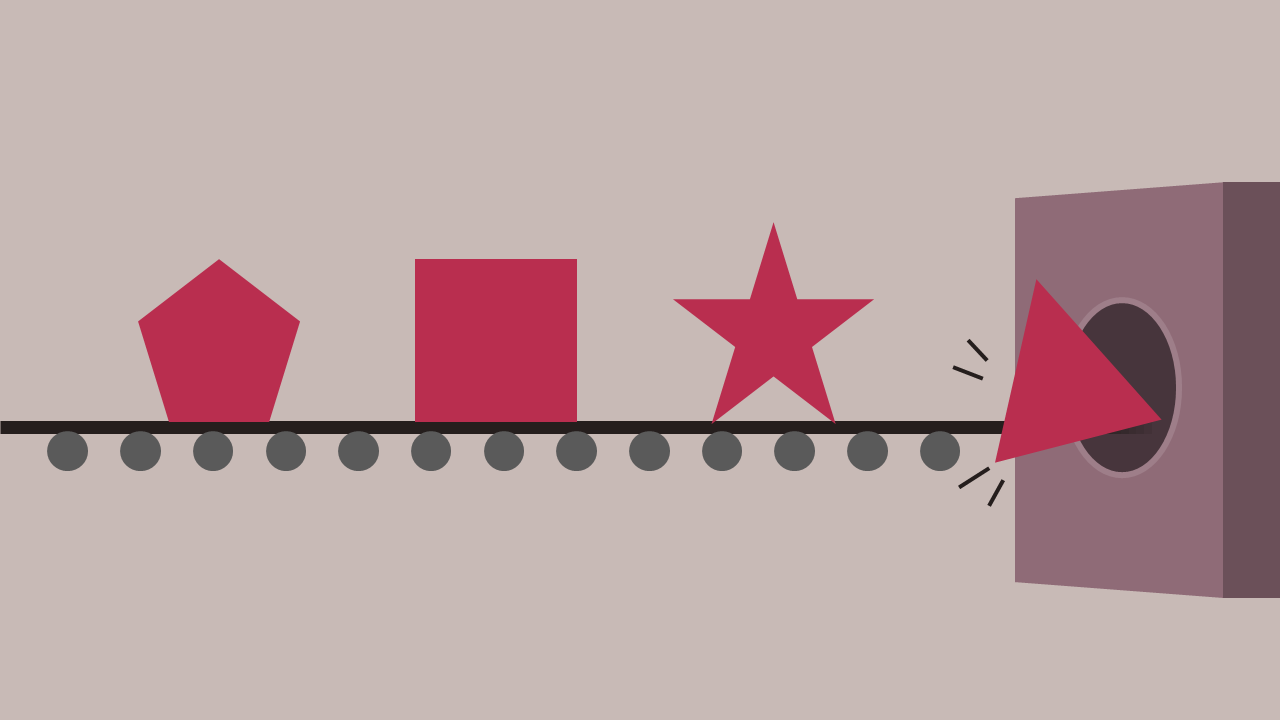
Thirdly, the authors highlight the "fidelity trap." Many school improvement models demand that educators follow a program "with fidelity," meaning exactly as written. However, Yurkofsky notes that no prepackaged program can account for every context. When teachers are discouraged from making adjustments, they stop learning. They become compliant rather than adaptive. Mehta suggests a shift toward "adaptive integration," where the goal is to weave a new practice into the existing system through constant adjustment and feedback.
Finally, there is the tendency to jump to solutions before the problem is fully understood. Using the framework of "Design Thinking," Mehta notes that schools often invest thousands of dollars in new technology or software to solve a "problem" that might actually be rooted in social dynamics or physical space. By rushing to a solution, districts often solve the wrong problem.
The Three Pillars of Effective Improvement: Mindsets, Routines, and Practices
Through their qualitative study of high-performing schools and districts, Mehta and Yurkofsky identified a triad of essential elements that must work in concert: Mindsets, Routines, and Practices.
1. Mindsets: The Foundation of Belief
Mindsets are the underlying assumptions that educators hold about their students, their colleagues, and their own roles. For example, if a secondary school attempts to implement a new literacy initiative, but the staff believes that "teaching reading is the elementary school’s job," the initiative will likely fail regardless of its quality. Successful improvement requires a collective mindset of "inquiry," where problems are seen as challenges to be investigated rather than failures to be hidden.
2. Routines: The Engines of Collaboration
Without formal structures, even the most motivated teachers remain isolated. Effective schools establish routines such as "instructional rounds," where teachers observe one another’s classrooms, or "data-informed inquiry cycles," where teams meet bi-weekly to examine student work. These routines ensure that improvement work is not an "extra" task but is embedded in the weekly schedule.
3. Practices: The Tools of the Trade
While mindsets and routines provide the "how," practices provide the "what." This involves the specific instructional strategies and disciplinary expertise required to solve a problem. Mehta emphasizes that schools cannot "inquiry" their way out of a lack of knowledge. If a school is struggling with math instruction, they eventually need an infusion of mathematical expertise. The inquiry process helps identify exactly where that expertise is needed.

Creating the Environmental Conditions for Success
The research underscores that mindsets, routines, and practices cannot flourish in a vacuum. District and school leadership must proactively curate an environment that supports professional risk-taking.
Protecting Time and Space
Time is the most significant currency in education. Mehta and Yurkofsky found that in successful districts, leaders were willing to cancel non-essential meetings or restructure the school day to provide teachers with "protected time" for collaborative problem-solving. This shift recognizes that the "work" of school improvement is the same as the "work" of teaching.
Psychological Safety and the "Gift of Problems"
Citing concepts similar to Amy Edmondson’s research on psychological safety, the authors argue that for a school to improve, it must be safe to fail. If teachers fear that admitting a struggle will lead to a poor evaluation, they will hide their problems. Yurkofsky suggests that leaders should view "problems as a gift." When a teacher identifies a failure in the curriculum, they are providing the system with the data it needs to improve.
Strategic Alignment
Successful schools do not treat improvement models (like the Plan-Do-Study-Act or PDSA cycle) as ends in themselves. Instead, they use these tools as part of a coherent, long-term strategy. This prevents the "initiative fatigue" that occurs when schools jump from one trendy framework to another every eighteen months.

Implications for Policy and Leadership
The findings presented by Mehta and Yurkofsky have significant implications for educational policy at both the state and federal levels. If the goal is sustainable improvement, the focus of oversight may need to shift from "compliance monitoring" to "capacity building." Rather than asking "Is the school following the program?", the question becomes "Is the school learning from its practice?"
Critics of this "bottom-up" approach often argue that it lacks the urgency required to address chronic underperformance. However, the authors contend that the traditional top-down approach has also failed to produce rapid, lasting results in many contexts. By empowering teachers to solve their own problems, schools build a "professional capital" that stays in the building even when leaders or programs change.
Conclusion: A Shift Toward Professionalism
The research of Jal Mehta and Max Yurkofsky represents a call to return to the concept of the educator as a skilled professional. In other high-stakes fields, such as medicine or engineering, the people on the front lines are expected—and required—to analyze failures and iterate on solutions.
As school districts navigate the complexities of the post-pandemic era—including significant learning gaps and a volatile labor market—the move toward inquiry-based improvement offers a potential path forward. By shifting the focus from "fixing people" to "improving systems," and by valuing teacher expertise as a primary driver of change, schools may finally break the cycle of the "reform churn" and create environments where both students and educators can thrive. The ultimate takeaway from A Chance to Solve Their Own Problems is that the most powerful tool for school improvement is already present in the building: the collective intelligence of the staff, provided they are given the time, safety, and agency to use it.