TKCat 1.3.0 Integrates with Model Context Protocol, Revolutionizing AI-Powered Knowledge Discovery

The latest release of TKCat (Tailored Knowledge Catalog), version 1.3.0, marks a significant advancement in how artificial intelligence can interact with and leverage structured data. This update introduces native integration with the Model Context Protocol (MCP), an open standard developed by Anthropic. This integration transforms TKCat from a mere repository of data into a dynamic, machine-readable knowledge resource, enabling AI assistants to understand, query, and synthesize complex information with unprecedented accuracy and efficiency. The development promises to enhance data governance, streamline research, and unlock new avenues for data-driven insights across various industries.
The Foundation of TKCat: Modeled Databases and Machine-Readability
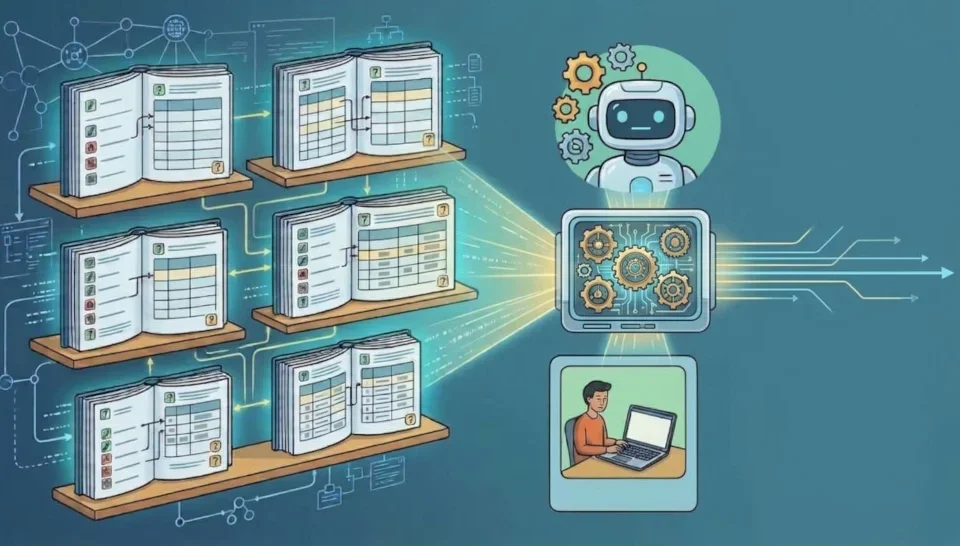
At its core, TKCat is built on the principle that a knowledge resource extends beyond a collection of disparate tables. Each resource within TKCat is conceptualized as a "modeled database" (MDB). This approach goes beyond simple data storage by incorporating rich metadata. An MDB in TKCat comprises:
- Data: The actual information stored in tables.
- Schema: The structure of the data, including table definitions, column names, data types, and constraints.
- Relationships: Explicitly defined links between different tables, illustrating how data entities are connected.
- Documentation: Comprehensive, human-readable descriptions of tables, columns, and their semantic meanings.
Crucially, this documentation has been designed from its inception to be machine-ready. This forward-thinking design choice has proven to be a pivotal factor in its successful integration with Large Language Models (LLMs). By providing AI with well-structured and clearly explained data, TKCat eliminates the guesswork often associated with LLM interactions with unfamiliar datasets.
Understanding the Model Context Protocol (MCP)
The Model Context Protocol (MCP), spearheaded by Anthropic, is a foundational element of this advancement. MCP establishes a standardized, secure, and universal framework for AI assistants to connect with external data sources, sophisticated tools, and complex workflows. Prior to MCP, integrating an LLM with a specific database or tool often necessitated bespoke coding and intricate prompt engineering for each unique combination. MCP simplifies this by providing a consistent client-server architecture.
In this model, an MCP client, which can be applications like Claude Desktop, Claude Code, or the Posit Assistant, communicates with an MCP server. This communication occurs over local or remote connections, adhering to a common protocol. The MCP server exposes a curated set of "tools" and resources that the AI assistant can dynamically discover and invoke. The trigger for this invocation is the user’s request, expressed in natural language. This means an AI can intelligently determine the most appropriate tool or data source to fulfill a query without explicit, pre-programmed instructions for every scenario.
For TKCat, the adoption of MCP represents a natural evolution. Instead of requiring developers to build custom chat interfaces or meticulously craft brittle prompts for each knowledge catalog, TKCat 1.3.0 directly exposes its modeled databases through an MCP server. This standardized interface grants any MCP-compatible assistant immediate access to the structured vocabulary, intricate relationship maps, and robust security guardrails necessary to navigate, query, and synthesize organizational knowledge resources safely and effectively.
Key Innovations in TKCat 1.3.0
TKCat 1.3.0 introduces a read-only MCP server, a feature that significantly broadens its utility for AI-driven analysis. This server empowers AI assistants, including Claude Code, Claude Desktop, Posit Assistant, and any other MCP-compliant client, to explore and query the modeled databases housed within a TKCat instance. This capability is particularly relevant for TKCat deployments on ClickHouse, a high-performance columnar database management system, enabling rapid querying of vast datasets.
The MCP server in TKCat 1.3.0 is available in two distinct configurations:
- Local Server: Designed for individual users and development environments, this server runs directly on the user’s machine, offering immediate access to local TKCat instances.
- Remote Server: Tailored for enterprise settings, this server can be deployed on dedicated infrastructure, allowing multiple users and AI assistants to access shared knowledge resources securely across a network.
The AI assistant is equipped with a concise suite of tools that mirror the methodical approach of a seasoned analyst encountering an unfamiliar dataset. These tools are designed to facilitate a systematic exploration and interrogation process:
| Step | Tools |
|---|---|
| Resource Discovery | list_mdbs, search_tkcat |
| Understanding Resources | describe_mdb, describe_tables, list_collections |
| Data Inspection | preview_table |
| Answering Questions | query_mdb (ClickHouse SQL), get_matrix_values |
This tiered approach ensures that the AI assistant first gains a comprehensive understanding of the available data before attempting to answer complex queries, thereby minimizing the risk of misinterpretation or inaccurate results.
The Transformative Impact of Documented Databases on AI
The distinction between querying a raw database and querying a well-documented modeled database through an AI interface is profound. When presented with an unfamiliar database, an LLM is forced to make educated guesses. It might infer the meaning of tables based on their names, assume the existence and nature of joins between them, or misinterpret the semantic meaning of a column. This often leads to inaccurate or incomplete answers.
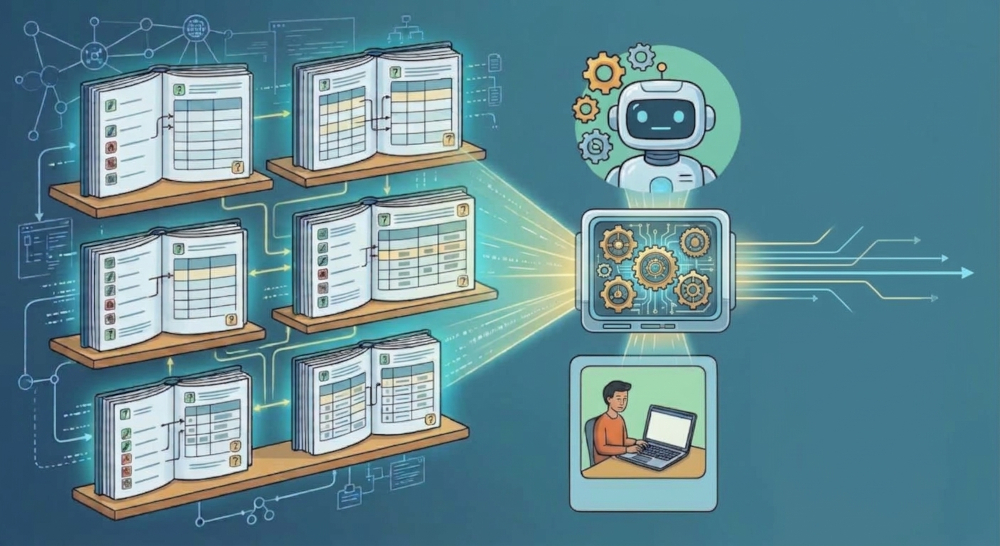
With TKCat, the AI assistant no longer needs to guess. The rich documentation embedded within each MDB provides:
- Semantic Clarity: Precise explanations of what each table and column represents, eliminating ambiguity.
- Relationship Context: Clear definitions of how different data entities are related, facilitating accurate data retrieval and synthesis.
- Security Context: Information about data access rules and sensitivity, enabling the AI to adhere to organizational policies.
A typical interaction exemplifies this enhanced capability:
User: "Which drugs target genes associated with the phenotypes of this disease?"
Assistant: The AI assistant, empowered by TKCat’s MCP integration, embarks on a systematic process:
- It begins by searching the catalog using
search_tkcatto identify relevant MDBs. - It then utilizes
describe_mdbanddescribe_tablesto read the detailed descriptions of the phenotype, variant, and drug MDBs, gaining a deep understanding of their content and purpose. - The assistant checks the collections that link these MDBs using
list_collections, mapping out the relationships. - It employs
preview_tableon key tables to inspect sample data and confirm its understanding. - Finally, it constructs and executes a sophisticated cross-MDB SQL query using
query_mdbto identify the drugs that meet the user’s criteria. - The assistant returns the answer, providing not only the result but also the specific queries it ran and the resources it consulted, ensuring transparency and reproducibility.
This dialogue illustrates how the investment in documenting knowledge resources pays dividends. The effort expended in creating clear, machine-readable documentation once becomes a perpetual asset, enabling complex questions to be answered effectively and efficiently in plain language, time after time.
Designed for Collaborative and Governed Environments
Knowledge resources are rarely isolated or universally accessible. They often have intricate access rules and are hosted within organizational infrastructures rather than on individual machines. The MCP server architecture, as implemented in TKCat, is inherently designed to address these complexities:
- Role-Based Access Control: The server supports granular access controls, ensuring that AI assistants can only access MDBs for which they have been granted permissions, aligning with organizational security policies.
- Centralized Management: Organizations can deploy a single, centralized MCP server that provides access to multiple TKCat instances, streamlining administration and ensuring consistent data governance.
- Auditing and Logging: All interactions with the MCP server can be logged, providing a comprehensive audit trail of data access and queries performed by AI assistants, which is crucial for compliance and security monitoring.
The accompanying diagram illustrates a typical remote MCP server architecture, highlighting how the TKCat MCP server can be deployed as a secure gateway to an organization’s knowledge resources. As with any AI service, organizations must exercise due diligence, ensuring that only MDBs whose content is permissible under their established policies are exposed to the AI assistant.
Getting Started with TKCat 1.3.0 and MCP
For users eager to leverage the new capabilities of TKCat 1.3.0, the project provides comprehensive documentation and guidance. The primary entry point is the "TKCat End-to-End vignette," which walks users through the entire process of setting up and utilizing the MCP server. This includes:
- Installation: Guidance on how to install TKCat and its dependencies.
- MDB Creation: Instructions on how to model and document knowledge resources as MDBs.
- MCP Server Configuration: Steps for setting up and configuring the read-only MCP server.
- AI Assistant Integration: Examples of how to connect MCP-compatible AI assistants to the TKCat MCP server.
For users seeking deeper technical details, the "MCP server vignette" offers in-depth reference information on the server’s tools, parameters, and functionalities. A complete introduction to the broader TKCat ecosystem can be found in the "main vignette."
Feedback, bug reports, and feature requests are actively encouraged and can be submitted through the project’s GitHub repository, fostering a collaborative development environment. This open approach ensures that TKCat continues to evolve to meet the dynamic needs of data management and AI integration.
Broader Implications and Future Outlook
The integration of TKCat with the Model Context Protocol signifies a pivotal moment in the democratization of data access and analysis. By bridging the gap between structured data repositories and intelligent AI agents, this development has far-reaching implications:
- Accelerated Research and Development: In fields like pharmaceuticals and biotechnology, where complex datasets are common, researchers can now query vast biological and chemical databases with natural language, significantly speeding up the discovery of new drugs and therapies. For instance, the ability to quickly identify drug targets associated with specific genetic mutations or disease phenotypes can shave months or even years off research timelines.
- Enhanced Business Intelligence: Enterprises can empower their business analysts and decision-makers with direct access to operational data, financial reports, and market intelligence, enabling them to derive insights and make informed decisions more rapidly. This can lead to improved operational efficiency, better strategic planning, and a more agile response to market changes.
- Improved Data Governance and Compliance: The inherent security features and auditability of the MCP architecture, combined with TKCat’s focus on documentation, bolster data governance. Organizations can ensure that AI-driven data access adheres to strict regulatory requirements and internal policies, mitigating risks associated with data breaches or unauthorized access.
- Democratization of Data Expertise: By abstracting away the complexities of database querying, TKCat and MCP allow individuals without deep technical expertise in SQL or database administration to access and utilize valuable data. This fosters a more data-literate workforce and enables a broader range of employees to contribute to data-driven initiatives.
The success of TKCat 1.3.0 hinges on the principle that well-documented data is inherently more valuable. As the volume and complexity of data continue to grow, the ability of AI to effectively navigate and interpret this information will become paramount. The marriage of TKCat’s modeled database approach with the standardized communication protocol of MCP lays a robust foundation for the future of AI-powered knowledge discovery, promising a more intelligent, efficient, and secure way to interact with the world’s data. The ongoing development and adoption of such technologies are expected to drive innovation across numerous sectors, transforming how we access, understand, and leverage information in the digital age.