Julia 1.13 Release Marks Significant Leap in Performance and Developer Experience Through Latency Optimization and Garbage Collection Overhauls

The Julia programming language has reached a new milestone with the official release of version 1.13, introducing a comprehensive suite of performance enhancements, developer productivity tools, and core engine optimizations. This release, built upon the contributions of a global community of developers and testers, specifically targets long-standing challenges within the ecosystem, most notably the "Time To First X" (TTFX) latency and garbage collection overhead. By streamlining the internal handling of system images and modernizing the REPL (Read-Eval-Print Loop) environment, Julia 1.13 represents one of the most significant iterative updates in the language’s recent history, providing a more responsive experience for both interactive data science and large-scale production deployments.
Accelerating the Development Cycle: Latency and Startup Improvements
For years, the Julia community has focused on reducing latency, often referred to as the "Time To First X"—the duration between launching the environment and receiving the first result from a function. Julia 1.13 delivers substantial gains in this area. Benchmarks indicate that version 1.13 is approximately 30% faster at precompiling packages than its predecessor, version 1.12. When compared to the Long-Term Support (LTS) version 1.10, the improvements remain impressive, with a 10% to 20% reduction in precompilation time depending on the hardware architecture.
These optimizations are the result of a more systematic approach to performance monitoring. The development team, led by Ian Butterworth and supported by community-contributed workflows from the Julia-TTFX-Snippets repository, has integrated real-world usage patterns into the language’s Continuous Integration (CI) pipeline. Since September 7, 2026, every commit to the Julia master branch has been tracked for its impact on TTFX, ensuring that regressions are caught early and performance gains are preserved.
Furthermore, the raw startup time of the Julia executable has been reduced by roughly 20%. In standardized benchmarks using tools like hyperfine, Julia 1.13 demonstrated a mean startup time of 56.7 milliseconds, compared to 69.1 milliseconds in version 1.12. This 1.22x speedup ensures that short-lived scripts and command-line utilities feel significantly more "snappy" to the end user.
Modernizing the Interactive Experience: REPL and Windows Parity
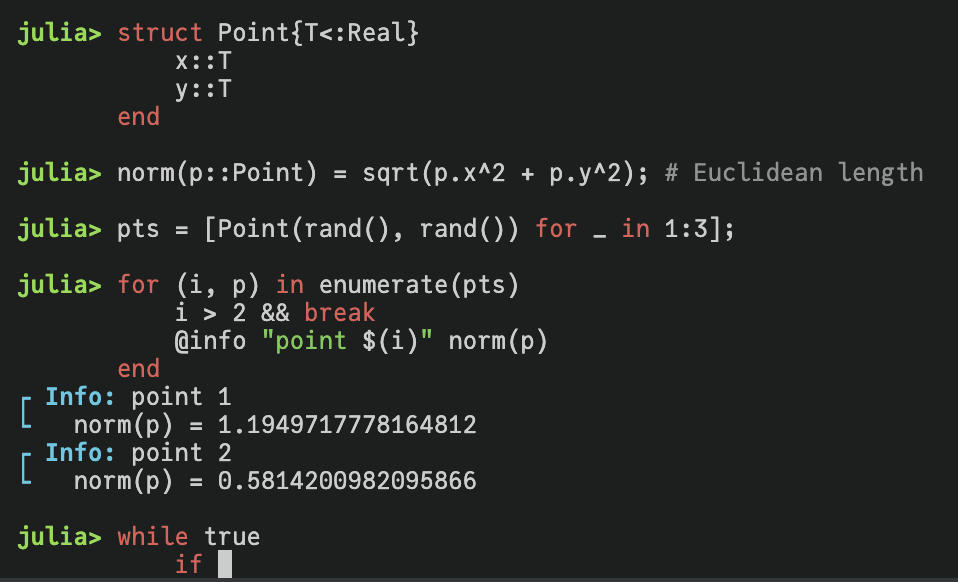
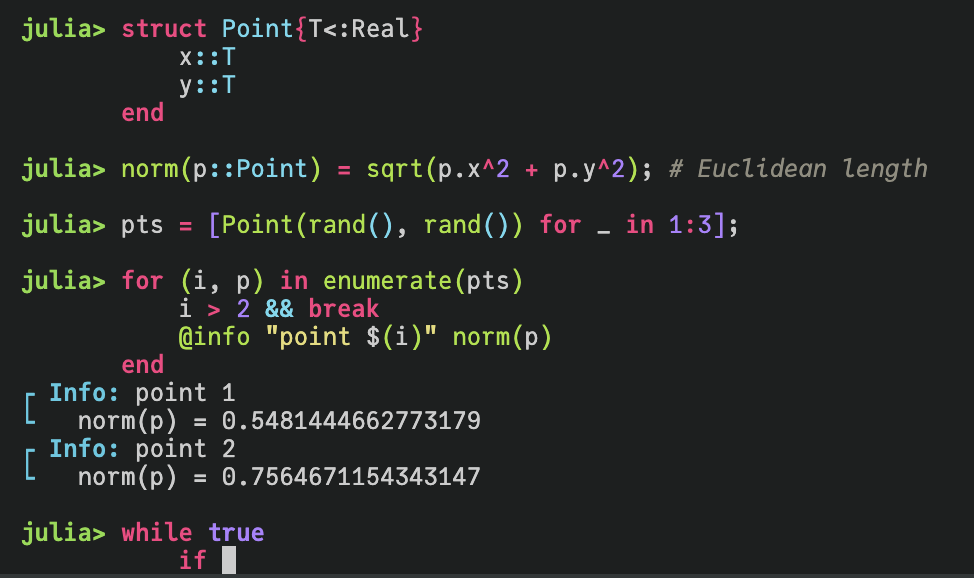
The interactive REPL, the heart of the Julia development experience, has received its most significant visual and functional overhaul in several versions. Chief among these is the introduction of native syntax highlighting. Previously, users had to rely on external packages like OhMyREPL.jl to achieve a colored interface. Julia 1.13 now includes this out of the box, offering a conservative default scheme that is fully customizable, including popular themes like Monokai.
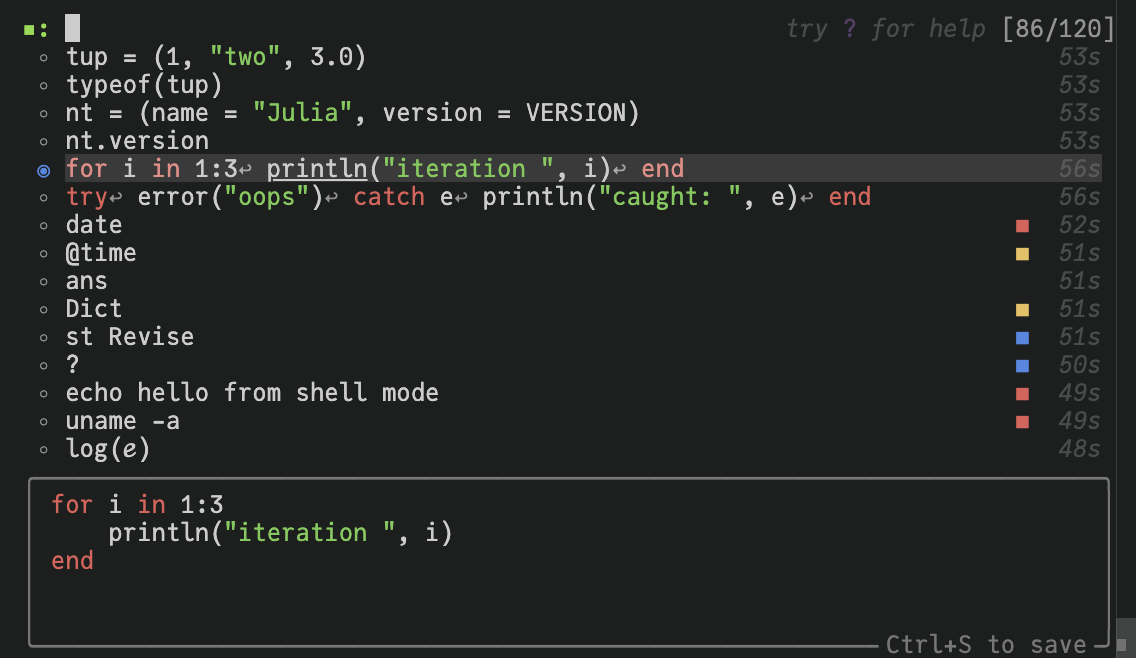
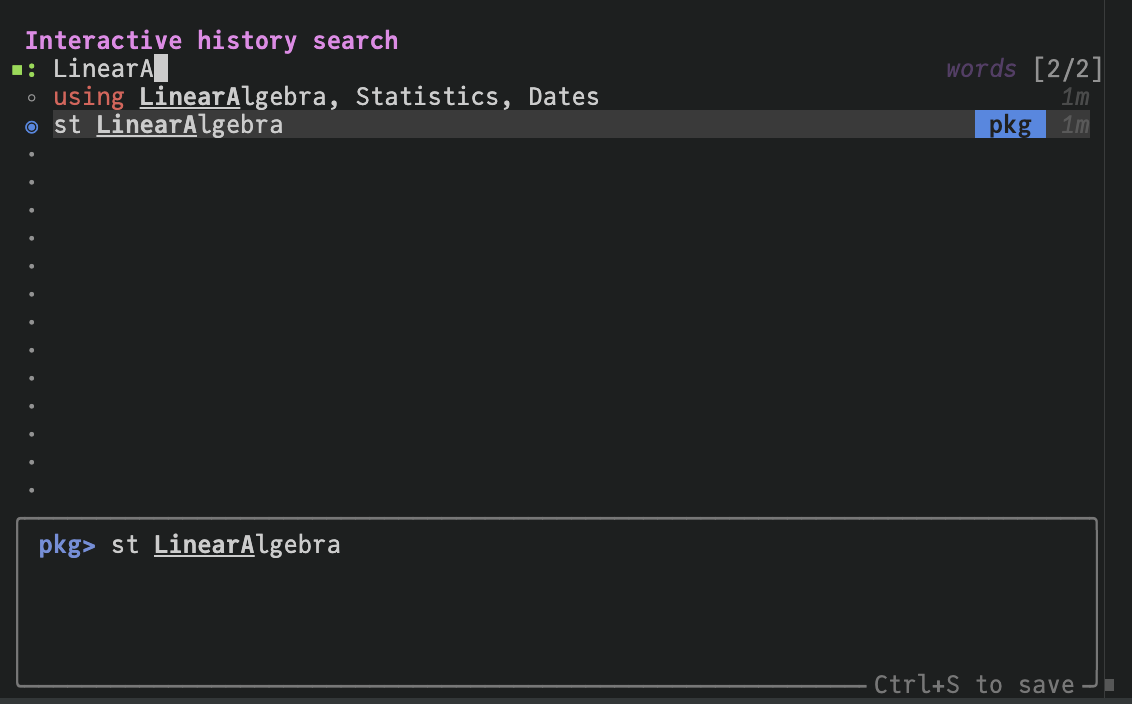
In addition to visual cues, the utility of the REPL has been bolstered by a new history search mechanism. Replacing the traditional linear search, the new system (accessed via Ctrl-R) adopts an "fzf-style" fuzzy finding logic. This allows developers to quickly locate complex multi-line commands using partial matches and non-sequential keywords, drastically reducing the time spent navigating previous session entries.
For developers on Windows, Julia 1.13 finally bridges a long-standing usability gap by enabling "bracketed paste." This terminal feature allows the REPL to distinguish between text typed manually and text pasted from a clipboard. In previous versions, pasting a large block of code—such as a 500-line function—could lead to the REPL attempting to process each line individually, causing significant lag and potential formatting errors. With bracketed paste enabled, large code blocks are handled as a single unit, resulting in near-instantaneous processing and improved reliability on Windows systems.
Revolutionary Changes to Garbage Collection and Memory Management
Perhaps the most impactful technical change in version 1.13 is the optimization of the Garbage Collector (GC). Historically, every full garbage collection cycle required the system to "mark" every object in memory to determine if it was still reachable. As users loaded more packages, the "system image" (the pre-compiled core of Julia) and "package images" grew, forcing the GC to spend an increasing amount of time scanning objects that are essentially permanent and immutable.
Julia 1.13 introduces a "skip-marking" strategy for image objects. Objects residing in the sysimage or package images are now loaded as permanently marked. The GC mark phase simply bypasses these regions, focusing only on the objects created during the current session. The performance implications are profound: a full collection in a bare session dropped from 35 milliseconds in version 1.12 to just 2 milliseconds in version 1.13.
In real-world workloads involving heavy memory allocation, such as dictionary manipulations with millions of entries, the overall time spent in GC has been cut nearly in half. For instance, a workload that spent nearly 80% of its execution time on GC in version 1.12 now sees that figure reduced to approximately 44% in version 1.13, leading to an overall execution speedup of nearly 3x for memory-intensive tasks.
Hashing Evolution and the Shift to RapidhashNano
The underlying hashing architecture of Julia has been replaced to improve both speed and maintainability. Version 1.13 adopts RapidhashNano, a modern, non-cryptographic byte-hashing algorithm. This change impacts AbstractString, BigInt, and other core numeric types.
The transition from the C-based MurmurHash3 to a pure Julia implementation of RapidhashNano offers several advantages:
- Performance: Hashing long strings is now up to five times faster. Benchmarks using the text of Moby Dick showed hashing times dropping from 8.55 microseconds to 1.74 microseconds.
- Streaming: The new algorithm does not require the total length of the input upfront, facilitating more efficient processing of data streams.
- Maintainability: Moving the implementation to pure Julia makes the code more accessible for community audits and contributions.
While the hashing algorithm for small fixed-width data has also been updated to improve "avalanche" characteristics (where a small change in input leads to a large change in output), developers are reminded that hash remains non-cryptographic and that the default seeds have changed, potentially affecting the iteration order of sets and dictionaries between versions.
Enhancements in Package Management and Deployment
The Julia package manager (Pkg) has seen targeted improvements to speed and data efficiency. A major shift in this version is the transition of the default compression algorithm from gzip to zstd for package and registry downloads. Data suggests that zstd provides a superior compression ratio and significantly faster decompression. For a typical stack involving libraries like Plots.jl and Makie.jl, the total download size was reduced by over 60 MB, while decompression time was nearly halved.
Other notable Pkg updates include:
- Registry Persistence: The manifest now records the specific registry from which a package was sourced, allowing for automatic registry installation during environment instantiation.
- Smart Version Matching: When adding new dependencies,
Pkgnow attempts to favor versions that are already loaded in the current session, minimizing the need for redundant precompilation. - Private Dependency Handling: Pkg now recursively collects source entries from URL-based packages, simplifying the management of private, non-registered dependency chains.
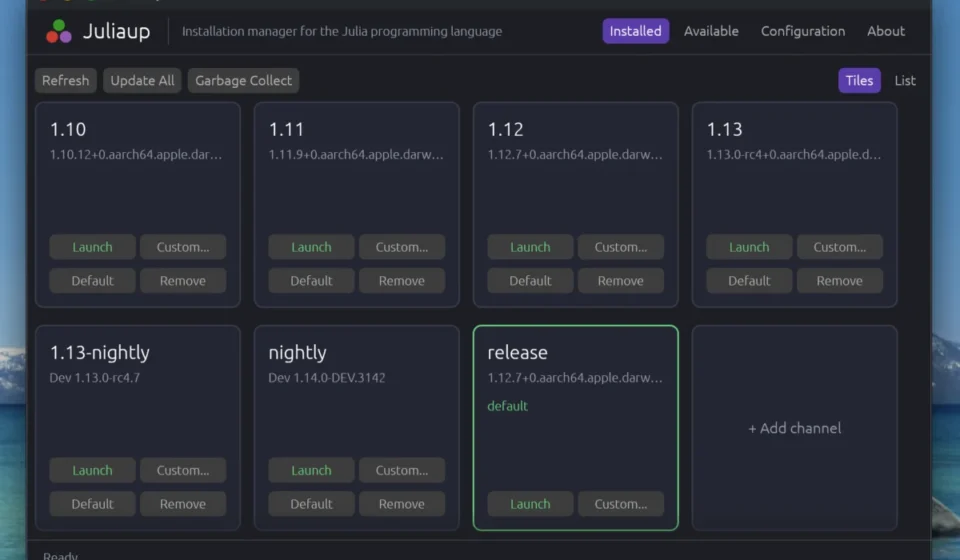
Additionally, for developers looking to manage their Julia installations, the Juliaup version manager now includes a graphical user interface (GUI). This allows users to manage channels, update versions, and configure environment variables through a visual dashboard rather than exclusively through the command line.
Advanced Introspection and Debugging Tools
For power users and library maintainers, Julia 1.13 introduces more expressive introspection macros. Macros like @which and @code_typed now support type annotations (e.g., ::VectorInt) directly in the call expression. This allows developers to copy a frame directly from a stacktrace and paste it into an introspection macro to identify exactly which method was dispatched, without needing to construct dummy values.

Furthermore, the new --trace-eval command-line flag provides a window into the top-level evaluation process. This is particularly useful for debugging "hangs" in complex test suites or scripts, as it logs the progress of the evaluator as it moves through the source files.
Conclusion and Future Outlook
The release of Julia 1.13 underscores a maturation of the language, shifting focus from adding new syntax to refining the core engine for production-grade stability and speed. By tackling the fundamental costs of garbage collection and package latency, the development team has addressed two of the most common critiques of the language.
Looking ahead, the work on a proper task cancellation mechanism—a highly requested feature for concurrent programming—is already underway and is slated for the Julia 1.14 release. For now, version 1.13 stands as a robust upgrade that offers immediate benefits to data scientists, researchers, and software engineers who require a high-performance, interactive programming environment. Users are encouraged to update via Juliaup to take advantage of these significant architectural improvements.