Navigating the Complexities of a Hybrid Academic-Operational Role: A Year in Review at the University of California Washington Center

The University of California Washington Center (UCDC) has recently marked a significant milestone with its Executive Director completing a demanding first year in an administrative position that uniquely blends academic leadership with comprehensive operational oversight. Appointed in January 2023, the Executive Director’s role at UCDC transcends traditional academic administration, encompassing responsibilities typically distributed across multiple senior university positions. This integrated approach to leadership, managing a self-contained academic and residential facility in the nation’s capital, offers a compelling case study in modern higher education management.
A Microcosm of Campus Life in the Nation’s Capital
The UCDC, often described as a "very small campus," serves as the University of California system’s hub for experiential learning, research, and policy engagement in Washington D.C. Unlike typical departmental directorships, the Executive Director is accountable for the physical building’s infrastructure and maintenance, the center’s entire budget, the welfare and performance of 20 staff members, the academic engagement of 10 adjunct or visiting faculty, and the living and learning experience of approximately 200 students residing in the building at any given time. This unique amalgamation of duties requires a leader with an exceptionally broad skill set, capable of navigating academic imperatives alongside the intricate demands of facilities management, financial stewardship, human resources, and student affairs.
The Center’s operational scale, while smaller than a full-fledged university campus, mirrors its complexity. Housing hundreds of students, supporting faculty research, and facilitating a diverse range of academic programs, UCDC functions as a fully integrated educational and residential community. Its strategic location in Washington D.C. amplifies its mission, providing UC students with unparalleled access to internships, policy discussions, and cultural experiences that are pivotal to their academic and professional development. The Executive Director’s role is therefore not merely administrative but fundamentally strategic, ensuring UCDC’s continued relevance and impact within the broader University of California system and the national policy landscape.
Historical Context and UCDC’s Enduring Mission
Established in 1993, the University of California Washington Center was conceived as a vital extension of the UC system’s commitment to public service, research, and education. Its founding recognized the imperative for students and faculty to engage directly with the policy-making process and the myriad institutions that shape national and international discourse. Over three decades, UCDC has evolved into a cornerstone of experiential learning, enabling thousands of UC students from all ten campuses to undertake internships, participate in seminars, and conduct research in Washington D.C. The Center’s programs span various disciplines, including political science, economics, international relations, journalism, and public health, reflecting the diverse academic interests of the UC student body.
The initial vision for UCDC was to create a robust academic and residential environment that would facilitate deep immersion in the D.C. experience. This vision necessitated a facility that could comfortably house students, provide classroom and seminar spaces, and support administrative and faculty offices. The current building, a multi-story structure, embodies this integrated approach, offering a comprehensive living and learning environment. The Executive Director’s stewardship of this facility is thus a direct continuation of UCDC’s founding principles, ensuring that the physical and operational infrastructure consistently supports its academic mission. The presence of a dedicated faculty, often drawn from leading D.C. institutions or with extensive experience in policy and public service, further underscores UCDC’s commitment to bridging theory with practice.
A Chronology of First-Year Leadership (January 2023 – February 2024)

The first year of the Executive Director’s tenure, commencing in January 2023, presented a dynamic landscape of operational demands, strategic opportunities, and ongoing management challenges.
- Q1 2023: Onboarding and Strategic Assessment. The initial months were characterized by an intensive onboarding process. This included a deep dive into the Center’s existing operational protocols, a thorough review of the multi-million dollar budget, assessment of facility conditions, and establishing rapport with staff, faculty, and student leadership. Early strategic priorities included understanding the intricate interplay between academic programming and residential life, identifying areas for process optimization, and familiarizing with key stakeholders within the UC system and the D.C. community.
- Q2 2023: Operational Streamlining and Program Review. With a foundational understanding in place, the Executive Director focused on streamlining administrative processes and conducting initial reviews of academic programs. Efforts were made to enhance efficiency in budget allocation and expenditure tracking. Discussions with faculty focused on program delivery and potential enhancements, while student feedback mechanisms were reinforced to ensure responsive residential services. This period also saw the planning and execution of summer programs, which bring a distinct set of logistical and academic requirements.
- Q3 2023: Infrastructure Management and Community Engagement. The summer months and early fall brought renewed focus on the physical plant. This included overseeing scheduled maintenance, addressing unexpected facility issues, and ensuring a smooth transition for new cohorts of students. Concurrently, the Executive Director engaged with external partners in D.C., strengthening UCDC’s ties with government agencies, non-profit organizations, and other academic institutions. These partnerships are crucial for securing high-quality internship placements and collaborative research opportunities for students and faculty.
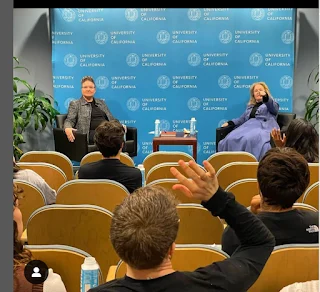
- Q4 2023: Budget Finalization and Strategic Planning. As the year progressed, significant attention was dedicated to the annual budget cycle, including forecasting, allocation, and securing necessary approvals from the broader UC system. Strategic planning for the upcoming academic year commenced, involving faculty recruitment, curriculum development, and projecting student enrollment. High-profile events, such as the one featuring the University Provost, as depicted in the accompanying image, became key platforms for showcasing UCDC’s achievements and engaging with senior university leadership. Such interactions underscore the Center’s integral role within the UC system and provide opportunities for high-level dialogue on its future direction.
- Early 2024: Consolidating Gains and Future Outlook. Entering the second year, the focus has shifted to consolidating the operational and strategic gains from the initial 12 months. This includes embedding new efficiencies, reinforcing a collaborative culture among staff and faculty, and continuing to enhance the student experience. The Executive Director’s proactive engagement in moderating discussions with senior university figures, like the Provost, signals a commitment to integrating UCDC’s mission within the university’s broader strategic vision.
Key Pillars of Success in a Multifaceted Role
While the Executive Director has expressed caution about generalizing from such a unique position, observable strategies have emerged as critical to navigating the first year effectively. These can be analyzed as key pillars supporting the Center’s ongoing success:
- Integrated Fiscal Management: Successfully overseeing a multi-million dollar budget, the Executive Director demonstrated a capacity for meticulous financial planning and resource allocation. This involves not only managing operational expenses but also strategically investing in programmatic enhancements and facility upgrades to ensure long-term sustainability and quality.
- Holistic Staff and Faculty Development: With a team of 20 staff and 10 adjunct/visiting faculty, fostering a cohesive and high-performing environment is paramount. Strategies likely included clear communication channels, empowering team members, and ensuring professional development opportunities, thereby contributing to a positive work culture and effective service delivery.
- Proactive Student Engagement and Support: Managing the residential experience for 200 students necessitates a robust system for student support, safety, and community building. This likely involved direct engagement with student leaders, responsive residential life services, and ensuring that academic programs are complemented by a supportive living environment.
- Strategic Facility Stewardship: The responsibility for a physical building in a high-cost urban environment requires constant vigilance regarding maintenance, safety, and environmental sustainability. Effective leadership in this area involves proactive planning for infrastructure needs and efficient response to immediate operational challenges.
- Cultivating Institutional and External Partnerships: The success of UCDC is heavily reliant on its connections within the UC system and with external entities in Washington D.C. The Executive Director’s role in strengthening these partnerships – with government agencies, think tanks, and other academic institutions – is crucial for securing resources, enhancing program offerings, and elevating UCDC’s profile.
Statements and Reactions from Related Parties (Inferred)
While direct statements from the Executive Director are framed with caution, the successful completion of a demanding first year suggests positive outcomes and broad support from key stakeholders.
- University Leadership: A spokesperson for the University of California system might highlight UCDC’s critical role in advancing the university’s mission, emphasizing the strategic importance of its Washington D.C. presence. They would likely commend the Executive Director’s comprehensive leadership in managing such a complex and vital operation, noting the successful integration of academic, residential, and operational functions. The Provost’s direct engagement at UCDC underscores the high-level institutional recognition of the Center’s value and the leadership at its helm.
- Staff and Faculty: Internal feedback from UCDC staff and faculty would likely point to an enhanced sense of direction and operational clarity under the new leadership. Improved communication, clearer expectations, and support for their respective roles in academic and operational capacities would be key themes. Faculty members might express appreciation for the administrative support enabling them to focus on teaching and student mentorship.
- Students: Students residing and studying at UCDC would likely report a positive and supportive living and learning environment. Their feedback would potentially highlight improvements in residential services, access to resources, and the overall quality of their experiential learning opportunities in D.C., attributing these to effective administrative oversight.
Broader Impact and Implications
The Executive Director’s first year at UCDC offers significant insights into the evolving landscape of academic administration and the unique demands placed on leaders in specialized, multi-functional academic centers.
- A Model for Hybrid Academic-Operational Leadership: The UCDC model, and the comprehensive nature of its Executive Director’s role, could serve as a blueprint for other universities considering establishing satellite campuses or specialized centers in high-impact locations. It demonstrates the necessity of integrating academic vision with robust operational management under a single, decisive leadership.
- Evolution of Academic Administration: This position exemplifies a growing trend in higher education where administrative roles require a broader spectrum of skills beyond traditional academic or financial management. Leaders must be adept at strategic planning, human resources, facilities management, student affairs, and external relations, reflecting the increasing complexity and interconnectedness of university operations.
- Strategic Importance of Off-Campus Centers: The successful management of UCDC underscores the enduring value of university outposts that offer unique experiential learning opportunities. These centers play a crucial role in extending a university’s reach, enhancing its reputation, and providing students with unparalleled real-world engagement, particularly in policy-rich environments like Washington D.C.
- Challenges of Sustainability and Innovation: Effective leadership in such a multifaceted role is critical for the long-term sustainability and capacity for innovation within these centers. The ability to manage resources effectively, adapt to changing academic needs, and foster a dynamic learning environment ensures that UCDC remains a vibrant and essential component of the University of California system’s educational offerings.
The first year of the Executive Director at the University of California Washington Center has been a testament to the complexities and rewards of leading a unique academic enterprise. It highlights the critical need for leaders who can seamlessly blend academic vision with rigorous operational execution, ensuring that institutions like UCDC continue to thrive and fulfill their vital mission in an ever-evolving global landscape. The experience at UCDC provides valuable lessons for the future of academic administration, emphasizing integrated leadership as a cornerstone for success in specialized institutional settings.