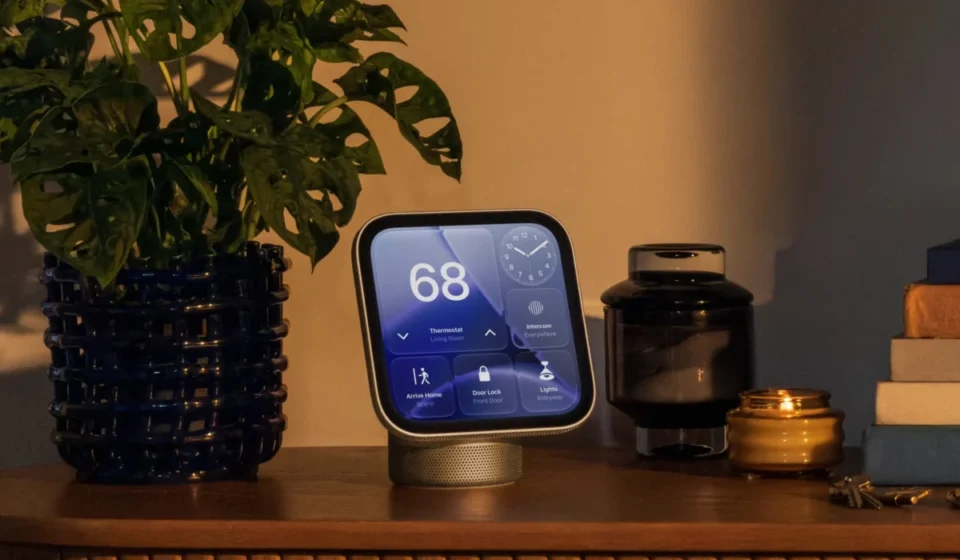

Apple today unveiled the HomeView, a significant new entrant into the smart home and personal assistant market, aiming to unify home control and entertainment experiences through its proprietary Siri AI. The device, which has been the subject of considerable industry anticipation, represents Apple’s most ambitious step yet in consolidating its ecosystem of smart home devices and digital services into a single, intuitive interface. Available in two distinct form factors, the HomeView promises to elevate user interaction with their connected homes and digital content.
HomeView Unveiled: A Fusion of Design and Intelligence
The HomeView is engineered to serve as a central hub for managing HomeKit-enabled devices, seamlessly integrating with a wide array of smart home accessories including lights, thermostats, locks, and blinds. Beyond its smart home capabilities, the device offers robust entertainment features, providing access to Apple Music, Apple Podcasts, Apple TV, and News, alongside select third-party video and audio applications. This dual functionality positions the HomeView as a versatile addition to any modern household.
The device’s intelligence is powered by the A18 chip, a testament to Apple’s continued investment in on-device processing for enhanced performance and privacy. The inclusion of Secure Enclaves further underscores Apple’s commitment to safeguarding user data, particularly for sensitive audio and video streams. According to Apple’s official announcement, personal data such as Messages and Calendar content will only be accessible when the user is recognized and their paired iPhone or iPad is nearby and recently unlocked, reinforcing a privacy-first approach to personal information management.
Design and Configurations: Tailored for Every Space
Apple has introduced the HomeView in two distinct configurations, both priced at $299, catering to diverse user preferences and living spaces.
The Desktop Model: A Tactile and Auditory Experience
The first configuration is designed for placement on flat surfaces. It features a striking aesthetic with a domed aluminum base and a 7-inch Liquid Retina True Tone display that offers tilt functionality for optimal viewing angles. The base is acoustically engineered, housing a downward-firing woofer and two force-cancelling passive radiators. This sophisticated audio setup is complemented by two drivers integrated into the display itself, which support Spatial Audio, promising an immersive listening experience for music, podcasts, and video content.
The Wall-Mounted Variant: Streamlined Aesthetics
The second HomeView model is engineered for wall installation, offering a more integrated and space-saving solution. While maintaining the core functionality of its desktop counterpart, the wall-mounted version omits the base unit and its integrated woofer. This design choice prioritizes a minimalist profile, allowing users to seamlessly blend the device into their home décor.
User Interface and Interaction: Intuitive and Familiar
The HomeView introduces a novel user interface characterized by customizable "faces" that are navigated through intuitive swipe gestures. These faces are reminiscent of Apple Watch complications and iPhone widgets, providing quick access to various information and controls. Users can personalize their HomeView with faces for photos, weather forecasts, and a clock, among others.
Furthermore, the device incorporates interactive tiles for controlling HomeKit devices and widgets for essential information such as weather updates and calendar appointments. This approach draws parallels to the functionality of iPhone’s StandBy Mode, offering glanceable information and immediate control.
The integration of Siri AI is central to the HomeView experience. Users can converse with Siri to navigate the device’s interface, interact with applications, request information, and manage their smart home ecosystem. This conversational approach aims to make technology more accessible and less intrusive.
Feature Set: Beyond Smart Home Control
The HomeView’s application ecosystem is a key aspect of its versatility. It comes pre-loaded with essential Apple applications, including FaceTime, Music, Podcasts, TV, News, and Messages. The inclusion of select third-party video and audio apps further broadens its entertainment capabilities.
As a smart home hub, the HomeView excels in providing a unified control panel for HomeKit devices. Users can conveniently monitor feeds from HomeKit-compatible cameras, adjust smart locks, manage thermostats, control lighting, and operate smart blinds, among other compatible devices. The ability to view live camera feeds directly on the HomeView display adds a significant layer of security and convenience.
Strategic Positioning and Market Context
The introduction of the HomeView marks Apple’s strategic effort to solidify its position in the burgeoning smart home market, a sector increasingly dominated by integrated hardware and software solutions. Competitors such as Amazon’s Echo Show and Google’s Nest Hub have already established significant market share with similar voice-activated displays. Apple’s approach, however, appears to emphasize a deeper integration with its existing hardware and software ecosystem, leveraging the strong brand loyalty and established user base of the iPhone, iPad, and Apple Watch.
The HomeView’s design language and user interface elements, drawing inspiration from the Apple Watch and iPhone’s StandBy Mode, are indicative of Apple’s strategy to create a consistent and familiar user experience across its product lines. This cross-pollination of design principles aims to reduce the learning curve for new users and enhance the perceived value for existing Apple customers.
Pricing, Availability, and Regional Considerations
The HomeView is slated for release on November 13, with preorders commencing today in select regions. The device is currently available for preorder in Australia, Canada, India, New Zealand, the United Kingdom, and the United States. A staggered rollout continues with preorders opening in Singapore on Thursday, October 15, at 9 a.m. SGT.
A notable exclusion from the initial launch regions is the European Union. This is attributed to regulatory complexities surrounding Siri AI’s availability within the EU. Apple has not provided a specific timeline for the HomeView’s expansion into the EU market, suggesting that ongoing discussions with regulatory bodies are likely.
For the wall-mounted HomeView, Apple is offering a range of mounting and power solutions. These include a $59.95 USB-C Wall Connector and a $79.95 AC Wired option, both available for preorder in the U.S. Additionally, a Power over Ethernet (PoE) option, the Power Mount PoE, is slated for release in early 2027 in the U.S. for $129.95, catering to users who prefer a more integrated and potentially simpler installation process.
Developer Ecosystem and Future Potential
While Apple has highlighted the integration of its own applications and select third-party audio and video apps, the long-term success of the HomeView may hinge on the expansion of its developer ecosystem. The ability for third-party developers to create compelling applications and integrations for the HomeView platform will be crucial in differentiating it from competitors and providing users with a richer, more diverse experience.
The initial focus on audio and video apps suggests a strategy of building a strong foundation in entertainment before potentially broadening the scope to other application categories. However, the potential for HomeView extends far beyond media consumption. Applications in areas such as home security, productivity, education, and health could significantly enhance its utility. The success of the App Store on iOS and macOS serves as a precedent for Apple’s potential to cultivate a vibrant third-party developer community for HomeView.
Broader Implications and Market Impact
The HomeView’s debut is poised to have several significant implications for the smart home and consumer electronics markets.
Firstly, it reinforces the trend towards integrated smart home hubs that combine voice control, display interfaces, and entertainment capabilities. This convergence is likely to drive further innovation from competitors, potentially leading to more sophisticated and feature-rich devices across the industry.
Secondly, Apple’s emphasis on privacy and on-device processing, powered by the A18 chip and Secure Enclaves, sets a high bar for data security in the smart home. This could influence consumer expectations and push other manufacturers to adopt more robust privacy measures.
Thirdly, the HomeView’s pricing and configuration options suggest an attempt to capture a broad segment of the premium smart home market. The $299 price point positions it as a premium offering, aligning with Apple’s established pricing strategies for its other devices.
Finally, the geographical limitations of the initial launch, particularly the exclusion of the EU due to Siri AI regulations, highlight the complex interplay between technological innovation and global regulatory landscapes. This may spur further dialogue and potential adjustments to AI deployment strategies by major tech companies.
The long-term impact of the HomeView will be determined by its adoption rates, the evolution of its software ecosystem, and Apple’s continued commitment to integrating it into the broader Apple experience. As the smart home market continues to mature, devices like the HomeView are expected to play an increasingly central role in how consumers interact with their homes and digital lives.