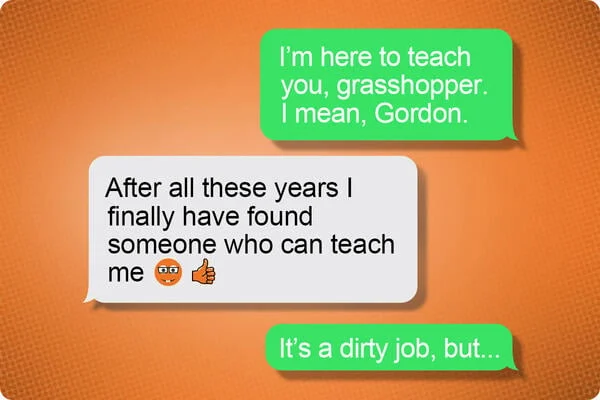
Higher Education’s ‘Odd Couple’ Debuts Live Tour, Offering Candid Insights from Hendrix College

The dynamic duo behind "The Sandbox" column, Rachel Toor and E. Gordon Gee, recently embarked on their inaugural live speaking engagement at Hendrix College in Conway, Arkansas, marking a significant expansion of their popular dialogue on higher education. For nine months, their contrasting perspectives have resonated with readers, but this debut represented their first foray into sharing their "Odd Couple" insights directly with a campus community. The event offered a candid exploration of the unique challenges and strengths of small liberal arts institutions, providing a real-world application of their ongoing discourse.
The Genesis of an Unlikely Partnership
Rachel Toor, a contributing editor at Inside Higher Ed and a professor of creative writing, initially expressed reservations about taking their digital column, "The Sandbox," on the road. Known for her preference for writing over public speaking and her comfort behind a computer, Toor often playfully described her co-author, E. Gordon Gee, as the "showman." Gee, a towering figure in higher education with an unparalleled 45-year tenure as a university president across five different institutions (two of them twice), brings a wealth of experience from leading large, complex universities. Their collaboration, often characterized by humorous disagreements and mutual respect, has cultivated a unique platform for discussing the multifaceted landscape of higher education. This live debut at Hendrix College, a departure from their usual digital format, was driven by persistent reader requests and a shared commitment to engaging with diverse institutional models.
A First-Hand Look at Hendrix College
The experience at Hendrix College, a private liberal arts college with approximately 1,000 students and 100 faculty members, proved to be an illuminating journey for both Toor and Gee, particularly for the latter, whose career has predominantly focused on larger universities. Gee described the campus as "looking like a movie set," immediately struck by its aesthetic and the palpable sense of community. Beyond the physical environment, he noted several key observations that stood in stark contrast to his usual institutional experiences:
- Transparent and Admired Leadership: President Karen Petersen and her leadership team were praised for their openness and the high regard in which they are held by the campus community. This level of transparency was identified as a critical factor in fostering trust and alignment.
- Committed Faculty and Staff: Gee observed a faculty that appeared genuinely invested in shared governance, willing to be "responsible stewards" of the institution. Similarly, students and staff exhibited an "unusual commitment to the cause," indicating a strong sense of collective purpose.
- Devoted Board of Trustees: The college’s Board of Trustees was noted for its unwavering support of President Petersen and its deep devotion to the institution’s success. This unified front is often crucial for smaller colleges navigating complex financial and strategic challenges.
The visit, while eye-opening, was not without its lighter moments, including a comically harrowing car journey driven by Toor through the roundabouts of Conway, prompting a mutual decision to opt for ride-sharing services for future travels. This humorous anecdote underscored their dynamic and willingness to candidly share their personal experiences alongside their professional insights.
The Unique Challenges of Small Institutions
A significant takeaway from the Hendrix visit, particularly for Gee, was a profound appreciation for the distinct operational realities of small liberal arts colleges. Having spent decades at institutions with "longer runways" – larger endowments, more diverse revenue streams, and greater student populations – Gee articulated the immense pressure faced by leaders of colleges like Hendrix. He vividly described the "clear-eyed focus" of President Petersen and the board, recognizing that "they have no room for error."
At institutions with 1,000 students, "every student counts on the bottom line." This direct correlation between enrollment figures and financial viability means there is "no room for delay or mistakes," a stark contrast to the "kicking the ball down the field and having one more round of planning" often seen at larger universities. Gee admitted that the constant pressure would induce "hives" and sleepless nights, akin to having a "Damocles sword" perpetually hanging overhead. This observation highlights a critical vulnerability for many small colleges across the nation, where even minor fluctuations in enrollment or fundraising can have immediate and severe consequences. According to data from the National Center for Education Statistics (NCES), numerous small private colleges have faced closures or mergers in recent years, underscoring the urgency of efficient and error-free leadership.
Shared Governance and Diverse Perspectives
The discussion during their engagement also delved into the intricacies of shared governance and the necessity of diverse perspectives within higher education. Toor, who has long championed the idea of higher education as a "gorgeous mosaic," often challenged Gee’s initial focus on the "giant tiles" – the large research universities. The visit to Hendrix was designed to expose Gee to the "other 99 percent" of institutions, broadening his understanding of the sector’s varied ecosystem.
During a conversation with the board, their contrasting views came to the forefront. Toor humorously recalled instances where Gee, speaking from his vast experience at large institutions, offered "smart, funny and dead wrong" answers to questions, prompting Toor to playfully invoke a classic SNL reference, "Jane, you ignorant slut!" This exchange, met with laughter from the trustees, underscored their agreed-upon compact: to be open, honest, and to agree, disagree, or find common ground. Gee acknowledged this as a crucial part of his "learning curve," admitting that some of his initial observations, while valid in a macro context, were "totally inapplicable" to an institution like Hendrix. This candid admission is a testament to the value of their partnership and the ongoing "rolling seminar" that defines their collaborative journey. It also speaks to the broader need for tailored solutions and nuanced understanding within the diverse landscape of higher education, rather than a one-size-fits-all approach.
The Role of Boards and Community Engagement
Gee’s address to the Hendrix College trustees was a focal point of the visit, where he channeled his extensive experience into a powerful message about board responsibility. He emphasized that Hendrix is at an "inflection point," requiring every board member to commit their "time and treasure" to meet and exceed fundraising goals. He stressed the imperative for a "consistent message about Hendrix," warning against a "cacophony of voices or half-hearted engagement." Having completed the difficult work of "rightsizing the institution and stopping the financial bleeding," the college now demands full engagement in the process of change. This call to action highlights the critical role of governance in steering small colleges through periods of transformation, particularly in an era of intense competition for students and philanthropic support.
Toor, observing Gee’s interaction with the community, noted his innate ability to connect with people. Despite her preference for punctuality, she described how Gee’s genuine curiosity led him to engage with everyone from golf cart drivers to softball coaches and dining hall workers, asking questions, paying attention, and remembering personal details. This authentic engagement, while causing them to be "late for everything," cultivated immense goodwill and reinforced the idea that strong leadership involves deeply understanding and valuing every member of the campus community.
"Believe" and the Spirit of Education
A poignant moment during the visit was Gee’s decision to wear a "BELIEVE" lapel pin, channeling the spirit of the popular television show Ted Lasso. He explained that this was a reflection of his conviction that "we must believe in the possibilities of education, including higher education, and not let the cynical hysteria start to define us." This sentiment resonated deeply, particularly in the context of a small college in Arkansas where, despite the inherent challenges, "people are believing in the work they are doing." This belief in the mission of higher education, especially amidst external pressures and skepticism, emerged as a core message from their Hendrix experience.
Toor further enriched this discussion by referencing the television series A Man on the Inside, which draws inspiration from Mary Steenburgen’s (a Hendrix alumna) experiences, depicting a fictional Wheeler College facing a hostile corporate takeover driven by a billionaire’s agenda. The show’s central question, posed to all new students – "Francis Wheeler came here in search of gold, but he found something much more important. What did Wheeler find?" – became a metaphor for Toor’s own findings at Hendrix. While the answer remains for viewers to discover in the series, it underscored the profound, intangible value that institutions like Hendrix offer beyond mere financial metrics.
Broader Implications for the Higher Education Landscape
The "Odd Couple’s" debut at Hendrix College offers valuable insights for the broader higher education sector. Their contrasting experiences and candid dialogue underscore the critical need for a nuanced understanding of institutional diversity. What works for a large public research university may be detrimental to a small private liberal arts college, and vice versa. The success of their "rolling seminar" highlights the power of open discussion, even amidst disagreement, to foster deeper learning and more effective strategies.
The visit reaffirmed that while financial pressures and strategic planning are universal, the scale and scope of execution differ dramatically. Small colleges, often seen as vulnerable, also possess inherent strengths: a strong sense of community, highly committed stakeholders, and the agility to make decisive changes when necessary. Their experience at Hendrix serves as a powerful reminder that "the possibilities of education" are being realized daily in diverse settings, driven by dedicated leaders, faculty, staff, and trustees who truly "believe" in their mission. As Rachel Toor and E. Gordon Gee continue their "Odd Couple" journey, their candid reflections promise to offer continued vital perspectives on the evolving landscape of higher education.
Rachel Toor is a contributing editor at Inside Higher Ed and the co-founder of The Sandbox. She is also a professor of creative writing. E. Gordon Gee has served as a university president for 45 years at five different universities—two of them twice. He retired from the presidency in July 2025.