Apple’s HomeView: A New Ecosystem Unfolds Through CarPlay and Evolving App Integration

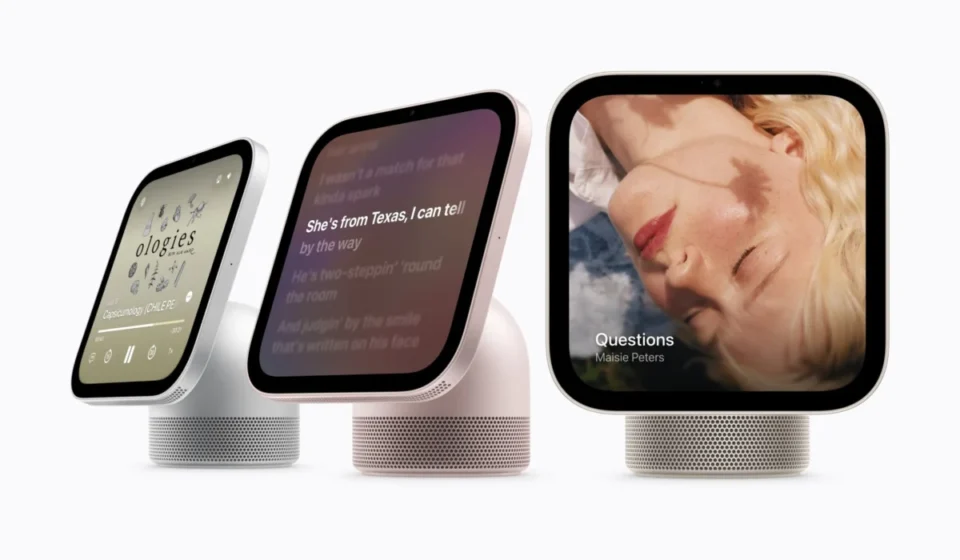
The recent unveiling of Apple’s HomeView smart display has sparked significant interest and, as is often the case with new Apple hardware, a degree of public interpretation and anticipation. Initial reports, notably from Wired, suggested that third-party applications with CarPlay functionality would be available on the HomeView. This revelation has prompted a deeper examination of the device’s app strategy and its implications for both developers and consumers. While not a completely new application development platform in the traditional sense, the HomeView appears to be carving out a distinct niche by leveraging existing Apple technologies and a refined approach to app integration, primarily through CarPlay and a focused widget system. This evolution signals a potential shift in how personal assistants and smart home devices interact with the broader app ecosystem, moving towards a more context-aware and less app-centric user experience.
Understanding the HomeView’s App Strategy: From Confusion to Clarity
Apple’s official press release announcing the HomeView offered a glimpse into its capabilities, stating support for "compatible third-party audio and video apps" and noting that "select apps require a paired and compatible iPhone nearby." This phrasing, while technically accurate, lacked the explicit detail that many observers expected, particularly regarding the integration of third-party applications. The mention of widgets and access to personal context further fueled speculation about the extent of third-party app interaction. The ambiguity surrounding the CarPlay connection, in particular, led to questions about whether HomeView was intended to be a standalone app platform or an extension of existing Apple in-car systems.
However, subsequent information has begun to clarify this picture. Apple’s developer documentation for CarPlay now explicitly outlines "out-of-the-box support" for audio and video applications within the CarPlay framework. This is a crucial distinction, as it indicates that HomeView will not be a general-purpose app platform akin to iOS or iPadOS, but rather will adopt a curated selection of CarPlay-compatible apps. This focus on audio and video aligns with the primary functions of a smart display, emphasizing media consumption and communication.
Further substantiation for this interpretation comes from an interview with Cecilia Dantas of Apple, who directly linked the availability of third-party video applications on HomeView to CarPlay support. This confirmation provides a concrete understanding of how developers will bring their applications to the HomeView, leveraging the familiar CarPlay development environment for specific app categories.
Evolving Widget Integration: A More Personalized Experience
Beyond app functionality, the HomeView’s integration of widgets is another key aspect of its user experience. The updated Human Interface Guidelines (HIG) for Apple HomeView shed light on how widgets will function on the device. The guidelines specify that users can place widgets on the "Modular face and the Home Screen" of the HomeView. These widgets are described as belonging to the "small system family" and will share the visual appearance of iPhone widgets, ensuring a consistent design language across Apple’s ecosystem.
Crucially, the HIG clarify that users can select widgets from those already installed on the HomeView itself, such as Weather or World Clock, or from widgets associated with their paired iPad or iPhone. This implies a deeper level of integration, allowing users to surface information and controls from their personal devices onto the HomeView without necessarily requiring a dedicated app to be installed directly on the smart display. This approach to widget management enhances personalization and streamlines access to frequently used information.
Siri’s Role in Third-Party App Interaction: Bridging the Gap
The extent to which Siri will be able to interact with third-party app data and actions on the HomeView is a significant point of interest. Apple’s press release emphasized the device’s ability to access "personal context," a feature further elaborated upon by Kaiann Drance and Lilian Rincon in an interview with Reuters. This suggests that Siri on HomeView will possess a sophisticated understanding of user data, enabling it to retrieve information from applications like Messages on a paired iPhone.
The Q&A section on the HomeView product page also hints at the device’s capacity for "taking action across apps with Siri." This strongly suggests that the HomeView’s Siri capabilities will mirror those of the forthcoming HomePod mini 2, which is expected to gain advanced AI-driven Siri functionalities. While Apple has not yet provided explicit details on the direct integration of Siri with third-party apps in this context, the indications are that the underlying framework will facilitate such interactions. This is likely to be achieved through Apple’s App Intents framework, which allows developers to expose app functionalities to Siri and other system-level integrations.
Implications for Developers and the Future of Personal Assistants
The HomeView’s app model, characterized by its reliance on CarPlay for audio and video apps and a focused widget system, may initially seem restrictive to some developers accustomed to the full breadth of app development opportunities on iOS. However, this approach can be viewed as a strategic move towards a more integrated and context-aware personal assistant experience. The trend suggests a departure from the traditional model of requiring a dedicated app for every device and function. Instead, the focus is shifting towards enabling seamless interaction with apps through natural language interfaces and personalized contextual information.
For developers who have already embraced App Intents, this presents an opportunity to extend their app’s reach to the HomeView without the need to build an entirely new application or adapt to a completely novel development environment. By exposing app functionalities through App Intents, developers can enable users to interact with their services via Siri on HomeView, effectively making their apps accessible through a new user interface. This can lead to increased user engagement and broader discoverability of app features.
This strategy holds significant promise for users as well. It offers a more intuitive and less fragmented way to interact with their digital lives. Instead of navigating through numerous applications on a smart display, users can leverage Siri to perform actions and retrieve information, creating a more streamlined and efficient experience. The ability to access personal context and control third-party apps through voice commands on a central home device represents a substantial advancement in smart home technology.
A Strategic Vision for the Evolving Smart Home Landscape
The HomeView’s approach to app integration, while seemingly limited on the surface, is indicative of a broader strategic vision from Apple. By leveraging the established CarPlay framework for specific app categories and focusing on a robust widget system and Siri integration, Apple is aiming to create a cohesive and intuitive smart home experience. This approach minimizes fragmentation for users and provides a clear, albeit specialized, pathway for developers to engage with the HomeView ecosystem.
The implications of this strategy extend beyond the HomeView itself. It suggests a future where personal assistants play an increasingly central role in orchestrating user interactions with their digital services. The emphasis on App Intents and contextual awareness points towards a paradigm shift where the lines between individual applications blur, and the user experience is driven by intelligent agents that can access and act upon information across a wide range of services.
This evolution could significantly impact the smart home market, potentially setting new standards for interoperability and user experience. As more devices adopt similar integration strategies, the concept of a truly connected and intelligent home, where technology seamlessly adapts to user needs, moves closer to reality. The HomeView, with its carefully considered approach to app integration and personal context, appears to be a significant step in this direction, offering a glimpse into the future of how we will interact with our homes and our digital lives. The success of this strategy will ultimately hinge on its ability to deliver a compelling and user-friendly experience that resonates with consumers and provides tangible benefits for developers seeking to expand their reach within the burgeoning smart home landscape. The integration of audio and video apps through CarPlay, coupled with advanced Siri capabilities and a user-friendly widget system, positions the HomeView as a pivotal device in Apple’s ongoing efforts to redefine home entertainment and smart home management.