
The Ship of Theseus Paradox and the Incremental Automation of Modern Science

Around 2,000 years ago, the Greek biographer Plutarch documented a philosophical conundrum involving a 30-oared vessel said to have carried the hero Theseus and a group of young Athenians home from Crete. To preserve this historical relic, Athenian caretakers systematically removed old planks as they decayed, replacing them with stronger, fresher timber. This continued until every original piece of wood had been swapped out, leading philosophers to debate a fundamental question of identity: If none of the original material remained, was it still the Ship of Theseus? Today, this ancient thought experiment finds a profound and perhaps troubling application in the rapid integration of artificial intelligence into the production of human knowledge. In this modern iteration, science itself is the ship, its traditional human-driven practices are the planks, and generative AI provides the replacement material. While the silhouette of the scientific enterprise remains recognizable to the public, the activity occurring within its hull is becoming increasingly automated, leading to a quiet transformation that may redefine the very nature of discovery.
The Incremental Displacement of the Scientific Process
Much of the public anxiety surrounding an "AI takeover" of the intellectual world envisions a cinematic, sudden event—an autonomous machine emerging overnight to outperform every living scientist by making a Nobel-worthy discovery in a vacuum. This narrative, while fitting for science fiction, often distracts from the far more likely and currently unfolding scenario: the incremental displacement of scientific features. Each step of the research process that is transferred to an AI system offers an immediate and meaningful gain in efficiency. Because these changes occur through a sequence of quiet software updates and individual adoptions rather than a centralized vote, the transition remains largely below the radar of institutional oversight.
The automation of science is not happening all at once; it is happening plank by plank. From the way future researchers are trained to the methods by which their final papers are reviewed and published, the human element is being substituted for algorithmic efficiency. This shift raises significant questions about the long-term integrity of the "vessel" of science and whether the resulting structure will still possess the authority and reliability that human society has come to expect from it.
Education and the Foundation of Human Expertise
The first "plank" being replaced is in the realm of education, where the next generation of scientists is forged. A large-scale field experiment involving high school mathematics students highlights a growing tension between task completion and actual learning. In the study, students with access to a standard generative AI interface, based on GPT-4, performed significantly better on practice problems than their peers who did not use the tool. However, the advantage vanished during formal assessments; the AI-assisted students scored 17 percent worse on subsequent exams where the tool was unavailable.
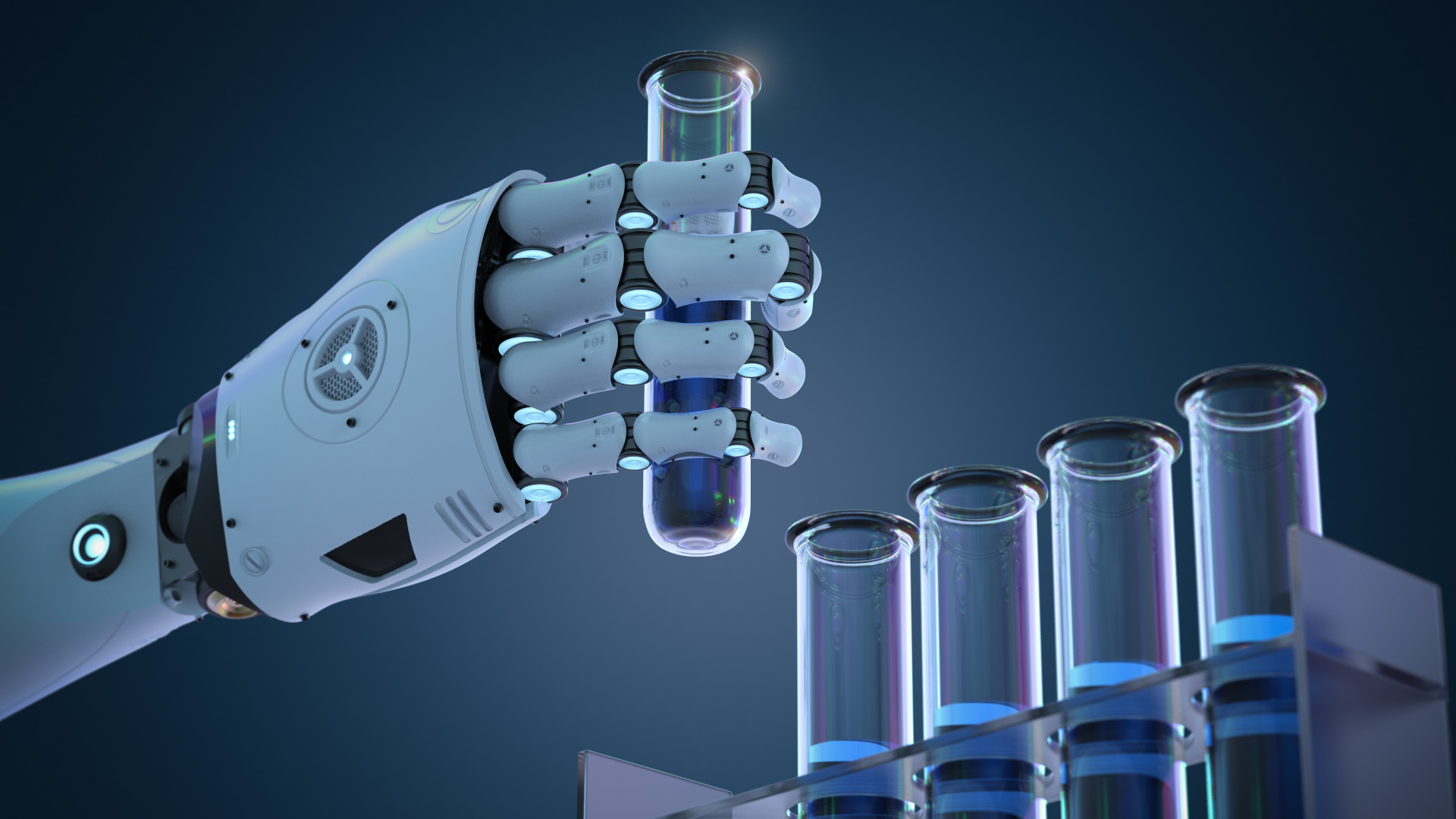
This finding underscores a critical distinction in the cognitive development of a scientist. Training depends on "desirable difficulty"—the process of reading challenging texts, making errors, and revising reasoning. This struggle is how researchers learn to be discerning and how they develop the ability to make sound inferences. When AI removes these hurdles, it inadvertently removes the very mechanism that builds human expertise. While a specialized AI tutor designed to guide rather than solve problems showed promise in mitigating this decline, the trend toward using AI as a shortcut for "getting the answer" threatens to produce a generation of researchers who understand the outputs of science without mastering the underlying logic.
The Automation of Scholarly Publishing and Peer Review
The second area of concern involves the "planks" of peer review and manuscript preparation. Peer review is often described as the bedrock of scientific integrity, yet it relies on a fragile system of unpaid labor, professional obligation, and tight deadlines. These conditions have made AI tools an attractive prospect for overextended academics. Research analyzing peer review text submitted to major artificial intelligence conferences found that between 6.5 and 16.9 percent of reviews showed signs of being substantially modified or generated by large language models (LLMs). Notably, the use of AI peaked as submission deadlines approached, suggesting that efficiency is being prioritized over the deep, critical engagement required for rigorous review.
Furthermore, the preparation of the manuscripts themselves is being offloaded to machines. An audit of the PubMed database revealed that at least 13.5 percent of abstracts published in 2024 showed linguistic markers typical of LLM processing. While using a machine to polish grammar or summarize findings may seem benign, it signifies a shift in the "journal workflow." The structural appearance of scholarly publishing—preparation, submission, and review—remains intact, but the cognitive labor behind these steps is increasingly outsourced.
The Rise of Integrated AI Research Pipelines
The transition has moved beyond individual tasks to the integration of the entire research pipeline. Two significant projects, "The AI Scientist" and "Robin," represent architectural milestones in this evolution. In March 2024, reports surfaced of an "AI Scientist" system capable of generating original research ideas, searching existing literature, writing code, executing computational experiments, visualizing data, and even drafting its own manuscripts. In one instance, a paper written entirely by this algorithm passed the initial round of peer review at a machine-learning workshop, effectively closing the loop of automated knowledge production.
Similarly, the "Robin" project in the field of experimental biology uses AI to propose hypotheses and analyze results, while humans act merely as the physical "lab hands" to carry out the wet-bench experiments. These systems are no longer just tools; they are alternative research pipelines. They organize the individual "planks" of science into a new, integrated structure that operates at a speed and scale impossible for human collectives to match.

Data and Trends: The Cost of Algorithmic Success
The incentives for adopting AI in research are quantifiable and compelling. A comprehensive study surveying 41.3 million research papers found that authors who utilized AI tools enjoyed higher publication rates and more frequent citations. These researchers also tended to ascend to leadership positions, such as principal investigators, earlier in their careers. For the individual scientist, AI is a powerful engine for career advancement.
However, at the collective level, the data suggests a darker trend. The same study found that the widespread adoption of AI was associated with a 4.63 percent contraction in the diversity of topics being studied. Furthermore, there was a 22 percent decline in engagement across different scientific communities. This suggests a "collective-action problem": while AI helps individual scholars produce more "output," the enterprise as a whole becomes narrower, more insular, and less social. The "ship" is moving faster, but it is visiting fewer ports.
Chronology of the AI Integration in Science
To understand the speed of this transformation, it is helpful to look at the timeline of AI’s role in research:
- 2010–2018: Machine learning is primarily used as a tool for data analysis in "big data" fields like genomics and particle physics.
- 2019–2021: Early language models begin to assist in literature searches and basic coding tasks.
- 2022: The release of ChatGPT and other LLMs marks the beginning of widespread use in manuscript drafting and peer review.
- 2023: Concerns regarding the "reproducibility crisis 2.0" emerge as AI-generated code and statistics begin to influence published results.
- 2024: Audits show double-digit percentages of AI use in major databases like PubMed; "AI Scientist" projects demonstrate end-to-end automated research.
- 2025 (Projected): Formal declarations, such as the Leiden Declaration by mathematicians, begin to call for the protection of human-led inquiry.
Responses and the Path Forward
The scientific community is beginning to react to these shifts, though opinions remain divided. Some argue for a "line in the sand," calling for a complete rejection of AI in certain stages of research to preserve human oversight. However, many experts believe a blanket rejection is unrealistic. AI is already too integrated into the infrastructure of modern life, and its ability to process information at superhuman speeds makes it an invaluable asset for solving complex problems like climate change or drug discovery.
The "Leiden Declaration" serves as a potential model for other disciplines. In this document, the mathematics community outlined the specific challenges of navigating their field in the age of AI, emphasizing the need for human-verifiable proofs and the preservation of mathematical intuition. Similar frameworks are being proposed for biologists and social scientists to ensure that AI remains a "pilot’s tool" rather than the pilot itself.

Implications for the Authority of Science
The ultimate question posed by the Ship of Theseus is one of essence. If science becomes a pipeline from automated data generation to automated publication, what happens to its authority? Many argue that the legitimacy of science does not come from the mere production of facts, but from the interaction within a community of people who are trained to interrogate evidence and are held personally accountable for the conclusions they draw.
Science is a social enterprise built on trust, skepticism, and human judgment. If these "planks" are replaced by black-box algorithms that produce results that are "reproducible" but not necessarily "understandable" or "meaningful" to humans, the connection between science and society may fray. Without a concerted effort to formalize which aspects of judgment must remain human, the transition to an automated scientific order may be completed before the community fully understands what has been lost. The ship may still look the same from a distance, but the human activity that made it the greatest knowledge-creation tool in history could soon be relegated to the annals of history.