
Australia’s premier celebration of scientific inquiry and innovation entered its third day on Monday, August 17, with a diverse slate of events designed to bridge the gap between high-level research and public engagement. National Science Week, an annual initiative supported by the Australian Government, the CSIRO, and various scientific organizations, continues to showcase the nation’s contributions to global knowledge while inspiring the next generation of researchers. From underground hydroponic farms in Sydney’s central business district to 60-year-long health studies in Western Australia and cutting-edge robotics challenges for school students, Day 3 emphasized the multidisciplinary nature of modern science and its direct impact on daily life.
Nationwide Robotics Initiative: CSIRO Robot Responders
A central highlight of the day was the national launch of the "CSIRO Robot Responders" program, an initiative aimed at secondary and primary students across the country. This program, which runs through August 23, invites participants to step into the shoes of robotics engineers to design solutions for some of the world’s most challenging environments.

The project is rooted in actual CSIRO research, specifically focusing on three distinct theaters of operation: subterranean caves and lava tubes, marine environments, and deep space. By engaging with these scenarios, students learn the fundamental principles of autonomous systems, sensor technology, and mechanical movement. The educational value of this program lies in its focus on "dangerous, dull, or dirty" jobs—tasks that are too hazardous or repetitive for humans but ideal for robotic intervention.
The initiative includes a competitive element where participants can win 3D printers and education vouchers. Beyond the competition, the CSIRO provides comprehensive resources for schools and libraries, including design challenges and interactive games. This effort reflects a broader national strategy to bolster STEM (Science, Technology, Engineering, and Mathematics) literacy in Australia, addressing a projected 15 percent increase in demand for technology-based roles over the next decade.
Urban Sustainability: Farming Beneath the Streets of Barangaroo
In New South Wales, the focus shifted to food security and urban innovation. Urban Green Sydney, located in an underground carpark in the Barangaroo precinct, opened its doors to demonstrate the potential of subterranean hydroponic farming. As urban populations swell and arable land becomes more scarce, the "Under the Pavement" project showcases how neglected city spaces can be repurposed for high-yield, sustainable agriculture.

Noah Verin, the founder of Urban Green Sydney, highlighted the use of circular farming techniques, such as utilizing coconut coir—a byproduct of the coconut industry—as a growing medium. This method eliminates the need for traditional soil and significantly reduces water consumption, a critical factor in the Australian climate. The facility provides a template for "vertical farming," which can reduce food miles by growing produce within meters of the end consumer.
The event also introduced the "Seed to STEM Grow Kits," allowing schools and community groups to conduct their own microgreen experiments. This hands-on approach to agricultural science aims to demystify food production and encourage urban residents to consider the physics and biology behind the food on their plates.
The Busselton Health Study: A Legacy of Longitudinal Research
In Western Australia, the City of Busselton celebrated a significant milestone in medical history: the 60th anniversary of the Busselton Health Study. What began in 1966 as a small fleet of caravans carrying researchers has evolved into one of the most prestigious and long-running community health studies in the world.

To date, more than 20,000 residents of Busselton have participated in the study, contributing data that has fueled over 600 scientific publications. The study has been instrumental in the global understanding of chronic conditions such as asthma, heart disease, and diabetes. By tracking the health of a stable population over six decades, researchers have been able to identify risk factors and trends that would be invisible in short-term clinical trials.
The National Science Week exhibition in Mitchell Park features a retrospective of this "journey of discovery," including the vintage caravans that served as the original mobile laboratories. Analysts suggest that the Busselton study serves as a prime example of the "citizen science" model, where community trust and participation create a data set of immense value to global public health policy.
Astronomy and Indigenous Knowledge: Dark Skies in Tasmania
The evening of Day 3 saw a convergence of astrophysics and cultural heritage at Mount Gnomon Farm in Penguin, Tasmania. The "Expanding the Cosmos" event featured Dr. Kirsten Banks, a Wiradjuri astrophysicist and prominent science communicator, alongside Dr. Martin George, the chief astronomer at the Hive Planetarium.

The discussion centered on the dual importance of dark skies for both scientific observation and Indigenous cultural practices. Dr. Banks, who has utilized platforms like TikTok to bring Indigenous astronomy to a global audience of over 600,000 followers, spoke on how the stars have guided Aboriginal and Torres Strait Islander people for millennia.
The event also addressed the growing threat of light pollution, which hampers the ability of telescopes to capture data and obscures the traditional "dark emu" and other constellations central to Indigenous lore. Dr. Martin George provided updates on the Artemis II mission, linking Tasmania’s unique vantage point for stargazing to humanity’s imminent return to the lunar surface. This event underscores the importance of "Dark Sky" preserves in Tasmania, which are increasingly recognized as vital scientific and ecological assets.
Conservation Technology: The Digital Frontier at Sydney Zoo
At Sydney Zoo in Bungarribee, the "Discovery Trail" demonstrated how smartphone technology and citizen science are revolutionizing wildlife conservation. Visitors were shown how apps are used to track and save threatened species, such as frogs and turtles, by allowing the public to upload photos and location data to centralized scientific databases.

The Innovation Hub at the zoo also featured First Nations educators who explained the intersection of traditional ecological knowledge and modern field science. Activities included the use of thermal cameras—standard equipment for monitoring nocturnal species—and food-web challenges that illustrate the delicate balance of Australian ecosystems. By engaging younger audiences through "wildlife detective" mysteries, the program aims to foster a sense of environmental stewardship powered by technological literacy.
Behavioral Science and Nutrition: The "Foodie Fun Play" Initiative
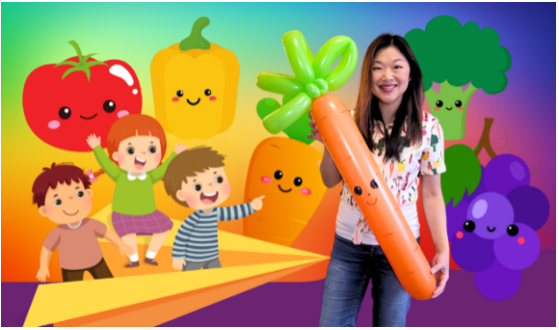
In the Australian Capital Territory, the intersection of molecular biology and behavioral science was on display through "Foodie Fun Play!" led by Dr. Chloe Lim. A former reality television star and professional "balloon scientist," Dr. Lim partnered with the University of Canberra and Nutrition Australia to address childhood nutrition.
By using balloon-modeled fruits and vegetables as props in a storytelling-driven scientific workshop, the program seeks to overcome "food neophobia" (the fear of new foods) in children aged 3 to 8. This "edutainment" approach is backed by sensory science, suggesting that positive, non-threatening engagement with the visual forms of healthy food can increase a child’s willingness to consume them. Given that only about 6 percent of Australian children meet the recommended daily intake of vegetables, such innovative outreach programs are increasingly viewed as essential public health interventions.
The Intersection of Art and Science: Regional Highlights
Across Victoria and New South Wales, several installations highlighted how artistic expression can communicate complex scientific data.
In Parkville, the Science Gallery Melbourne hosted the "EMERGENCE(Y)" exhibition. Notable works included David Bowen’s tele-present wind, which uses real-time data from the Perseverance Mars rover to manipulate physical installations on Earth, and Alia Parker’s research into fungal leather. Parker’s work explores the potential of mycelium as a sustainable, fire-retardant, and compostable alternative to animal leather and synthetic fabrics—a crucial development for the future of the circular economy.
Meanwhile, in Waverton, NSW, the "Wings" installation at The Coal Loader utilized century-old tunnels to house a multi-sensory exploration of avian biology. Combining sculpture, photography, and music, the project highlighted the biodiversity of North Sydney’s bird populations. In Newcastle, Dr. Karen Livesey, a physicist and NSW Chair of the Australian Institute of Physics, hosted tours focused on the "ghost mushrooms" (Omphalotus nidiformis). Dr. Livesey explained the chemical process of bioluminescence and the physics of spore dispersal, turning a local natural phenomenon into a lesson in fluid dynamics and light science.
National Flora: The Search for Australia’s Most Amazing Wildflower
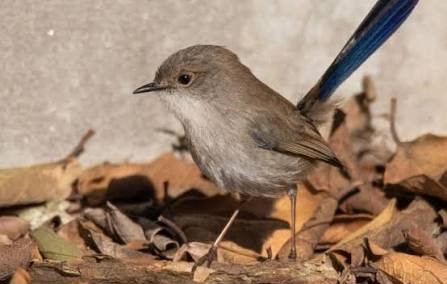
Running concurrently with these physical events is a major digital initiative by ABC Science to identify Australia’s "most amazing wildflower." The competition, which concludes with a live broadcast on Radio National on August 21, features a shortlist of ten native blooms.
Rather than focusing solely on aesthetic beauty, the shortlist highlights plants with "superpowers," such as unique pollination mechanisms or the ability to survive extreme environmental stress. This initiative aims to raise awareness of the "unsung understory" of the Australian bush, emphasizing the role of native flora in supporting pollinators and maintaining soil health.
Broader Impact and Implications
The activities of Day 3 of National Science Week illustrate a strategic shift in how science is communicated to the Australian public. By moving away from purely academic settings and into underground farms, zoo trails, and art galleries, organizers are making science accessible to a broader demographic.
The data gathered from programs like the Busselton Health Study and the various citizen science apps at Sydney Zoo represent a significant contribution to the national research infrastructure. Furthermore, the emphasis on robotics and sustainability reflects Australia’s economic transition toward high-tech industries and renewable resources. As National Science Week continues, the focus remains on demonstrating that science is not merely a classroom subject, but a vital tool for solving the practical challenges of the 21st century.