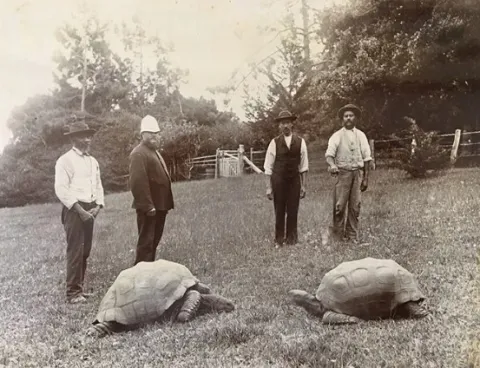
Jonathan the Giant Tortoise Unveils Genetic Keys to Extreme Longevity, Offering Unprecedented Insights into Human Aging

A groundbreaking study published today in the prestigious journal Science Advances reveals that the extraordinary longevity of Jonathan, the world’s oldest living land animal, is not merely a stroke of genetic luck but a testament to a unique biological resilience against the ravages of time. Researchers have pinpointed specific genetic adaptations and an exceptionally stable epigenome in the nearly two-century-old Aldabra giant tortoise, providing a novel blueprint for understanding and potentially combating the aging process in humans. This landmark investigation challenges conventional wisdom about aging, suggesting that a lack of genetic wear and tear, rather than just superior genes, is the cornerstone of extreme lifespan.
The collaborative research, spearheaded by the longevity research non-profit Kallel in the US with significant contributions from Peterhouse at the University of Cambridge, delves deep into the genomic and epigenomic landscape of Jonathan. Their findings highlight 287 unique gene variants that actively reduce the typical degenerative effects associated with aging. These variants are not arbitrary; they are strategically involved in critical cellular processes: the meticulous repair of DNA damage, the effective reduction of systemic inflammation, the precise regulation of insulin pathways, and robust mechanisms for suppressing cancer development. This comprehensive genetic architecture paints a picture of an organism finely tuned to resist the cumulative cellular damage that defines biological aging.
Jonathan’s Enduring Legacy: A Life Spanning Centuries
Jonathan, an Aldabra giant tortoise (scientific name: Aldabrachelys gigantea), holds the distinction of being the oldest known land animal alive today, with an estimated age of 194 years. Born in approximately 1832, his life has unfolded against a backdrop of profound historical and technological transformations. To put his age into perspective, Jonathan hatched into a world where Charles Darwin was embarking on his voyage aboard HMS Beagle, a journey that would revolutionize biology with the theory of evolution. Queen Victoria had not yet ascended to the British throne, and the global landscape was vastly different, with sail dominating maritime travel and the Industrial Revolution just beginning to reshape societies.
Jonathan arrived on the remote South Atlantic island of St Helena in 1882, already fully grown, as a diplomatic gift to the then-governor. He has since resided in the tranquil grounds of Plantation House, the official residence of the governor of St Helena, becoming an iconic symbol of the island. His long life has silently witnessed the invention of the telephone, the motor car, the airplane, the advent of two World Wars, the space age, and the digital revolution. He has seen 31 British governors come and go, each presiding over his peaceful existence. His story is not just a biological marvel but a living chronicle of human history, observed from a slow, steady, and remarkably enduring perspective.
Unraveling the Genetic Blueprint of Longevity
The core of the study’s revelations lies in two key areas: Jonathan’s unique genetic variants and the remarkable stability of his epigenome.
The Power of Unique Gene Variants: The identification of 287 specific gene variants in Jonathan that actively counter aging processes is a significant breakthrough. These variants play crucial roles in maintaining cellular integrity and function over an extended period:
- DNA Damage Repair: Every living cell is constantly exposed to factors that can damage its DNA, from metabolic byproducts to environmental toxins. Unrepaired DNA damage accumulates over time, leading to mutations, cellular dysfunction, and an increased risk of diseases like cancer. Jonathan’s unique variants enhance the efficiency of his DNA repair mechanisms, effectively minimizing genetic "wear and tear" at a fundamental level. This superior repair capability is a cornerstone of his prolonged cellular health.
- Inflammation Reduction: Chronic low-grade inflammation, often termed "inflammaging," is a major contributor to age-related diseases, including cardiovascular disease, neurodegeneration, and metabolic disorders. The gene variants identified in Jonathan appear to play a role in downregulating inflammatory responses, keeping systemic inflammation in check and thus protecting his tissues and organs from chronic damage.
- Insulin Regulation: Metabolic health is inextricably linked to longevity. Efficient insulin regulation is vital for maintaining stable blood sugar levels and ensuring proper energy utilization by cells. Dysregulation of insulin signaling is a hallmark of aging and a precursor to conditions like Type 2 diabetes. Jonathan’s genetic adaptations in this area suggest a finely tuned metabolic system that maintains youthful function for an extended duration.
- Cancer Suppression: The "Peto’s Paradox" observes that large, long-lived animals, despite having many more cells and thus more opportunities for cancerous mutations, do not have a proportionally higher incidence of cancer. Giant tortoises, with their immense size and extreme lifespan, are excellent examples of this paradox. The study suggests that Jonathan’s gene variants contribute to robust cancer suppression mechanisms, allowing his cells to resist uncontrolled proliferation for centuries. This insight could be invaluable for developing new cancer therapies in humans.
Epigenetic Stability: A Novel Discovery: Perhaps even more groundbreaking is the discovery concerning Jonathan’s epigenome. The epigenome refers to the "on/off" switches that control gene expression without altering the underlying DNA sequence. These epigenetic marks, such as DNA methylation, typically change over time, a phenomenon known as "epigenetic drift." This drift is a key contributor to the aging process, leading to the misregulation of genes and subsequent cellular dysfunction.
Remarkably, the researchers found that the epigenetic switches controlling Jonathan’s DNA repair and metabolism genes were strikingly similar to those found in much younger Aldabra giant tortoises of the same species. This suggests an unprecedented stability in his epigenome, a stark contrast to the typical epigenetic changes observed in aging bodies across most species, including humans. This stability implies that Jonathan’s cells are able to maintain a youthful pattern of gene expression for an extended period, effectively preventing the cellular chaos that often accompanies aging. This finding marks the first time the epigenome of a giant tortoise has been investigated, opening entirely new avenues for longevity research.
The Visionaries Behind the Research

The study represents a significant milestone for Kallel, a US-based non-profit dedicated to advancing longevity research. Stephen Clark MD, PhD, founder of Kallel and senior author of the study, articulated the profound implications: "Nature has already solved the puzzle of ageing in remarkable ways, and Jonathan’s genome provides a blueprint for cellular resilience." Dr. Clark emphasized Kallel’s mission to translate these evolutionary insights into tangible, affordable treatments for everyday people, asserting that "Ageing is the greatest risk factor for nearly every chronic disease we face, and through the generosity of philanthropic partners, we can democratise access to longevity medicine." This statement underscores the translational potential of the findings, aiming to extend healthy human lifespan and reduce the burden of age-related diseases.
Dr. Justin Gerlach from Peterhouse at the University of Cambridge, a long-time expert in giant tortoise ecology and conservation, played a pivotal role in the study. Dr. Gerlach expressed his privilege in working with such an ancient creature: "We found that the gene regulators involved in energy production and DNA repair have remained incredibly stable in Jonathan over almost two centuries. There are few creatures that could tell us more about ageing than the giant tortoises of the Galapagos and Seychelles islands. Working with a really old giant tortoise is such a privilege: you get a sense of the tortoise being your collaborator, not your study subject." His involvement bridges the gap between ecological understanding and cutting-edge genetic research, highlighting the importance of studying these unique animals in their natural context. The research was made possible through funding provided by the Voland Fund, demonstrating philanthropic commitment to advancing scientific understanding of longevity.
Broader Implications for Human Health and Longevity Medicine
The insights gleaned from Jonathan’s extraordinary biology hold immense promise for human longevity research. By understanding the precise mechanisms through which he resists aging, scientists can identify potential therapeutic targets for human intervention.
- Targeting Core Aging Pathways: The focus on DNA repair, inflammation, insulin regulation, and cancer suppression aligns perfectly with the current understanding of the "hallmarks of aging." Pharmaceutical interventions could be developed to enhance human DNA repair efficiency, modulate inflammatory responses, optimize metabolic health, and boost natural cancer defenses, drawing inspiration from Jonathan’s genetic blueprint.
- Epigenetic Therapies: The discovery of epigenetic stability in Jonathan opens a new frontier for anti-aging therapies. If scientists can understand how Jonathan maintains his youthful epigenetic profile, it might be possible to develop interventions that reverse or slow epigenetic drift in humans, thereby preventing age-related gene misregulation and promoting cellular resilience.
- Disease Prevention: Aging is the single greatest risk factor for most chronic diseases, including neurodegenerative disorders like Alzheimer’s and Parkinson’s, cardiovascular diseases, Type 2 diabetes, and many cancers. By targeting the fundamental processes of aging, therapies inspired by Jonathan could offer a paradigm shift from treating individual diseases to preventing their onset by maintaining youthful cellular function.
- Evolutionary Biology and Negligible Senescence: Jonathan’s case contributes to the broader understanding of negligible senescence, a phenomenon where certain organisms do not show an increase in mortality rate with age after reaching sexual maturity, or show little or no evidence of biological aging. While true negligible senescence is rare, creatures like Jonathan push the boundaries of what is considered normal aging, providing critical models for studying extreme longevity in nature.
Aldabra Giant Tortoises: Sentinels of Ancient Ecosystems
Jonathan is an Aldabra giant tortoise (Aldabrachelys gigantea), a species native to the Aldabra Atoll in the Seychelles archipelago. These magnificent reptiles are among the largest tortoises in the world, with adults often weighing over 250 kilograms and reaching shells lengths of over a meter. Their natural habitat consists of grasslands and scrublands, where they play a crucial ecological role as grazers and seed dispersers, shaping the vegetation and contributing to the biodiversity of their island homes.
Giant tortoises once dominated the ecology of many islands worldwide, particularly in the Indian Ocean and the Galápagos archipelago. However, due to human exploitation for food and habitat destruction, many species faced extinction. The Aldabra giant tortoise is one of the last remaining giant tortoise species, listed as "Vulnerable" by the IUCN, underscoring the importance of conservation efforts. Their slow metabolism, herbivorous diet, and lack of natural predators in their native environment are thought to have contributed to the evolution of their remarkable lifespans. Studying these "last survivors" not only offers insights into longevity but also provides a deeper understanding of island ecosystems and the delicate balance of nature.
Jonathan’s Home: St Helena
St Helena, the remote British Overseas Territory in the South Atlantic where Jonathan has spent the vast majority of his life, is a volcanic island renowned for its unique biodiversity and historical significance, most famously as the place of Napoleon Bonaparte’s exile. Jonathan’s residence at Plantation House, the stately Georgian mansion that serves as the governor’s home, is a testament to his status. He shares the sprawling grounds with other tortoises, but none command the same venerable respect as Jonathan. His presence on the island is not just a scientific curiosity but a cherished part of St Helena’s cultural heritage, a living monument to endurance and the passage of time. The iconic image of Jonathan, often seen grazing peacefully on the lawns, serves as a poignant reminder of the enduring power of nature.
The research published today marks a pivotal moment in longevity science. By cracking the genetic code of a multi-century life, scientists have gained unprecedented insights into the mechanisms of extreme lifespan. Jonathan, the gentle giant from St Helena, has become more than just an ancient tortoise; he is a living laboratory, a beacon of hope for a future where the burdens of age-related diseases might be significantly alleviated, offering a blueprint for cellular resilience that could one day benefit all of humanity.
Reference:
Vaisvil, B et al: Epigenetic insights into extreme longevity in the world’s oldest terrestrial animal, Jonathan. Science Advances, Oct 2026. DOI: 10.1126/sciadv.adw8887.