Google’s SynthID Detector Arrives Online, Offering a New Tool in the Fight Against AI-Generated Misinformation

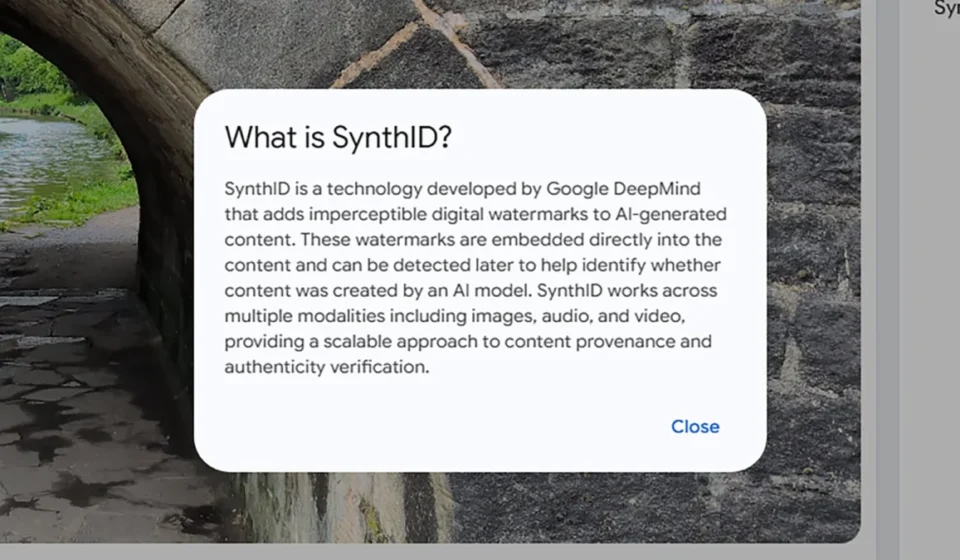
Google has launched a standalone SynthID Detector, a web-based tool designed to identify AI-generated content by detecting an invisible watermark embedded in images, videos, and audio files produced by certain AI models. This development marks a significant step in Google’s ongoing efforts to address the growing proliferation of synthetic media and its potential to spread misinformation. The tool, available to the public, aims to provide a layer of transparency in an increasingly complex digital landscape where distinguishing between real and AI-generated content is becoming a significant challenge.
The SynthID system, initially integrated into Google’s AI models like Gemini and previously accessible through specific interfaces, now offers a more direct and user-friendly way for anyone to check the provenance of digital media. This move comes at a critical juncture, as AI-generated imagery is becoming ubiquitous, appearing in everything from marketing materials and educational content to personal communications. The ease with which AI can now produce photorealistic images and lifelike videos raises concerns about its potential misuse for creating deepfakes, spreading propaganda, and eroding public trust in visual information.
The Growing Challenge of AI-Generated Content
The rapid advancement of artificial intelligence has democratized the creation of sophisticated digital content. Tools like DALL-E, Midjourney, and Stable Diffusion have made it possible for individuals with little to no technical expertise to generate complex and often indistinguishable images from simple text prompts. Similarly, AI has made significant strides in generating realistic video and audio content, further blurring the lines between authentic and synthetic media.

This accessibility, while fostering creativity and innovation, also presents substantial societal risks. The potential for AI to be used to create convincing fake news, impersonate individuals, or manipulate public opinion is a growing concern for governments, tech companies, and the public alike. The ability to easily create and disseminate such content at scale necessitates the development of robust detection mechanisms to maintain the integrity of information.
How Google’s SynthID Detector Works
SynthID is Google’s proprietary watermarking technology designed to embed an imperceptible digital signal into AI-generated content. This watermark is woven directly into the fabric of the media itself – into the pixels of images and videos, and the frequency components of audio. Unlike visible watermarks or metadata tags, which can be easily removed or altered, the SynthID watermark is intended to be robust against common digital manipulations, such as resizing, cropping, and filtering.
The newly launched web portal allows users to upload various file formats, including common image types (JPG, PNG, BMP, WEBP, AVIF, HEIC, HEIF, TIFF, TIF, GIF), video formats (MP4, MOV, WEBM), and audio formats (WAV, MP3, OGG, FLAC, AAC, M4A). Once uploaded, the tool analyzes the file for the presence of the SynthID watermark.
According to Google, the detection tool is not infallible. It acknowledges that "heavy modifications" and multiple transformations applied to a piece of media can degrade the watermark, potentially making it undetectable. The company advises using the highest quality files possible for more reliable detection, suggesting that a greater amount of data can improve the accuracy of the analysis. The SynthID watermarks themselves are designed to be imperceptible to the human eye and ear, ensuring that their presence does not compromise the aesthetic or auditory quality of the generated content.

Putting SynthID Detector to the Test: Initial Findings
Early testing of the SynthID Detector reveals a tool that largely performs as advertised, though with certain limitations. When presented with images directly generated by Google’s Gemini and OpenAI’s ChatGPT, the detector reliably identified them as AI-generated and, in some cases, even indicated the specific AI tool used. This initial success suggests the technology is effective at identifying content from prominent AI models that have adopted SynthID or similar watermarking protocols.
The detector also correctly identified a genuine photograph as AI-free, albeit with a nuanced response. It stated that it was "unlikely" the media was AI-generated, clarifying that its primary function is to detect the SynthID watermark, rather than a broader spectrum of AI generation tells. This distinction is crucial: the tool specifically looks for Google’s watermark, not for general indicators of AI creation.
Crucially, the detector demonstrated resilience against common editing techniques. Screenshots of AI-generated images, applying filters such as an "oil painting" effect, adding slight blurs, and adjusting color and contrast, were still accurately identified. Even when AI-generated images from different sources were cropped and combined, the SynthID watermark remained detectable. This robustness suggests that the watermark is indeed embedded deeply within the media’s data.
Limitations and Challenges
Despite its promising capabilities, the SynthID Detector is not an absolute solution to the AI detection problem. The testing revealed scenarios where the detector could be circumvented. Heavily pixelated images, for instance, rendered the watermark undetectable. Similarly, when an AI-generated image was heavily composited with real media, with the AI content forming only a smaller portion of the overall file, the detector sometimes faltered.

One notable instance involved a composite image where 75% was real and 25% was AI-generated. In this case, the detector failed to identify the AI component. Interestingly, in a subsequent test where ChatGPT was used to add an extra person to an otherwise genuine group photo, the tool did detect SynthID, even though the proportion of AI-generated content was less than in the previous failed attempt. This suggests that the detector’s performance can be variable, particularly with mixed-media files, and may depend on the specific nature and placement of the AI-generated elements.
Users are also subject to a daily quota limit, reportedly around 10 files per category (images, videos, audio) per day. Exceeding this limit requires a 24-hour waiting period before further checks can be performed. This limitation, while understandable for managing server load, might hinder extensive or rapid analysis for users needing to check a large volume of content.
Broader Implications and the Future of AI Detection
The introduction of the SynthID Detector by Google signifies a proactive approach by major technology companies to equip the public with tools to navigate the evolving landscape of digital media. This development is part of a larger, ongoing effort within the AI industry to establish standards and safeguards for the responsible development and deployment of generative AI.
The existence of such detectors raises several implications:

- Enhanced Transparency: For consumers and professionals alike, the tool offers a greater degree of transparency regarding the origin of digital content. This can be invaluable for journalists, researchers, educators, and anyone concerned with verifying information.
- Deterrent Effect: The knowledge that AI-generated content can be detected may act as a deterrent against malicious actors attempting to pass off synthetic media as authentic.
- Ongoing Arms Race: The development of detection tools inevitably leads to a continuous "arms race" between AI generation capabilities and AI detection technologies. As detection methods improve, so too will methods to circumvent them, necessitating ongoing innovation from both sides.
- Standardization Efforts: The SynthID watermark is a standard supported by various AI companies, including Nvidia, OpenAI, and Kakao. This collaborative approach, while not universal, is crucial for developing interoperable solutions. OpenAI, for instance, has its own detection tool, indicating a broader industry trend toward addressing the provenance of AI content.
- Legal and Ethical Frameworks: As AI-generated content becomes more sophisticated, there will be an increasing need for robust legal and ethical frameworks to govern its creation, dissemination, and use. The ability to identify AI content is a foundational element in developing such frameworks.
Google’s SynthID Detector is a significant, albeit not perfect, tool in the fight against AI-generated misinformation. Its availability empowers users with a tangible way to investigate the authenticity of digital media. While the technology continues to evolve, and users find new ways to test its limits, the introduction of such tools marks a critical step towards fostering a more trustworthy and informed digital environment. The ongoing commitment from tech giants to develop and deploy these technologies will be paramount in shaping the future of digital content verification.