
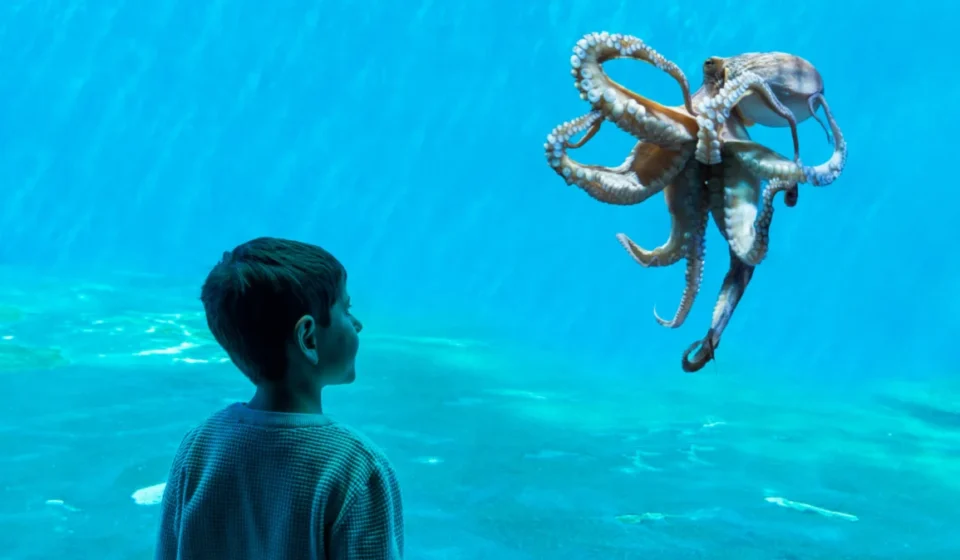
The Scientific and Ethical Debate Over Animal Sentience Measuring Consciousness in Invertebrates and the Implications for Global Welfare Policy

The question of which animals possess consciousness has transitioned from the realm of abstract philosophy to a critical focal point of international law and scientific rigor. As governments worldwide begin to codify animal welfare based on the "sentience" of various species, a profound debate has emerged among philosophers, neuroscientists, and policymakers regarding where the line of consciousness should be drawn. This debate, centered on creatures as diverse as octopuses, lobsters, and even insects, carries significant implications for the food industry, scientific research, and the ethical framework of modern society.
At the heart of this discussion is the distinction between "consciousness"—a broad term often implying self-awareness—and "sentience," which is more narrowly defined as the capacity to experience feelings, particularly pleasure and pain. While most researchers agree that vertebrates like mammals and birds are sentient, the inclusion of invertebrates like cephalopod mollusks (octopuses and squids) and decapod crustaceans (crabs and lobsters) remains a subject of intense scientific scrutiny.
The Legislative Shift: The U.K. Animal Welfare (Sentience) Act 2022
The contemporary debate reached a fever pitch following the passage of the Animal Welfare (Sentience) Act 2022 in the United Kingdom. This landmark legislation formally recognized cephalopods and decapods as sentient beings. The move was prompted by a comprehensive review conducted by the London School of Economics (LSE), led by Dr. Jonathan Birch, which analyzed over 300 scientific studies.
The LSE report utilized eight specific criteria to evaluate sentience, including the possession of nociceptors (pain receptors), the presence of integrative brain regions, the effectiveness of anesthetics or analgesics on the animal’s behavior, and complex motivational trade-offs. For example, researchers observed that hermit crabs would endure higher levels of electric shock to remain in a "preferred" shell versus a less desirable one, suggesting a conscious weighing of pain against value.
The recognition of these animals as sentient has led to immediate calls for policy changes, most notably the banning of practices such as boiling lobsters alive, dismembering live crabs, and the proposed expansion of industrial octopus farming.
Behavioral Indicators vs. Neurological Architecture
Despite legislative progress, the scientific community remains divided on the methodology used to prove sentience. The divide essentially splits into two camps: those who favor behavioral "inference to the best explanation" and those who demand specific neurological architecture as a prerequisite for consciousness.
The Behavioral Approach: Inference to the Best Explanation
Heather Browning, a philosopher at the University of Southampton and a former zookeeper, represents the view that complex behavior is a reliable proxy for internal experience. Browning argues that when an animal displays sophisticated responses—such as learning from a single negative experience, seeking out painkillers when injured, or showing motivational trade-offs—the most plausible explanation is that the animal is "feeling" something.
"We don’t usually think that we have any strong moral duties towards rocks or rivers," Browning notes, "but we do feel like we have moral duties towards conscious creatures because they are able to experience these pleasures and sufferings." From this perspective, the accumulation of behavioral markers creates a "probability-raising" case. If an octopus checks seven out of eight boxes for sentience, the burden of proof shifts to those claiming it is a mere automaton.
The Neurological Challenge: The Cortical Requirement
Conversely, some researchers argue that behavioral studies are "stacked" in favor of over-attribution. Deb Brown, a philosopher and director of the Critical Thinking Project at the University of Queensland, works alongside neuroscientist Brian Key to argue that behavior can be deceptive. They emphasize the distinction between "nociception"—the unconscious, reflexive response to harmful stimuli—and "pain," which is the conscious experience of that stimuli.
Brown and Key posit that pain requires a specific type of neural complexity, specifically a cortex or a functionally equivalent structure capable of "higher-order" processing. In humans, the cortex is the seat of sensory experience. Brown points to historical data from World War I soldiers; those with specific cortical lesions lost the ability to "feel" pain in corresponding body parts, even if their lower-level reflexes remained intact.
"Once you get to phylogenetically distant animals like fish, amphibians, and invertebrates, we just don’t find evidence of the sufficiently complex neural circuitry that’s required to sustain pain in us and other mammals," Brown explains. From this viewpoint, an octopus—despite having 500 million neurons—distributes much of its nervous system in its arms, focusing on coordination and vision rather than the centralized "executive" processing required for a subjective "I" to experience pain.
A Chronology of Animal Consciousness in Science and Law
The evolution of this debate follows a clear historical timeline, moving from total denial of animal feeling to a cautious, evidence-based inclusion.
- 17th Century: René Descartes famously argued that animals were "automata" or machines without souls or feelings, claiming their cries of pain were merely the "creaking of a machine."
- 19th Century: Charles Darwin’s The Expression of the Emotions in Man and Animals (1872) suggested a biological continuity between human and animal minds, laying the groundwork for evolutionary psychology.
- 1960s-70s: The rise of the animal rights movement, spurred by Peter Singer’s Animal Liberation, focused primarily on vertebrates (mammals and birds).
- 2012: The Cambridge Declaration on Consciousness is signed by a group of prominent neuroscientists, stating that "non-human animals, including all mammals and birds, and many other creatures, including octopuses," possess the neurological substrates that generate consciousness.
- 2018: Switzerland becomes the first country to ban the boiling of live lobsters, requiring they be stunned before slaughter.
- 2022: The U.K. officially includes cephalopods and decapod crustaceans in its sentience laws.
Supporting Data: The Scale of the Impact
The debate over sentience is not merely academic; it affects billions of lives and a massive global economy. According to data from the Food and Agriculture Organization (FAO) of the United Nations:
- Cephalopod Harvest: Humans consume approximately 3.5 to 4 million metric tons of cephalopods annually.
- Crustacean Farming: Decapod crustaceans, including shrimp, crabs, and lobsters, represent a market worth over $60 billion globally.
- The Octopus Farm Debate: Plans for the world’s first industrial octopus farm in the Canary Islands (Spain) aim to produce 3,000 tons of meat per year. Critics, citing sentience research, argue that the solitary and highly intelligent nature of octopuses makes intensive farming inherently cruel.
Broader Implications and Ethical Precaution
The disagreement between behavioral and neurological experts raises a fundamental question: What is the "cost of error"?
If society assumes an animal is sentient and it is not, the cost is primarily economic—higher food prices due to humane slaughter requirements or the loss of certain farming industries. However, if society assumes an animal is not sentient and it actually is, the cost is a staggering amount of undetected suffering.
This has led many to advocate for the "Precautionary Principle." This principle suggests that when there is a plausible scientific basis for sentience, even if not 100% proven, policy should err on the side of protection. Heather Browning argues that we don’t need absolute certainty to act: "When we think about the level of potential harms and benefits… that’s going to play into where we set the evidential bar."
Interestingly, even skeptics like Deb Brown often support welfare protections for non-sentient reasons. Brown notes that even if she is unconvinced of a fish’s or crab’s capacity for pain, she supports their protection for environmental, ecological, and conservationist reasons. This suggests a potential "common ground" where policy can advance even while the scientific debate over the "inner world" of the octopus remains unsettled.
The Future of Neuro-Philosophy
As imaging technology improves and our understanding of non-mammalian brains deepens, the "cortical requirement" may be challenged by the discovery of "functional analogs"—structures in invertebrate brains that do the same work as the human cortex but look entirely different.
The study of animal consciousness forces a confrontation with human exceptionalism. If an insect or a crab can feel, the human "monopoly" on experience dissolves, necessitating a radical rethink of how we interact with the natural world. For now, the consensus is shifting toward a more inclusive definition of life, acknowledging that while we may never know "what it is like to be a bat" or an octopus, the evidence increasingly suggests that there is, indeed, "someone" home.