
Tiny Swimmers and Great Whorls How Brine Shrimp Are Revolutionizing Our Understanding of Fluid Turbulence and Energy Cascades

Researchers at the University of Pittsburgh have unveiled a groundbreaking discovery that challenges long-held assumptions in the field of fluid dynamics, demonstrating that the flow of energy in turbulent systems can be fundamentally altered and even reversed through minor geometric adjustments. By observing the movements of brine shrimp—the tiny crustaceans famously marketed as "Sea-Monkeys" in the mid-20th century—scientists have found that these "active matter" organisms can dictate the direction of energy cascades in two-dimensional systems. This revelation, led by engineer Lei Fang and his team, suggests that the way energy moves from large-scale currents to microscopic eddies is not as rigid as previously believed, opening new doors for applications ranging from environmental protection to advanced pharmaceutical manufacturing.
The Cultural and Biological Context of the Brine Shrimp
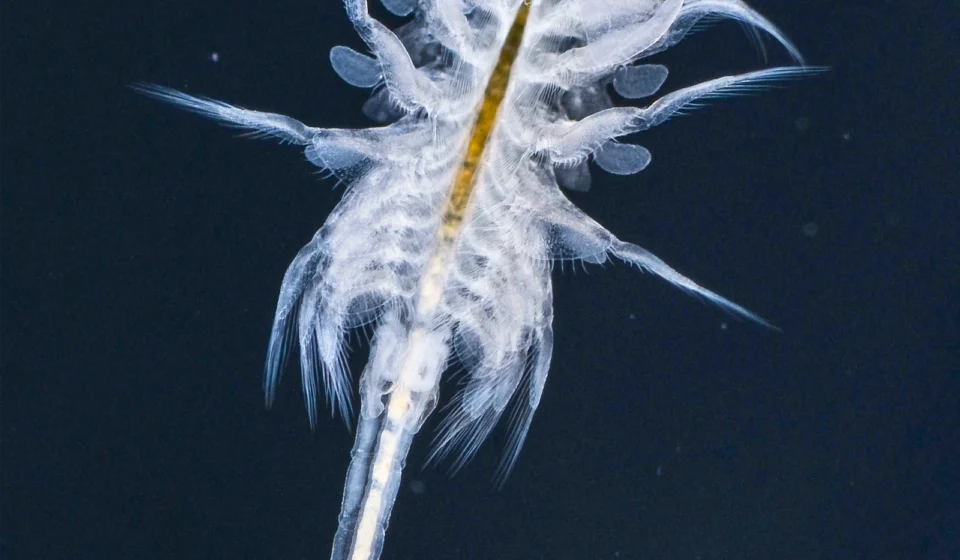
To understand the significance of this discovery, one must first look at the humble subject of the study. In the 1960s and 1970s, the Transcience Corporation of New York City captivated the imaginations of children across the United States with colorful comic book advertisements. These ads promised a "bowlfull of happiness" delivered via mail for just a few dollars. What arrived was a small paper envelope containing freeze-dried eggs of Artemia salina, or brine shrimp. When dropped into salt water, these eggs hatched into tiny, translucent invertebrates roughly one centimeter in length.
Biologically, brine shrimp are remarkable survivors, capable of entering a state of cryptobiosis to endure extreme conditions. In the water, they swim upside down, using a metachronal rhythm to beat their eleven pairs of appendages. This constant, frantic motion does more than just propel the shrimp; it injects kinetic energy into the surrounding fluid. In the language of modern physics, brine shrimp are classified as "active matter"—entities that convert internal or ambient energy into systematic motion, thereby influencing their environment in ways that passive particles cannot.
A Century of Turbulence Theory: From Richardson to Kolmogorov
The study of turbulence—the chaotic, unpredictable movement of fluids—has been a cornerstone of physics for over a hundred years. Turbulence is ubiquitous, appearing in the wake of a jet engine, the swirling cream in a coffee cup, and the massive plasma storms on the surface of the sun. Despite its prevalence, it remains one of the most difficult physical phenomena to model mathematically.
The foundation of modern turbulence theory was laid in 1922 by the English mathematician Lewis Fry Richardson. Richardson proposed the concept of an "energy cascade," where kinetic energy enters a system at a large scale (such as a massive ocean current) and is passed down to smaller and smaller scales through the formation of "whorls" or eddies. This process continues until the energy reaches a scale so small that molecular viscosity turns the kinetic energy into heat. Richardson famously summarized this in a poem: "Big whorls have little whorls / Which feed on their velocity, / And little whorls have lesser whorls / And so on to viscosity."
In 1941, Soviet mathematician Andrey Kolmogorov refined this theory, providing a rigorous mathematical framework known as K41 theory. Kolmogorov’s work focused primarily on three-dimensional systems, establishing that energy flows in a "forward cascade" from large to small scales. This remained the standard understanding of fluid dynamics for decades.
The Two-Dimensional Twist and the Inverse Cascade
The narrative shifted in the late 1960s when physicists Robert Kraichnan and George Batchelor began investigating turbulence in two-dimensional systems. While a 3D system allows energy to dissipate downward into smaller scales, a 2D system—where the fluid’s thickness is negligible compared to its width and length—behaves differently.
Kraichnan and Batchelor discovered the "inverse cascade." In 2D turbulence, energy does not break down into smaller eddies; instead, smaller vortices tend to merge and feed into larger ones. A prime example of this is Jupiter’s Great Red Spot. This massive, centuries-old storm is sustained by the energy of smaller vortices along its perimeter that merge into the central maelstrom.
Until the recent Pittsburgh study, the direction of these cascades—forward in 3D and inverse in 2D—was largely considered a fixed property of the system’s dimensionality. The work of Lei Fang and Xinyu Si has now proven that this "fixed" property is actually malleable.
The University of Pittsburgh Experiment: Manipulating the Cascade
The research began around 2021 in Lei Fang’s lab, which specializes in the study of active matter. Xinyu Si, then a student in the lab, was investigating how biological swimmers contribute to the mixing of fluids in natural environments. The team hypothesized that the collective movement of billions of tiny organisms, such as brine shrimp or zooplankton, could play a significant role in oceanographic mixing—a process often referred to as "biogenic mixing."
To test their theories, the researchers created a controlled two-dimensional environment. They introduced brine shrimp into a thin layer of salt water and observed the resulting turbulence. The shrimp, acting as "energy injectors," created a field of small-scale eddies. Under normal 2D conditions, these eddies would be expected to merge, moving energy from the small scale of the shrimp to a larger scale.
However, the team introduced a crucial variable: a small obstacle placed within the flow. By adjusting the geometry and the angle of this obstacle, the researchers discovered they could disrupt the natural inverse cascade.
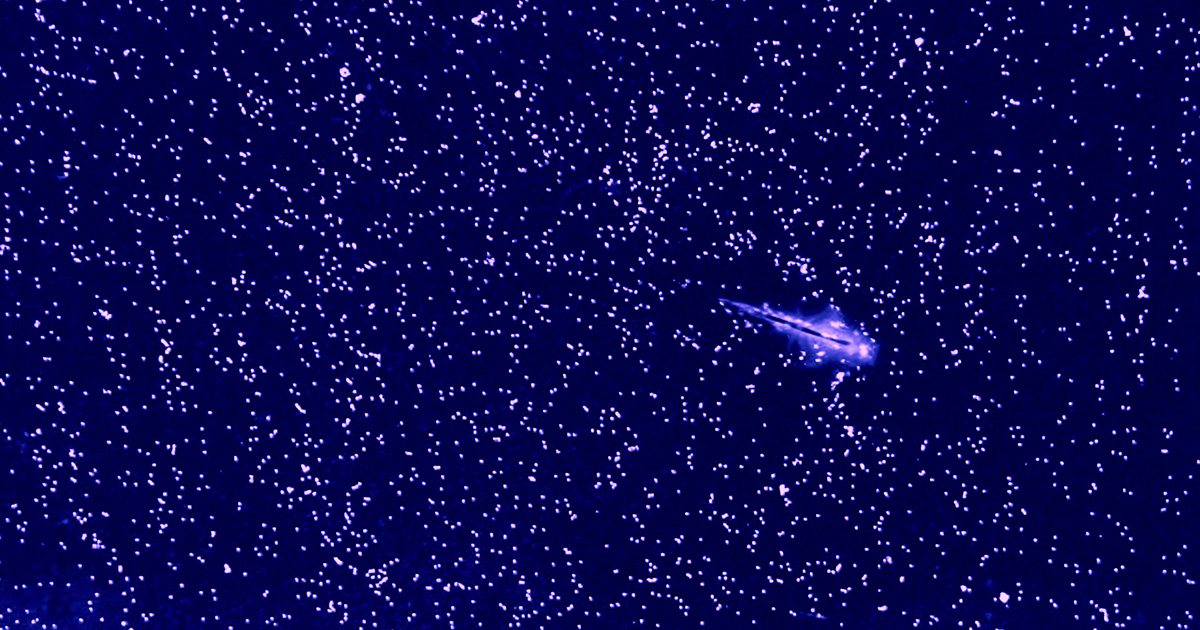
"The geometry matters," Lei Fang noted, explaining that with the right alignment, they could force the energy to flow in the opposite direction. By disrupting the way vortices interacted with one another, the team successfully demonstrated that a 2D system, which "should" have an inverse cascade, could be manipulated to exhibit a forward cascade. This discovery suggests that the direction of energy flow is not solely a function of dimensions, but also of the physical boundaries and obstacles within the system.
Expert Validation and Mathematical Significance
The scientific community has responded to the findings with significant interest. Gregory Falkovich, a renowned physicist at the Weizmann Institute of Science and a pioneer in 2D turbulence research, praised the study as "beautiful and skillful experimental work."
According to Falkovich, the discovery capitalizes on a fundamental mathematical description of how forces interact. In fluid dynamics, the Navier-Stokes equations govern the motion of fluid substances. The Pittsburgh study highlights how the presence of a boundary or obstacle changes the "symmetry" of the system, allowing for the reversal of energy flux.
Francesca De Serio, a civil engineer and hydrodynamics expert at the Polytechnic University of Bari, emphasized the universality of these findings. She noted that because turbulence is found everywhere—from the way we wash our hands to the way waves break on a beach—understanding how to control it could have massive implications across various scientific disciplines.
Broader Implications: From Climate Change to Drug Design
The ability to direct the flow of energy in a turbulent system is not merely a matter of theoretical physics; it has practical applications that could address some of the world’s most pressing challenges.
1. Environmental and Climate Science
One of the most significant implications lies in our understanding of the oceans. Ocean mixing is a critical component of the global climate system, as it regulates how heat and carbon dioxide are absorbed and distributed throughout the depths. If the collective movement of marine organisms can alter energy cascades, climate models may need to be updated to include biogenic mixing. Furthermore, understanding how obstacles affect energy flow could help in predicting the movement of plastic pollution or oil spills, allowing for more effective cleanup strategies.
2. Industrial Mixing and Pollution Control
In industrial settings, mixing chemicals efficiently is vital for safety and productivity. The discovery that energy cascades can be reversed suggests that engineers could design reactors with specific geometric "obstacles" to ensure that energy is distributed exactly where it is needed. This could lead to more efficient waste treatment plants and better methods for neutralizing pollutants in water supplies.
3. Pharmaceutical Innovation and Drug Design
At the microscopic level, the principles of fluid dynamics are essential for "lab-on-a-chip" technologies and drug delivery systems. When designing complex pharmaceuticals, scientists must often mix tiny amounts of fluids with extreme precision. The insights gained from the brine shrimp study could lead to the development of micro-fluidic devices that use specific geometries to control the mixing of delicate biological compounds, potentially speeding up the development of new vaccines and medications.
4. Aerodynamics and Engineering
While the study focused on 2D systems, the researchers believe the findings could eventually extend to 3D environments. This could influence the design of aircraft wings or automotive bodies, where controlling turbulence is key to reducing drag and increasing fuel efficiency.
Chronology of Turbulence Research and the Pittsburgh Discovery
The journey to this discovery can be traced through a clear timeline of scientific evolution:
- 1922: Lewis Fry Richardson publishes his theory of the energy cascade in 3D systems.
- 1941: Andrey Kolmogorov provides the mathematical foundation (K41) for forward energy cascades.
- 1967-1968: Robert Kraichnan and George Batchelor identify the "inverse cascade" in 2D systems.
- 1960s-1970s: Brine shrimp become a household name as "Sea-Monkeys," though their scientific potential remains largely untapped.
- 2021: Xinyu Si and Lei Fang begin experiments at the University of Pittsburgh focusing on "active matter" and biogenic mixing.
- 2024: The team publishes their findings, demonstrating that energy flow in 2D turbulence can be reversed via geometric manipulation.
Conclusion: The Power of the Humble Shrimp
The research conducted at the University of Pittsburgh serves as a powerful reminder that profound scientific truths can be found in the most unlikely of places. The brine shrimp, once relegated to the back pages of comic books as a novelty toy, has provided the key to unlocking a new understanding of one of the most complex phenomena in physics.
As scientists continue to explore the "cascade of chaos" that defines our physical world, the ability to steer the flow of energy offers a new level of control over the natural and engineered environment. Whether it is improving the accuracy of weather forecasts or refining the way we manufacture life-saving drugs, the "bowlfull of happiness" promised decades ago has finally delivered something far more valuable: a new frontier in the science of motion.