
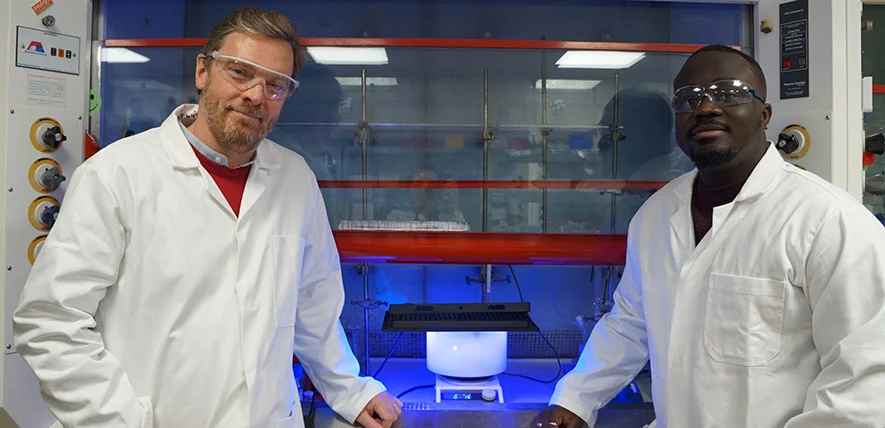
Cambridge Researchers Pioneer Solar Reactor Transforming Hard-to-Recycle Plastics and Spent Battery Acid into Clean Hydrogen and Valuable Chemicals

A groundbreaking innovation from the University of Cambridge promises a dual solution to two pressing environmental challenges: the global scourge of plastic waste and the disposal of hazardous acid from spent car batteries. Researchers have developed a novel solar-powered reactor capable of breaking down notoriously difficult-to-recycle plastic forms, including ubiquitous drinks bottles, resilient nylon textiles, and pervasive polyurethane foams. This revolutionary system leverages acid recovered from old car batteries, not only neutralizing a waste stream but also converting it into clean hydrogen fuel and a suite of valuable industrial chemicals. Published in the esteemed journal Joule, this method presents a potentially cheaper, more sustainable alternative to existing chemical-based recycling paradigms, establishing a compelling model where one waste stream ingeniously addresses another.
Addressing the Global Plastic Predicament
The scale of global plastic production is staggering, exceeding 400 million tonnes annually. Despite growing environmental awareness and concerted efforts, a dismal 18% of this colossal output is effectively recycled. The overwhelming majority – 82% – is either incinerated, relegated to landfills, or, more alarmingly, permeates natural ecosystems, contributing to widespread pollution and microplastic contamination. This unchecked accumulation of plastic waste poses severe threats to biodiversity, human health, and climate stability, with incineration releasing greenhouse gases and landfills consuming ever-scarcer land resources. The Cambridge team’s pioneering method, termed solar-powered acid photoreforming, offers a beacon of hope in confronting this escalating global mountain of plastic waste, providing a pathway to valorize materials previously deemed intractable.
The Technological Breakthrough: Solar-Powered Acid Photoreforming
At the heart of this innovation lies an engineered photocatalyst, a material designed to harness solar energy to drive chemical reactions. What sets this particular photocatalyst apart is its extraordinary robustness, capable of withstanding the highly corrosive effects of concentrated acid – a condition previously thought to be incompatible with such solar-driven systems. This resilience is critical, as the process makes productive use of the sulfuric acid found within spent car batteries, which is typically neutralized at considerable environmental and financial cost before disposal.
Professor Erwin Reisner, from Cambridge’s Yusuf Hamied Department of Chemistry, who led the research, recounted the serendipitous nature of the discovery. "The discovery was almost accidental," Professor Reisner stated. "We used to think acid was completely off limits in these solar-powered systems, because it would simply dissolve everything. But our catalyst developed didn’t – and suddenly a whole new world of reactions opened up." This "accidental" finding represents a fundamental shift in understanding the boundaries of photocatalytic chemistry, opening doors to new reaction pathways and material applications.
Kay Kwarteng, a PhD candidate in Professor Reisner’s research group and the lead author responsible for developing the groundbreaking photocatalyst, further elaborated on the significance. "Acids have long been used to break plastics apart, but we never had a cheap and scalable photocatalyst that could withstand them," Kwarteng explained. "Once we solved that problem, the advantages of this type of system became obvious." The ability to combine acid-catalyzed depolymerization with solar-driven photoreforming marks a significant leap forward in sustainable materials science.
The methodology involves a two-stage process. First, waste plastics are treated with the recovered car battery acid. This acidic environment facilitates the depolymerization of long polymer chains, effectively breaking them down into their fundamental chemical building blocks, such as ethylene glycol. In the second stage, the specially engineered photocatalyst, when exposed to sunlight, then converts these chemical intermediates into valuable end products: clean hydrogen gas and acetic acid, the primary component of vinegar. This integrated approach not only tackles plastic waste but simultaneously generates high-demand commodities, embodying the principles of a circular economy.
Performance and Versatility: Beyond Conventional Recycling
Laboratory tests have demonstrated the reactor’s impressive efficacy. The system consistently generated high hydrogen yields and produced acetic acid with remarkable selectivity, indicating an efficient and controlled chemical transformation. Furthermore, a crucial indicator of its potential for industrial application is its operational stability: the reactor ran for more than 260 hours without any discernible loss in performance. This prolonged stability under highly corrosive conditions is a testament to the robustness of the photocatalyst and the overall system design, addressing a key challenge in chemical recycling technologies.
A significant advantage of this approach lies in its versatility. Unlike many existing upcycling technologies that are often limited to specific plastic types, such as polyethylene terephthalate (PET), the Cambridge method proves effective across a broader spectrum of plastic waste. It successfully processes materials that are currently tough to recycle, including complex polymers like nylon and polyurethane. This capability offers a genuine advancement in tackling the "hard-to-recycle" fractions of plastic waste, which often end up incinerated or landfilled due to economic and technological barriers. By expanding the range of treatable plastics, this technology has the potential to significantly increase the overall plastic recycling rate.
The Untapped Resource: Repurposing Spent Car Battery Acid
The integration of spent car battery acid into the recycling process is perhaps one of the most ingenious aspects of this innovation, transforming a hazardous waste product into a valuable reagent. Lead-acid batteries, ubiquitous in vehicles worldwide, contain a significant volume of sulfuric acid, typically ranging from 20-40% by volume. With millions of these batteries reaching their end-of-life annually, their disposal presents a considerable environmental challenge. While the lead components are commonly extracted for resale and reuse, the acidic electrolyte traditionally undergoes a neutralization process, generating another waste stream that requires careful management and disposal.
Kwarteng highlighted the immense potential of this overlooked resource: "It’s an untapped resource. If we can collect the acid before it’s neutralised, we can use it again and again to break down plastics: it’s a real win-win, avoiding the environmental cost of neutralising the acid, while putting it to work generating clean hydrogen." This concept of circularity, where waste from one industry becomes a resource for another, is a cornerstone of sustainable development. By valorizing spent battery acid, the process not only reduces the environmental burden associated with its disposal but also mitigates the need for virgin acid production, further reducing the overall environmental footprint.
Economic Implications and Cost Reduction Potential
Beyond its environmental benefits, the Cambridge team projects that their method could offer an order-of-magnitude cost reduction compared with other existing photoreforming approaches. This substantial cost efficiency stems from several key factors. Firstly, the acidic environment significantly enhances hydrogen production rates, making the process more productive and economically viable. Secondly, the ability to reuse the recovered battery acid repeatedly, rather than consuming or discarding it, drastically reduces operational costs associated with reagent procurement and waste disposal.
Current chemical recycling methods often involve high energy inputs or rely on expensive, virgin chemical reagents. By harnessing readily available sunlight and a waste product, the solar-powered acid photoreforming system inherently possesses a lower operational cost profile. This economic advantage is crucial for scaling up the technology and ensuring its widespread adoption in an industry often driven by cost-effectiveness. The potential to generate high-value products like clean hydrogen – a critical component for decarbonizing various sectors – and acetic acid further enhances the economic attractiveness of this novel recycling pathway.
Challenges and the Path to Commercialization
While the fundamental chemistry has been proven sound, the researchers acknowledge that significant engineering challenges remain before the technology can be deployed at an industrial scale. Kwarteng emphasized the practical hurdles: "These acids are already handled safely in industry. The question now is engineering: how do we build reactors that can run continuously and handle real-world waste?" Designing and constructing reactors capable of withstanding prolonged exposure to highly corrosive acidic conditions, while efficiently processing diverse and often contaminated plastic waste streams, will require considerable engineering expertise and investment. Scaling up from laboratory prototypes to industrial-scale facilities demands careful consideration of materials science, process optimization, and safety protocols.
The researchers are clear that their approach is not intended to entirely replace conventional mechanical recycling, which remains a vital component of waste management. Instead, it is envisioned as a complementary solution, specifically targeting the complex and challenging fractions of plastic waste that currently lack a viable route to reuse or high-value recovery. This includes heavily contaminated plastics, mixed plastic streams, and those polymers that are too difficult or uneconomical to sort and process using existing mechanical methods. By addressing these "orphan" plastics, the solar-powered reactor can significantly enhance the overall efficiency and reach of global recycling efforts.
Professor Reisner concluded with an optimistic outlook: "We’re not promising to fix the global plastics problem. But this shows how waste can become a resource. The fact we can create value from plastic waste using sunlight and discarded battery acid makes this a really promising process." This perspective underscores the broader implications of the research: shifting societal perceptions of waste from a burden to a valuable feedstock, thereby fostering a more resource-efficient and sustainable future.
Broader Impact and Future Outlook
The potential broader impact of this technology is multifaceted. Environmentally, it offers a tangible pathway to reduce plastic pollution in landfills and oceans, mitigate greenhouse gas emissions from incineration, and prevent the hazardous disposal of battery acid. Economically, it promises to create new value chains for waste materials, generate high-demand industrial chemicals and clean energy, and potentially foster new green industries. Societally, it contributes to the development of a more robust circular economy, reducing reliance on virgin fossil resources for both plastic production and energy generation.
The team plans to accelerate the commercialization of this promising process, receiving support from Cambridge Enterprise, the University’s dedicated innovation arm, and a UKRI Impact Acceleration Account. This institutional backing, coupled with funding from prestigious organizations such as the Cambridge Trust, the Royal Academy of Engineering, the Leverhulme Trust, the Isaac Newton Trust, and the Engineering and Physical Sciences Research Council (EPSRC) part of UK Research and Innovation (UKRI), underscores the confidence in the technology’s transformative potential. Professor Erwin Reisner is a Fellow of St John’s College, Cambridge, and Kay Kwarteng is a Member of Churchill College, Cambridge, highlighting the deep academic roots and institutional support for this cutting-edge research.
As the world grapples with the escalating environmental crisis, innovations like the solar-powered acid photoreforming reactor offer a glimpse into a future where waste is not merely managed but actively transformed into valuable resources. This Cambridge breakthrough represents a significant step towards a more sustainable and resource-efficient global economy, proving that creative scientific inquiry can indeed turn environmental challenges into opportunities for progress.
Reference:
Papa K. Kwarteng et al. ‘Solar Reforming of Plastics using Acid-catalyzed Depolymerization.’ Joule (2026). DOI: 10.1016/j.joule.2026.102347