
Exploring Contemporary Research Frontiers in Migration Security Theology and Cultural Identity

The intersection of academic inquiry and real-world crisis has never been more critical than in the current global climate, where issues of displacement, technological governance, moral frameworks, and national identity are undergoing rapid transformation. Recent studies across several disciplines—ranging from sociology and criminology to theology and linguistics—are providing new insights into how societies manage these complex challenges. From the shores of the Republic of Cyprus to the favelas of Rio de Janeiro, and from the hallowed halls of theological discourse to the historical archives of early modern Europe, researchers are identifying the mechanisms that either facilitate or hinder human progress and social cohesion.
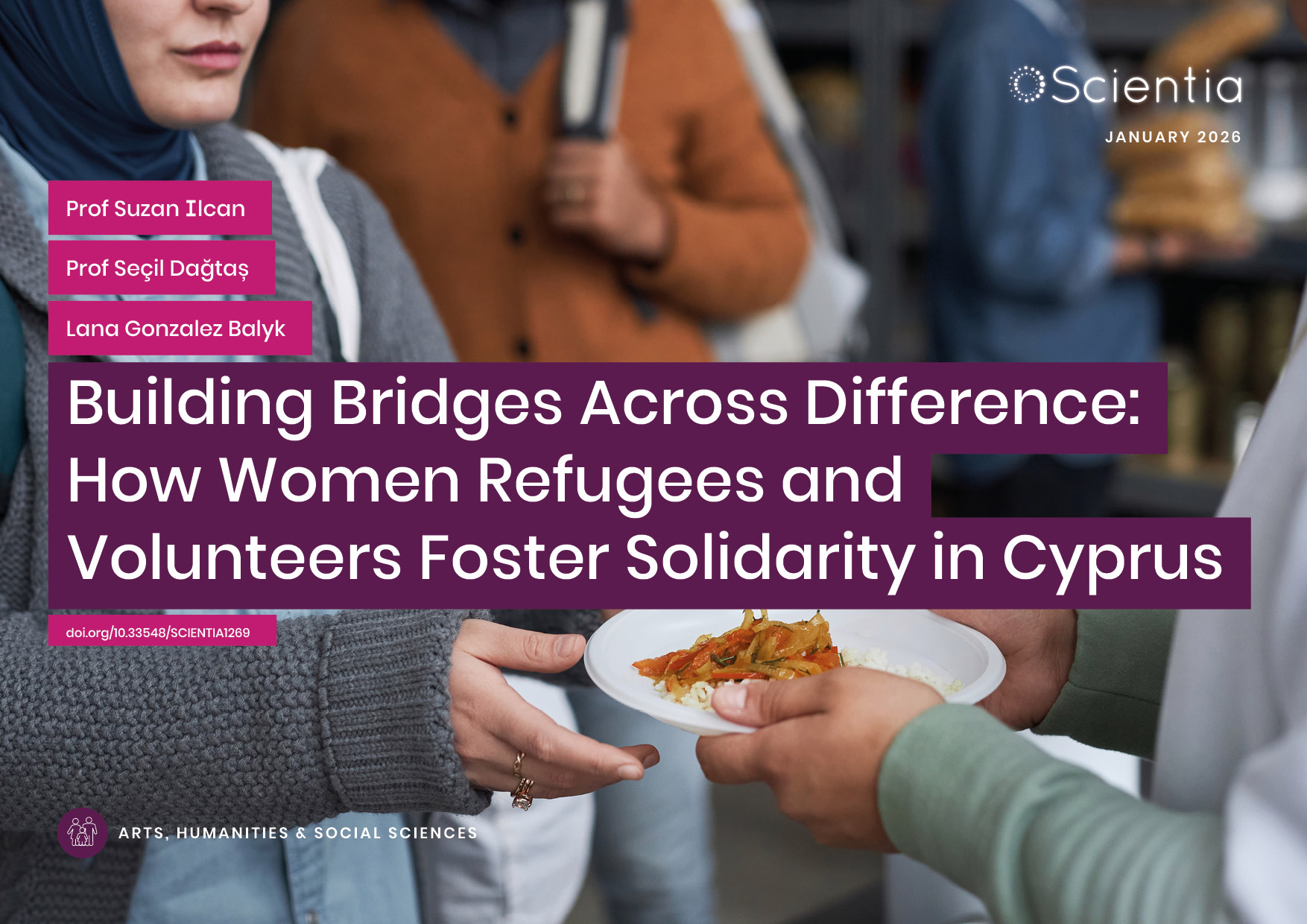
Grassroots Solidarity and the Migration Crisis in Cyprus
The Republic of Cyprus (RoC) has emerged as a focal point in the European migration debate, serving as a primary entry point for asylum seekers fleeing conflict and economic instability in the Middle East and Africa. According to data from the European Union, the RoC has consistently reported the highest number of asylum applications per capita among all EU member states. In 2021, this pressure reached a peak, with the government struggling to provide adequate housing, legal aid, and social services to the burgeoning refugee population.
Dr. Suzan Ilcan’s research into the city of Paphos highlights a critical shift in how these challenges are being met. As state-led initiatives falter under bureaucratic weight and political division, grassroots movements have stepped in to fill the void. These initiatives are characterized by "transversal solidarity," where women refugees and local volunteers collaborate to build support networks that transcend cultural and linguistic barriers.
The Context of Division and Displacement
The response to refugees in Cyprus is deeply colored by the island’s own history. Following the 1974 division, Cyprus experienced massive internal displacement, leaving a legacy of trauma and a heightened sensitivity to the plight of the dispossessed. However, the modern influx of refugees has also triggered xenophobic rhetoric and social tension. Dr. Ilcan’s work suggests that the spaces created by women in Paphos act as counter-narratives to this hostility. By focusing on mutual aid—such as shared child-rearing, language exchanges, and joint advocacy for legal rights—these groups are redefining citizenship as an active, participatory process rather than a mere legal status.

Technological Intervention in High-Conflict Urban Zones
While Cyprus grapples with integration, the city of Rio de Janeiro, Brazil, faces a crisis of security and police accountability. In 2016, a landmark experiment was conducted in Rocinha, the city’s largest favela, to determine whether body-worn cameras (BWC) could mitigate the chronic violence that defines the relationship between the state and its marginalized citizens.
The research team, led by Beatriz Magaloni, Vanessa Melo, and Gustavo Robles of Stanford University, entered an environment where police-community relations were at a nadir. Rio’s police force has historically been cited as one of the deadliest in the world; in the years leading up to the 2016 Olympics, the city saw a significant spike in "acts of resistance" resulting in civilian deaths.
The Paradox of Surveillance
The findings of the Rocinha study reveal a complex duality in technological solutions. On one hand, the presence of cameras provided a layer of transparency that had previously been non-existent, offering a digital record that could, in theory, protect both officers and civilians. On the other hand, the experiment met with significant internal resistance. The warning from a police unit commander—that cameras would prevent officers from "doing their job"—encapsulates the tension between traditional, aggressive policing tactics and modern standards of accountability.
Data from the study suggests that while BWCs can reduce the use of force, their effectiveness is heavily dependent on the institutional culture and the rigorousness of oversight. Without a corresponding shift in judicial and administrative consequences for misconduct, technology remains a tool rather than a solution.
The Renewal of Moral Theology in a Fragmented World
Parallel to these socio-political shifts is a profound internal debate within the Catholic Church regarding its role in the 21st century. Dr. Carolina Montero Orphanopoulos argues that contemporary moral theology has become overly preoccupied with "pelvic issues"—specifically debates surrounding sexuality and personal health—at the expense of broader existential threats.
Drawing on Pope Francis’s concept of "theology in exit," Dr. Montero Orphanopoulos proposes a framework that pivots toward the public sphere. This "New Moral Theology" is built upon three pillars: vulnerability, corporality, and recognition.
Addressing Global Crises through Ethics
The proposed shift aims to align theological discourse with the most pressing challenges of the modern era, including:
- Climate Change: Moving from individual morality to a collective "ecological conversion."
- Artificial Intelligence: Examining the ethical implications of dehumanized decision-making and the preservation of human dignity.
- Political Fragmentation: Addressing the rise of populism and the erosion of social solidarity.
By grounding ethics in the shared experience of human vulnerability, this approach seeks to move the Church away from combative internal debates and toward a constructive engagement with a world in crisis.
Language and the Construction of National Identity
The quest for identity is not a modern phenomenon; it is a process that has shaped European history for centuries. Professor Han Lamers’ research into the "Hellenising" of early modern Europe reveals how scholars used ancient Greek to bolster the status of their native tongues and, by extension, their national prestige.
During the 16th and 17th centuries, intellectuals in Italy, France, Germany, and the Netherlands engaged in a form of linguistic engineering. By "revealing" or inventing structural similarities between their mother tongues and ancient Greek—the language of philosophy, democracy, and high culture—these scholars sought to claim a direct lineage from the foundations of Western civilization.

The Political Utility of Linguistics
This was not merely an academic exercise. Demonstrating a "Greek" character in a language could support claims of cultural superiority over rival nations. In the Netherlands, for instance, scholars argued that the Dutch language was particularly close to Greek to support their burgeoning national identity during the struggle for independence from Spanish rule. This historical context provides a vital lens for understanding how modern national identities are still often constructed through the manipulation of history and heritage.
Data Analysis and Comparative Chronology
When examining these four areas of research together, a timeline of human response to crisis emerges.
- Early Modern Period (1500s–1700s): Intellectuals use historical and linguistic tools to build the foundations of the nation-state (Lamers).
- Post-War Era (1974–Present): The Republic of Cyprus deals with the long-term consequences of division, which now shapes its response to the global migration crisis (Ilcan).
- The Technological Turn (2010s–Present): Cities like Rio de Janeiro attempt to use digital surveillance to reform institutional violence (Magaloni).
- The Modern Ethical Shift (Present Day): Global institutions like the Catholic Church seek to redefine their moral mandates to address the "poly-crisis" of the 21st century (Montero Orphanopoulos).
Statistical Overview of Migration and Security
The scale of the issues addressed in these studies is underscored by recent data. In the Republic of Cyprus, the 13,235 asylum applications received in 2021 represented a nearly 40% increase from previous years, placing immense strain on a country with a population of less than one million. In Brazil, despite the introduction of body cameras in various regions, police-related fatalities remained high, with over 6,000 deaths recorded nationwide in 2022, highlighting the limitations of technology without systemic legal reform.
Broader Impact and Policy Implications
The collective findings of these researchers suggest that top-down solutions—whether they are government policies on migration or technological fixes for police violence—are often insufficient on their own.
The research in Cyprus points to the necessity of fostering local, grassroots networks that can provide the "social infrastructure" for integration. For policymakers in the EU, this suggests that funding should be directed not only toward border security but also toward community-based organizations that facilitate interaction between locals and newcomers.

In the realm of security, the Rio de Janeiro case study serves as a warning for other metropolitan areas considering the implementation of BWC programs. Technology must be accompanied by a "culture of accountability." This includes independent review boards, clear protocols for when cameras must be activated, and transparent access to footage for the public and the judiciary.
Finally, the work of Dr. Montero Orphanopoulos and Professor Lamers reminds us that the stories we tell about ourselves—whether through theology or history—have tangible consequences for how we treat others. A moral framework that recognizes universal vulnerability can mitigate the "us vs. them" mentality that often fuels nationalist movements.
Conclusion
The diverse research highlighted here demonstrates that the challenges of the 21st century are deeply interconnected. Migration is not just a policy issue but a question of grassroots solidarity; security is not just a technological challenge but a matter of institutional culture; and identity is not a fixed trait but a historical construct. As these scholars continue to bridge the gap between theory and practice, their work provides a roadmap for navigating an increasingly complex global landscape. The synthesis of these findings suggests that the most effective solutions are those that combine rigorous data, ethical reflection, and a deep understanding of human history and social dynamics.