
Navigating the Shifting Tides of American Gas Prices: An Interactive Look at Regional Disparities

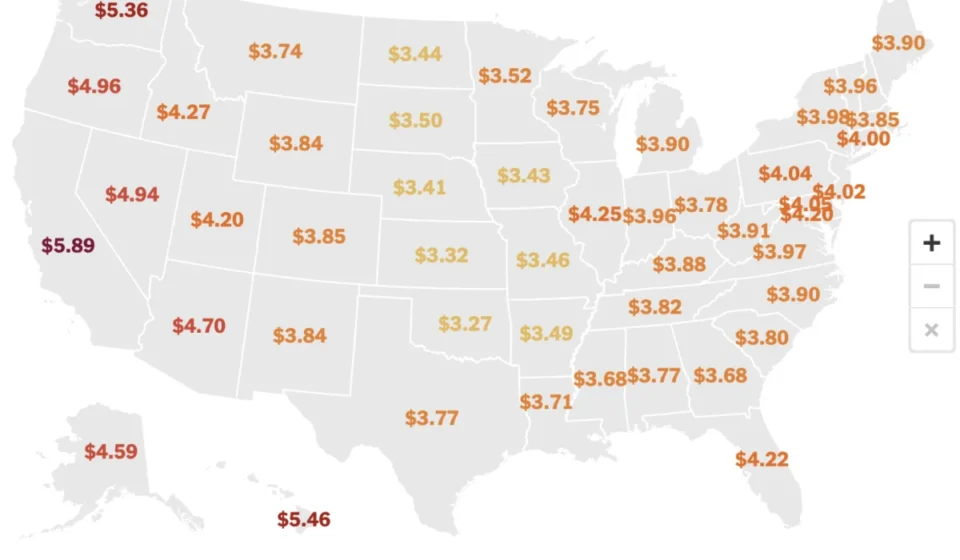
The persistent rise in gasoline prices across the United States has become a significant economic concern for consumers nationwide, with the burden disproportionately affecting certain regions. A recent interactive map released by The New York Times offers a granular, county-by-county visualization of these average prices, shedding light on the complex factors contributing to this widespread phenomenon. While the initial view presents state-level data, users can seamlessly zoom in to explore the specific cost of fuel in their local communities. This detailed approach underscores the localized nature of price fluctuations, even within states experiencing generally high averages, such as California.
The interactive map, accessible at https://www.nytimes.com/interactive/2026/business/energy-environment/gas-prices-map-iran-war-oil.html?unlocked_article_code=1.XlA.h0lR.cxbvUG6DpXaa&smid=url-share, is a powerful tool for understanding the spatial distribution of fuel costs. It allows individuals to not only see the national landscape of gas prices but also to identify the specific areas where the economic strain is most acutely felt. The visualization prompts a deeper inquiry into the underlying causes of these price variations, which extend beyond simple supply and demand dynamics.
Understanding the Drivers of Elevated Gas Prices
The current surge in gasoline prices is a multifaceted issue, influenced by a confluence of global and domestic factors. On a global scale, geopolitical tensions and their impact on oil production and supply chains play a pivotal role. The ongoing conflict in Iran, for instance, has introduced significant uncertainty into the international oil market. As a major oil-producing nation, any disruption to Iran’s production or export capabilities, or even the threat thereof, can lead to a rapid escalation in crude oil prices. Crude oil is the primary component of gasoline, and its cost directly translates to the price consumers pay at the pump. Fluctuations in the global supply of crude oil, influenced by factors such as production quotas by major oil-producing countries, the stability of oil-rich regions, and international sanctions, are therefore critical determinants of national gasoline prices.
Domestically, several factors contribute to the price at the pump. These include refining costs, distribution expenses, and federal and state taxes. Refineries, which convert crude oil into gasoline, operate with their own set of economic considerations, including the cost of their own inputs, operational efficiency, and the availability of specific crude oil grades. Furthermore, the complexity of the gasoline supply chain, involving pipelines, tankers, and trucks, introduces logistical costs that vary by region. Finally, fuel taxes, levied at both federal and state levels, represent a significant portion of the retail price of gasoline. These taxes are often used to fund infrastructure projects, but their contribution to the overall cost is undeniable.
Regional Disparities: A Closer Look at the Map’s Insights
The New York Times’ interactive map highlights striking regional differences in average gas prices. California, as noted, consistently features some of the highest prices in the nation. This is attributable to a combination of stringent environmental regulations that mandate specific, more expensive fuel blends, higher state taxes, and a complex distribution network. These factors, when combined with the global price of crude oil, create a perfect storm for elevated fuel costs for Californian consumers.
Other states and counties may experience lower prices due to a variety of reasons, including proximity to major refining centers, less burdensome state taxes, or greater competition among fuel retailers. The map allows for a direct comparison, enabling users to see how their local prices stack up against neighboring counties and states, and to observe patterns that might not be apparent from statewide averages alone. For example, a county in a major oil-producing state might still have higher prices than expected if it lacks significant refining capacity or faces transportation challenges. Conversely, a landlocked state with no oil production might enjoy relatively lower prices due to efficient pipeline networks and robust competition.
Historical Context and Precedent
The current price surge is not an isolated event. The history of gasoline prices in the United States is marked by periods of volatility, often linked to geopolitical crises, natural disasters affecting production or refining, and shifts in global energy policy. For instance, the oil crises of the 1970s, triggered by OPEC embargoes, led to unprecedented price hikes and long lines at gas stations, fundamentally altering public perception of energy security and consumption. More recently, events like Hurricane Katrina in 2005 disrupted Gulf Coast refining operations, leading to temporary but significant price increases across the country.
The New York Times’ interactive map, while a contemporary tool, likely builds upon a lineage of data visualization efforts aimed at making complex economic and social data more accessible. The author of the original content notes a potential resemblance to older NYT maps, possibly related to temperature data, suggesting a consistent interest in using spatial representations to communicate information. This approach, where data is visualized directly through text or graphical overlays, is a powerful way to engage audiences and foster understanding of intricate subjects. Examples cited, such as maps showing the most popular residents of cities, midterm election challengers, or the distribution of surnames, all demonstrate a shared commitment to making data relatable and informative through cartographic means.
Official Responses and Market Dynamics
In response to sustained high gas prices, various stakeholders are voicing concerns and exploring potential solutions. Government officials, including those at the federal and state levels, are under pressure to address the economic impact on households and businesses. Discussions often revolve around potential policy interventions, such as temporary suspensions of state or federal gasoline taxes, or measures aimed at increasing domestic oil production. However, the effectiveness and potential unintended consequences of such interventions are subject to considerable debate. For example, tax holidays, while offering immediate relief, reduce revenue for infrastructure projects and may not significantly impact global crude oil prices.
Energy companies and industry analysts also offer perspectives on the market dynamics. They often point to the interplay of global supply and demand, the cost of exploration and production, and the refining capacity as key drivers. Statements from these entities typically emphasize the need for stable energy policies and investment in both traditional and renewable energy sources to ensure long-term price stability. The industry also highlights the role of market speculation in commodity futures, which can amplify price swings based on anticipated events.
Broader Economic and Social Implications
The persistent elevation of gas prices has far-reaching implications that extend beyond individual household budgets. For consumers, it translates to reduced discretionary spending, as a larger portion of income is allocated to fuel. This can impact retail sales, travel and tourism, and overall consumer confidence. Small businesses, particularly those reliant on transportation for their operations, face increased costs that can erode profit margins or necessitate price increases for their goods and services.
The higher cost of transportation also disproportionately affects lower-income households, who often spend a larger percentage of their income on fuel and may have fewer alternatives to driving. This can exacerbate existing economic inequalities and limit access to essential services, employment opportunities, and education.
On a national level, sustained high energy prices can influence inflation rates, prompting central banks to consider monetary policy adjustments, such as interest rate hikes, to curb rising costs. This, in turn, can impact borrowing costs for consumers and businesses, potentially slowing economic growth.
Furthermore, the ongoing discussion about gas prices often intersects with the broader conversation about energy transition and climate change. While the immediate concern is affordability, the volatility of fossil fuel markets can also serve as a catalyst for accelerating investment in and adoption of renewable energy sources, electric vehicles, and improved energy efficiency measures. The interactive map, by illustrating the tangible and often painful reality of current fuel costs, serves as a potent reminder of the complex energy landscape the nation navigates and the need for informed, strategic decision-making regarding its future. The ability to visualize these disparities at a granular level empowers individuals and policymakers alike to better understand the nuances of this critical economic issue.