
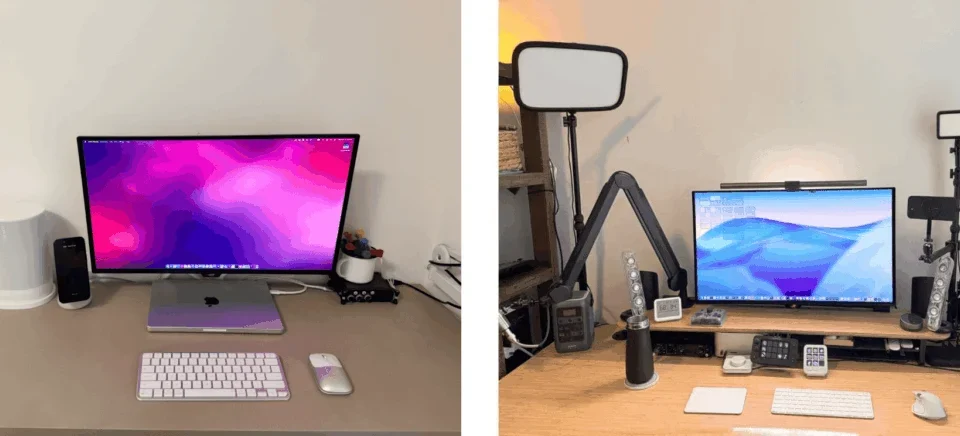
MacStories Setups Update Reveals Summer Technology Experimentation and Workflow Refinements

The latest installment of the MacStories Setups series highlights a period of significant technological exploration and workflow optimization by key contributors Federico Viticci and John Voorhees throughout the summer months. Uncoordinated in their purchasing decisions, both individuals independently converged on experimental adoption of e-readers and smart ring technology, alongside substantial adjustments to their digital toolchains and hardware configurations. This update offers a granular look into how professionals are integrating emerging technologies to enhance productivity and creative output.
E-reader Adoption and Smart Ring Integration
A notable trend emerging from this summer’s setup evolution is the shared experimentation with XTEINK e-readers and the Pebble Index 01 smart ring. While the precise models vary, the underlying interest suggests a growing curiosity in dedicated reading devices beyond traditional tablets and a nascent exploration of wearable technology for discreet interaction and data input.
The XTEINK brand, known for its focus on digital reading experiences, has seen increased attention. Voorhees, in particular, delved into the customizability of the XTEINK 3 reader, reportedly dedicating time to creating a bespoke user interface. This suggests a desire to tailor the reading experience beyond off-the-shelf functionalities, hinting at a potential demand for more personalized digital content consumption platforms. His subsequent acquisition of the XTEINK 4 Pro indicates a deeper commitment to exploring the capabilities of this technology, awaiting further opportunities for in-depth testing and development.
Simultaneously, the Pebble Index 01 smart ring, a device designed for discreet notifications and potential interaction with other connected devices, entered the workflows of both individuals. While the specific use cases are not fully detailed, the inclusion of such a wearable points towards an interest in reducing reliance on larger screens for quick information access or control. This aligns with broader industry trends in the miniaturization of computing and the development of ambient technology that integrates seamlessly into daily life.
Workflow Refinement and App Ecosystem Integration
Federico Viticci’s setup changes primarily revolve around the meticulous fine-tuning of his application workflows. This summer saw a strategic re-evaluation of his digital toolkit, with a notable re-integration of established applications alongside the adoption of newer, potentially more specialized tools.
The re-incorporation of Claude, an advanced AI assistant known for its conversational capabilities and creative text generation, alongside Superhuman, an email client focused on speed and efficiency, signifies a renewed emphasis on core productivity functions. These applications, while distinct in their primary purposes, can be seen as complementary in managing high volumes of communication and information.
A particularly telling development is Viticci’s "reluctant adoption" of Google Chrome for "agentic workflows." This phrasing suggests a pragmatic approach to leveraging the capabilities of Chrome, possibly for its extensive extension ecosystem or its integration with specific web-based AI services. Agentic workflows, a concept gaining traction in AI-driven productivity, involve systems that can autonomously perform tasks or make decisions. The use of Chrome in this context implies an exploration of how web browsers can serve as more active participants in automated processes, moving beyond their traditional role as passive content viewers.
This strategic app recalibration underscores a commitment to optimizing the digital environment for efficiency and advanced task management. The process of selecting, re-integrating, and adopting specific applications is a continuous effort for many professionals seeking to maintain a competitive edge in an increasingly complex digital landscape.
Hardware Upgrades and Peripheral Investments
Beyond software, both Viticci and Voorhees have made significant hardware adjustments, focusing on enhancing their physical workspace and audio-visual capabilities.
Viticci’s setup has seen the introduction of the DJI Mic Mini, a compact and portable microphone system. This suggests an increased focus on audio quality for content creation, remote communication, or potentially voice-controlled interactions. The accompanying Pebble Index 01 smart ring is also mentioned in relation to dictation, hinting at a potential synergy between the wearable and audio input devices for hands-free operation.
His desktop setup has been refined with the inclusion of a UGREEN Thunderbolt 5 dock. Thunderbolt 5, a relatively new standard, offers significantly increased bandwidth and capabilities compared to previous generations, enabling faster data transfer, support for higher resolution displays, and more robust peripheral connectivity. This upgrade points to a demand for high-performance connectivity to support demanding workflows, including potentially complex video editing, large data handling, or multi-monitor configurations.
Furthermore, the integration of a Steam Controller into Viticci’s setup is an interesting, though perhaps niche, addition. While typically associated with PC gaming, the Steam Controller’s unique input methods and programmability could be leveraged for non-gaming applications, such as custom shortcuts or ergonomic control schemes for complex software interfaces. This suggests a willingness to explore unconventional hardware solutions for improved interaction.
Voorhees’s setup changes are also heavily influenced by his experimentation with new hardware. The aforementioned XTEINK readers represent a significant shift in his personal reading device strategy. His exploration of custom UI creation for these devices indicates a deep dive into user experience design and a desire to push the boundaries of what dedicated e-readers can offer.
Emerging Applications and Niche Software Exploration
Both individuals have been actively testing a range of new applications designed to address specific productivity challenges or unlock new functionalities.
Voorhees highlights his use of T3 Code, an application aimed at managing multiple AI subscriptions. In an era where access to various AI models and services is proliferating, a tool that consolidates these subscriptions could offer significant administrative and cost-saving benefits. This points to a growing need for unified platforms that can streamline interactions with the rapidly expanding AI landscape.
Open Minis is another application that has captured Voorhees’s attention. Described as a tool to "get more out of iOS than Siri AI allows," it suggests a gap in current native AI capabilities on Apple’s mobile operating system. Open Minis likely provides a more advanced or customizable conversational AI experience, catering to users who require more sophisticated voice assistance or task automation.
His exploration extends to remote access applications, with a specific mention of Beam and Jump Desktop. The ability to securely and efficiently access remote computers is crucial for many professionals who work across multiple devices or locations. The testing of various remote access solutions indicates a pursuit of the most performant and user-friendly options available.
Finally, Voorhees has partially shifted from custom-built social media web applications to Typefully. This move suggests that Typefully offers a comprehensive feature set that surpasses the utility of his own bespoke solutions. Typefully is likely a robust platform for social media management and content scheduling, providing advanced tools that are time-consuming to replicate from scratch. This pragmatic decision highlights the balance between customizability and leveraging established, feature-rich software.
Contextualizing the Tech Landscape and Future Implications
The technology choices highlighted in this MacStories Setups update are not isolated incidents but reflect broader trends in the consumer and professional technology markets. The increasing sophistication and accessibility of AI, the growing interest in wearable technology, and the continuous evolution of connectivity standards like Thunderbolt are all shaping how individuals interact with their digital environments.
Timeline of Developments:
- Early Summer: Initial experimentation with e-readers and smart rings begins, driven by curiosity and the desire to explore new interaction paradigms.
- Mid-Summer: Focus shifts to refining app workflows, re-integrating core productivity tools, and adopting new specialized applications for AI management and remote access. Hardware upgrades, such as the Thunderbolt 5 dock, are implemented to support enhanced performance demands.
- Late Summer: Continued testing of emerging software and hardware, with a pragmatic approach to adopting solutions that offer demonstrably superior functionality over custom-built alternatives.
Supporting Data and Market Trends:
The e-reader market, while mature, continues to see innovation, particularly in the realm of customizable interfaces and integration with broader digital ecosystems. Companies like XTEINK are catering to a segment of users who seek a more focused and personalized reading experience, moving beyond the general-purpose nature of tablets.
The smart ring market, though smaller than that of smartwatches, is experiencing steady growth. Companies are exploring use cases beyond basic notifications, including health tracking, contactless payments, and device control. The Pebble Index 01’s inclusion suggests a growing interest in discreet, low-profile wearable technology.
AI integration into workflows is a dominant theme across all technology sectors. Applications like Claude and tools for managing AI subscriptions reflect the increasing reliance on AI for tasks ranging from content creation to complex data analysis. The concept of "agentic workflows" is a forward-looking development, suggesting a future where AI plays a more autonomous role in task execution.
Thunderbolt technology continues to advance, with Thunderbolt 5 promising substantial improvements in speed and versatility. This is critical for professionals dealing with high-resolution media, large datasets, and demanding multi-display setups. The adoption of such docks signifies a commitment to future-proofing hardware infrastructure.
Broader Impact and Implications:
The personal technology choices of influential figures like Viticci and Voorhees often serve as bellwethers for wider consumer adoption. Their willingness to experiment with emerging technologies like advanced e-readers and smart rings suggests a potential for these categories to gain broader traction.
The emphasis on workflow optimization and the pragmatic adoption of feature-rich applications over custom solutions highlights a mature approach to productivity in the digital age. Professionals are increasingly seeking tools that offer immediate benefits and robust functionality, rather than investing significant time in building bespoke solutions unless absolutely necessary.
The integration of AI into daily tasks, from communication to content creation, is no longer a futuristic concept but a present reality. The development of tools to manage and leverage multiple AI subscriptions indicates a burgeoning market for AI orchestration and management solutions.
The ongoing evolution of hardware, particularly in areas like connectivity and peripherals, continues to enable more sophisticated and efficient digital workflows. The pursuit of higher bandwidth and more versatile input methods suggests a constant drive towards enhancing the physical interface between humans and their digital tools.
Prime Big Deal Days and Promotional Opportunities
As this update coincides with Amazon’s Prime Big Deal Days event, readers are encouraged to explore the provided links. Several of the featured gadgets are reportedly on sale, presenting an opportune moment for consumers to acquire these technologies. The MacStories Deals social media accounts on X.com, Mastodon, and Bluesky are also recommended for staying abreast of further discounts and relevant promotions. This promotional tie-in underscores the commercial aspect of technology adoption and the role of editorial coverage in guiding consumer purchasing decisions.