
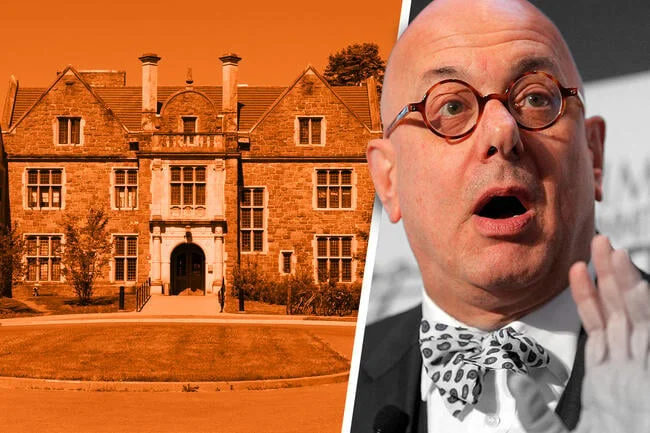
Leon Botstein Resigns from All Bard College Affiliations Amidst New Epstein Allegations and Whistleblower Claims

Leon Botstein has definitively severed all ties with Bard College and its affiliated entities, a dramatic culmination following House Democrats’ disclosure of fresh details regarding his association with the late convicted sex offender Jeffrey Epstein and serious whistleblower allegations of sexual harassment and obstruction of Title IX proceedings during his extensive tenure as president. This comprehensive withdrawal from the institution he led for over half a century marks a significant moment in the ongoing national reckoning with institutional accountability, particularly within the hallowed halls of academia, and further extends the long shadow cast by Epstein’s sprawling network of influence and abuse. The revelations, presented in a forceful Wednesday letter from Ranking Member of the House Judiciary Committee Jamie Raskin, a Maryland Democrat, to Bard’s acting president and board chairman, paint a deeply troubling picture, suggesting Botstein "likely enabled and possibly even participated in Epstein’s abuse." This assertion is bolstered by specific documentation unearthed from the Department of Justice’s Epstein files, which includes a particularly disturbing email exchange.
The Weight of New Allegations: Epstein Connection and Title IX Interference
The core of the recent controversy centers on a May 2014 email exchange involving Botstein and Epstein. According to Raskin’s letter, Epstein dispatched an aspiring young vocalist, referred to as Jane Doe in legal documents—a victim he had been systematically trafficking—to meet with Botstein. The ostensible purpose of this meeting was for Botstein to assess her musical talents and offer educational guidance, leveraging his esteemed position as a college president and renowned conductor. However, the subsequent email from Botstein to Epstein on May 15, 2014, radically alters the perception of this interaction. In the message, Botstein explicitly asked Epstein, "Is [Jane Doe] for me, or are you keeping her for yourself?" This question, as highlighted by Raskin, is profoundly unsettling and difficult to reconcile with any innocent explanation, especially given Epstein’s well-documented predatory nature. The Department of Justice had redacted Botstein’s official presidential email address in the publicly accessible file of Epstein documents, but members of Congress were granted access to the unredacted version, confirming the source.
Raskin underscored the gravity of this communication: "It is hard to construct any kind of innocent explanation for Botstein’s question and the surrounding events. We know that Epstein was neither a college president recruiting students nor a symphony director recruiting players, so what would it mean for Botstein to ask Epstein whether Jane Doe was for him or whether Epstein was ‘keeping her for yourself’?" This direct query, framed within the context of Epstein’s documented exploitation of young women, has ignited a firestorm of criticism and raised profound questions about Botstein’s judgment and potential complicity.
Beyond the direct link to Epstein, the House Judiciary Committee also revealed "deeply troubling" whistleblower reports alleging that Botstein misused his presidential authority to interfere in Title IX proceedings. Title IX is a federal civil rights law that prohibits sex-based discrimination in any education program or activity receiving federal financial assistance. Its mandate includes ensuring a safe educational environment free from sexual harassment and assault. Allegations that Botstein leveraged his influence to meddle in these critical proceedings and "protect sexual predators on the Bard faculty" strike at the very heart of institutional integrity and a university’s duty of care towards its students and employees. Such actions, if proven, would represent a grave betrayal of trust and a significant undermining of the mechanisms designed to protect vulnerable individuals within the academic community.
Leon Botstein’s Denial and the Imperative of Institutional Review
In response to the escalating allegations, Leon Botstein issued a written statement to Inside Higher Ed, vehemently denying the accusations. He asserted, "The allegations in [Raskin’s] letter are untrue, including an email that I did not author or send. Any assertion that I knew of or was involved in Epstein’s criminal behavior is wrong." Botstein expressed confidence that a fair review would vindicate him, but stated his decision to resign from all Bard-affiliated roles was made to shield the institution from further reputational damage stemming from what he termed "false allegations." This blanket denial, particularly regarding the authorship of the incriminating email, sets the stage for a contentious and potentially prolonged investigation.
Bard College, through its Board of Trustees Chairman Brandon Weber, acknowledged the gravity of the situation. Weber released a statement indicating that the college would initiate a "full review" of the allegations contained in Raskin’s letter and pledged continued cooperation with the House Judiciary Committee’s ongoing investigation. This commitment to a thorough internal examination is crucial for Bard to navigate the crisis, restore stakeholder confidence, and uphold its ethical responsibilities. The scope and independence of this review will be critical in determining its credibility and effectiveness.
A Legacy Under Scrutiny: Leon Botstein’s Long Tenure at Bard
Leon Botstein’s departure marks the end of an extraordinary, if now controversial, era at Bard College. Appointed president in 1975 at the remarkably young age of 28, Botstein became one of the youngest college presidents in American history. Over 51 years, he transformed Bard from a struggling liberal arts college into a globally recognized institution known for its innovative programs, commitment to the arts, and progressive educational philosophy. Under his leadership, Bard expanded significantly, establishing numerous graduate programs, a network of early colleges, and international partnerships. He championed a rigorous, interdisciplinary curriculum, fostering a vibrant intellectual environment that attracted distinguished faculty and students.
Botstein himself is a polymath: a distinguished historian, musicologist, and an accomplished orchestral conductor. He has served as music director of the American Symphony Orchestra since 1992 and founded The Orchestra Now, a graduate conducting and orchestral studies program at Bard. His public intellectual persona, characterized by his distinctive round glasses and erudite pronouncements, made him a prominent voice in higher education and cultural discourse. His influence extended far beyond Annandale-on-Hudson, with Bard becoming a model for experimental pedagogy and civic engagement.

However, even before these latest revelations, Botstein’s long tenure had faced intermittent criticism, particularly concerning his management style, fiscal policies, and, more recently, his association with Epstein. The current allegations represent the most severe challenge to his legacy, threatening to overshadow his considerable contributions to Bard College and higher education at large. His initial retirement as Bard’s president in July, prior to this full resignation, came after months of mounting pressure and scrutiny over his communications with Epstein, though he had maintained a professorship and involvement with several music programs. The comprehensive resignation signifies a complete break, underscoring the severity of the new information.
The Shadow of Jeffrey Epstein: A Broader Context
The allegations against Botstein are inextricably linked to the broader, sordid saga of Jeffrey Epstein. A financier with a vast network of powerful and influential acquaintances, Epstein was convicted in 2008 of soliciting prostitution from a minor and arrested again in 2019 on federal charges of sex trafficking. His subsequent death by suicide in jail sparked further controversy and fueled conspiracy theories. The ongoing investigation into Epstein’s activities and his extensive network of enablers and associates has continued to yield disturbing details, with congressional committees and the Department of Justice pursuing leads to identify those who may have facilitated or benefited from his crimes.
The release of Epstein’s unsealed documents, including the DOJ files referenced by Raskin, has shed light on the mechanisms of his abuse, revealing how he leveraged his wealth and connections to traffic and exploit vulnerable young women. The inclusion of academic figures, philanthropists, and public intellectuals in Epstein’s orbit has prompted a wider examination of the responsibilities of institutions and individuals who may have inadvertently or intentionally legitimized or enabled his predatory behavior. The House Judiciary Committee’s expanded investigation into institutions like Bard and Harvard underscores the public and governmental demand for accountability from any entity or individual linked to Epstein’s egregious crimes. The "Jane Doe" victims, central to these investigations, represent the tragic human cost of Epstein’s depravity and the imperative to seek justice and expose all forms of complicity.
A Timeline of Growing Scrutiny
The path to Botstein’s full resignation is marked by a series of events reflecting increasing scrutiny:
- 1975: Leon Botstein begins his tenure as president of Bard College.
- Early 2000s onwards: Jeffrey Epstein’s criminal activities become public, leading to his 2008 conviction in Florida.
- May 15, 2014: The alleged email from Botstein to Epstein regarding "Jane Doe" is sent.
- July 2019: Jeffrey Epstein is arrested on new federal sex trafficking charges and dies in jail a month later.
- Late 2019 – Present: The Department of Justice and congressional committees continue investigations into Epstein’s network.
- June 2026 (or earlier, depending on actual publication year): House Democrats announce an expansion of their Epstein investigation to include Bard College and Harvard University, signaling initial concerns about Botstein’s connection.
- July 2026 (or earlier): Leon Botstein retires as Bard’s president after 51 years, amidst public criticism concerning his communications with Epstein. He maintains a professorship and involvement in music programs.
- Present Day: House Judiciary Committee, led by Ranking Member Jamie Raskin, uncovers new details from DOJ Epstein files and whistleblower allegations, prompting Raskin’s letter to Bard. Botstein subsequently resigns from all remaining Bard-affiliated positions.
This timeline illustrates a gradual tightening of the investigative net, culminating in the current, severe allegations that have irrevocably altered Botstein’s public standing and institutional legacy.
Implications for Higher Education and Institutional Accountability
The revelations concerning Leon Botstein and Bard College carry significant implications for the landscape of higher education. First and foremost, they reinforce the critical importance of robust and independent Title IX processes. Any perceived or actual interference by senior leadership in these proceedings undermines their credibility and creates an environment where victims may fear coming forward, and perpetrators may evade accountability. Universities must demonstrate an unwavering commitment to protecting students and staff from sexual harassment and assault, ensuring that internal mechanisms are transparent, fair, and free from undue influence.
Secondly, the case highlights the immense power and influence wielded by long-serving university presidents and the need for strong governance structures to ensure accountability. While longevity can bring stability and visionary leadership, it can also concentrate power, making it harder for dissenting voices or concerns about misconduct to be heard. The scrutiny now facing Botstein underscores the need for vigilant oversight by boards of trustees and for clear ethical guidelines governing the interactions between university leaders and external figures, especially those with problematic histories.
For Bard College itself, the path forward will be challenging. The institution must navigate a period of intense public scrutiny, rebuild trust among its students, faculty, alumni, and donors, and reaffirm its commitment to its core values. The "full review" promised by Chairman Weber must be comprehensive, transparent, and potentially involve external, independent experts to ensure impartiality. The long-term reputational damage could be substantial, affecting enrollment, fundraising, and the overall perception of the college.
Finally, this episode serves as a stark reminder that the full scope of Jeffrey Epstein’s network and the extent of his enablers’ complicity may still be unfolding. The ongoing investigations continue to reveal how powerful individuals, often cloaked in respectability, may have wittingly or unwittingly contributed to or ignored his heinous crimes. The demand for accountability will likely continue to reverberate across various sectors, ensuring that no institution or individual is above scrutiny when it comes to safeguarding the vulnerable and upholding fundamental ethical standards. The case of Leon Botstein at Bard College is a potent symbol of this enduring and necessary pursuit of truth and justice.