
Crossref Deepens Engagement in Asia with Landmark Bangkok Summit and Charleston Conference Participation

Bangkok, Thailand – In a significant move highlighting the escalating importance of Asia in the global research landscape, Crossref, the non-profit organization dedicated to making research outputs easy to find, cite, link, and assess, recently concluded a series of pivotal engagements in Bangkok. A delegation of three Crossref staff members traveled to the Thai capital in January to participate in the inaugural Charleston Conference held in Asia and to host a dedicated Crossref Bangkok event, fostering direct interaction with its rapidly expanding community in the region. This visit underscored Crossref’s commitment to strengthening the "Research Nexus" – an interconnected web of scholarly metadata – and addressing the unique needs and opportunities within Asian scholarship, which now accounts for over half of Crossref’s global membership. The engagements took place during an official mourning period for Her Majesty Queen Sirikit The Queen Mother, a context that further highlighted the exceptional warmth and resilience of the Thai hosts.
Crossref’s Global Mandate and Asia’s Ascendance
Crossref operates as a global community of over 24,000 organizations across 166 countries, each playing a crucial role in building and maintaining the Research Nexus. This vast network relies on the standardized assignment of Digital Object Identifiers (DOIs) and the registration of rich, open metadata, ensuring persistent access and discoverability for scholarly content worldwide. The organization’s presence in Asia has seen exponential growth in recent years, reflecting the continent’s burgeoning research output and increasing integration into global scholarly communication systems. Recognizing this shift, direct engagement with members in Asia has become a strategic priority for Crossref, allowing for invaluable firsthand insights into regional challenges and advancements.

The Charleston Conference, historically an annual fixture for librarians and publishers in the United States, made its debut in Asia, selecting picturesque Bangkok as its host city. This historic shift provided an unprecedented opportunity for Crossref to connect with the diverse library and publishing communities across Asia, as well as delegates from other parts of the world. The decision to bring such a prominent conference to Asia signals a broader recognition of the region’s increasing influence and innovation in scholarly communication. Crossref’s direct participation and leadership in a panel discussion at this seminal event, coupled with its dedicated local gathering, demonstrated a proactive approach to supporting and learning from its Asian members.
Charleston Asia Conference: A Catalyst for Regional Collaboration and Infrastructure Discussion
The three-day Charleston Asia conference served as a vital platform for Crossref to engage with members and colleagues from across the continent, facilitating discussions on critical areas of focus and concern. The conference offered a refreshing perspective on global challenges such as access to knowledge, the impact of Artificial Intelligence (AI) on research, and the preservation of research integrity, all examined within the specific institutional, linguistic, and economic environments of Asia. A recurring theme was the significant number of national-level projects in the region that are actively integrating Crossref data to inform strategic planning and even shape national policy decisions, highlighting the tangible impact of robust research infrastructure.
Three inspiring keynote addresses at the conference delved into various facets of scholarship in Asia, presenting local, national, and regional approaches to overcoming prevalent challenges. Distinguished Professor Joyashree Roy from the Asian Institute of Technology presented her groundbreaking work on the Intergovernmental Panel on Climate Change at the United Nations. Professor Roy compellingly highlighted that populations in Asia are disproportionately impacted by climate change, yet remain underrepresented in relevant research due to structural, linguistic, and financial barriers. Her address offered actionable insights for publishers and librarians on how to dismantle these obstacles, thereby fostering more inclusive research participation and dissemination.
Professor Devika Madalli, Director of the INFLIBNET Centre in India, shared her team’s remarkable efforts in creating national-level services designed to mitigate country and institution-wide inequalities in research access and dissemination. INFLIBNET’s subscription to Crossref’s Metadata Plus service exemplifies how rich metadata can be leveraged to build impactful national infrastructure, underscoring the utility and versatility of Crossref’s community-contributed data. Professor Bin Zhang, Library Director at Renmin University of China, further elaborated on the challenges of equitable access to scholarship across China’s diverse regions, emphasizing how strategic investment in digital infrastructure is proving instrumental in bridging these gaps. These keynotes collectively painted a comprehensive picture of the concerted efforts being made across Asia to strengthen scholarly communication and address unique regional complexities.
The Importance of Metadata for Asian Scholarship: A Deep Dive
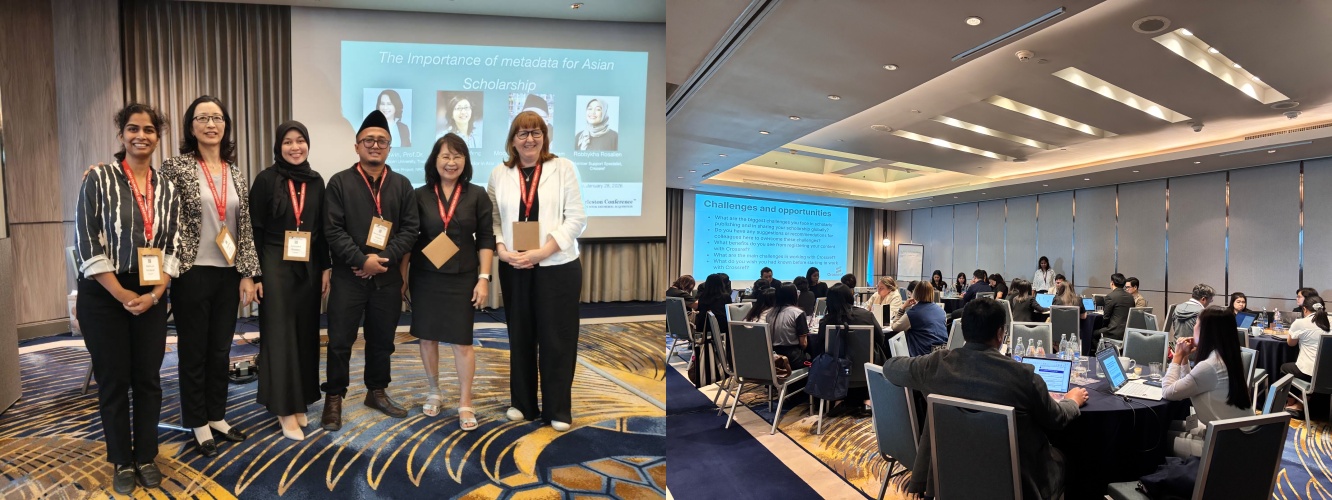
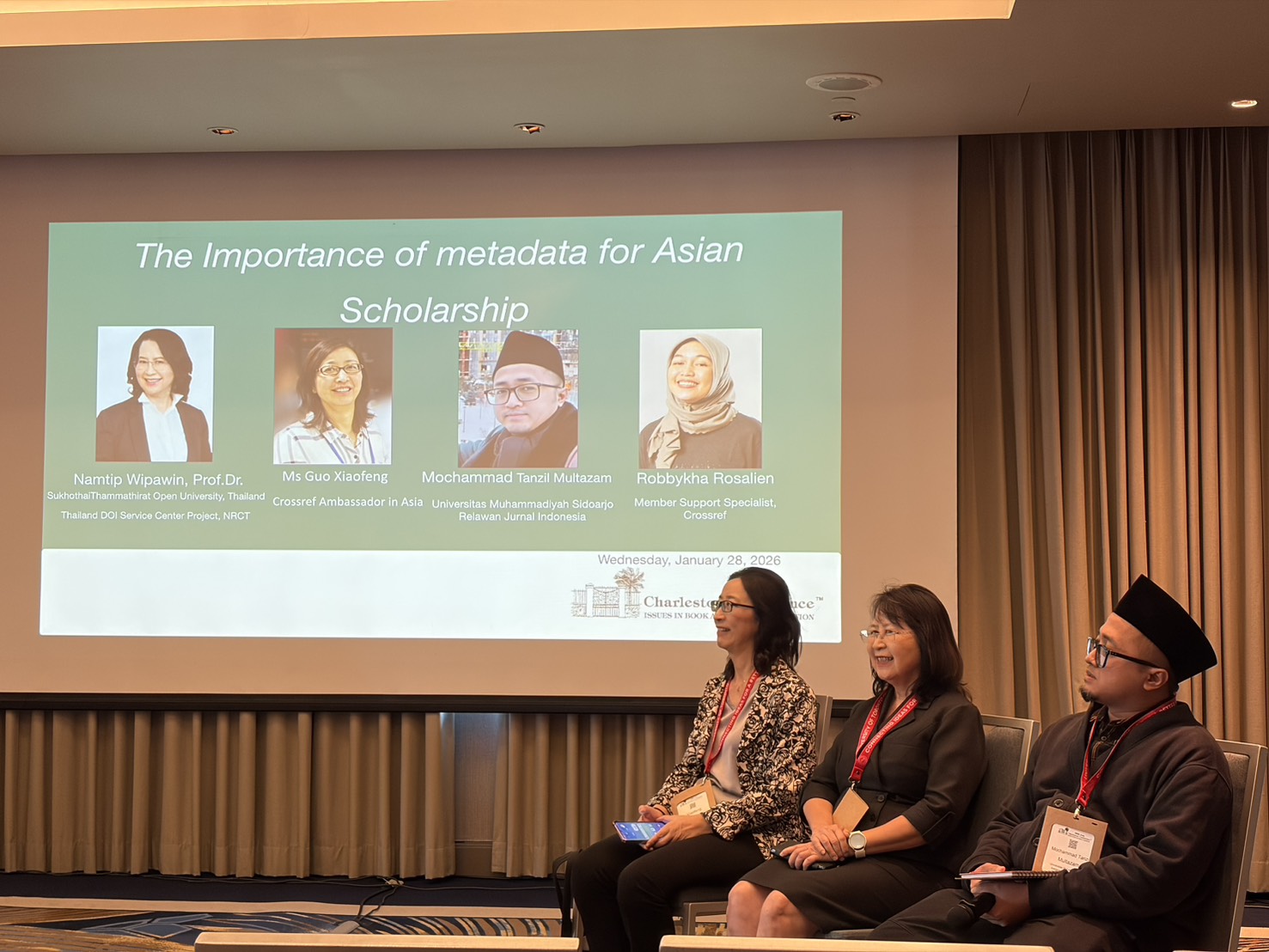
A highlight of the Charleston Asia conference was a panel discussion moderated by Crossref’s Robbykha Rosalien, titled “The importance of metadata for Asian scholarship.” This session critically examined the role of metadata – far beyond mere technical detail – as the fundamental backbone of discoverability, credibility, trust, and impact in scholarly communication. The discussion explored current metadata trends across Asia and demonstrated how open metadata is actively shaping research visibility, integrity, and assessment within diverse scholarly communities in the region.
The panel brought together a diverse group of experts: Mochammad Tanzil Multazam from Relawan Jurnal Indonesia, Ms. Guo Xiaofeng, a Crossref Ambassador in Asia and Director at Sin-Chn Scientific Press (Singapore), and Prof. Dr. Namtip Wipawin from the Department of Information Science, School of Liberal Arts, Sukhothai Thammathirat Open University in Thailand. Each panellist shared invaluable experiences, highlighting both the persistent challenges and innovative solutions encountered in adopting open metadata practices and leveraging metadata effectively within their respective contexts.
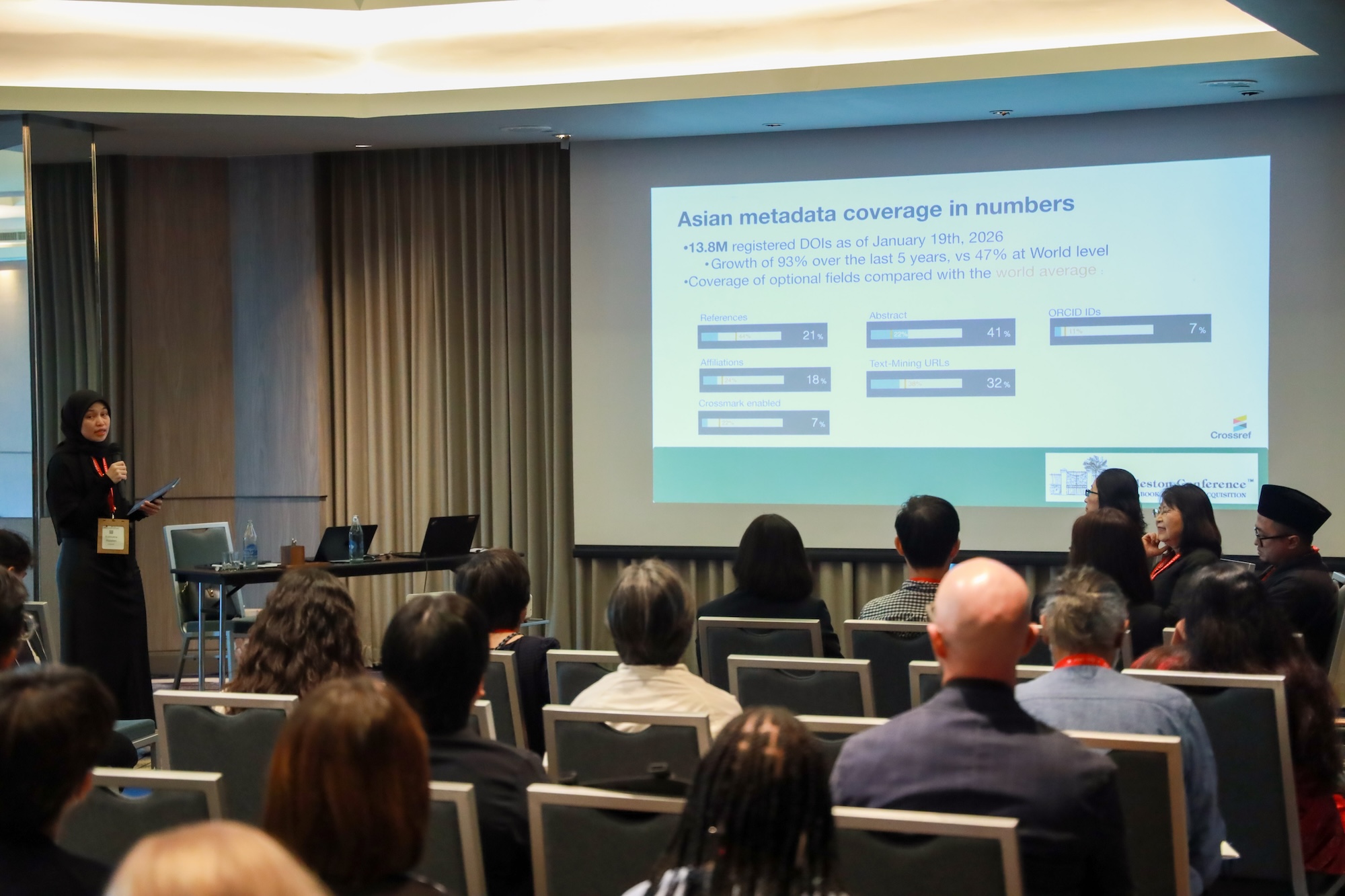
Robbykha Rosalien initiated the session with a striking statistical overview, underscoring Asia’s pivotal role in global scholarly communication. She revealed that Crossref now boasts over 14,000 members from Asia, constituting more than half of its entire global membership. As of January 19, 2026, a staggering 13.8 million registered DOI records originate from Asia. Indonesia leads this charge with 3.02 million registered DOIs, followed by Japan (2.73 million), India (2.52 million), South Korea (1.28 million), and Türkiye (793,198), collectively showcasing the continent’s robust and growing contribution to global research.
Mochammad Tanzil Multazam provided an insightful account of how robust government support for persistent identifiers and metadata in Indonesia has propelled the development of one of the largest and fastest-growing open-access journal ecosystems globally. Out of 27,807 national journals, nearly half already register DOIs and metadata records, as evidenced by data from SINTA (Indonesia’s national research portal) as of January 13, 2026. Prof. Dr. Namtip Wipawin offered a comprehensive overview of the metadata landscape within Thai academia, outlining both notable progress and ongoing challenges specific to the country. Concurrently, Ms. Guo Xiaofeng presented a compelling case study on the practical utilization of open metadata across Asia, illustrating tangible examples of how enhanced metadata directly contributes to greater discoverability and builds trust in scholarly outputs.
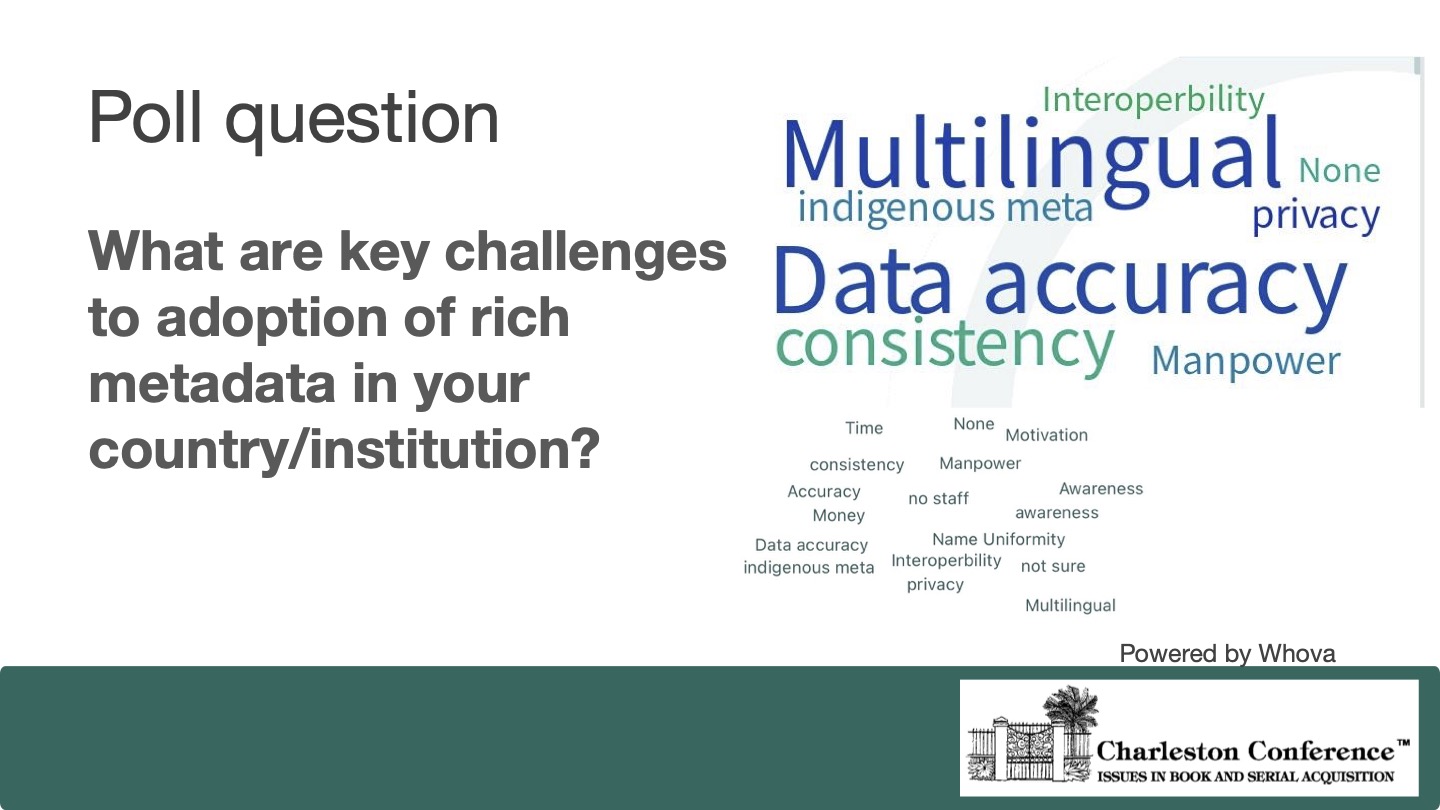
A key takeaway from the panel and audience interaction was the unanimous emphasis on metadata’s paramount importance for Asian scholarship, particularly in enhancing discoverability, accessibility, and providing rich, accurate data for evaluation. However, significant challenges persist, with one of the most pressing being the effective representation of multilingual content within metadata. The discussion highlighted the complexities of accurately reflecting diverse linguistic outputs, prompting Crossref to point attendees to its existing documentation on multilingual metadata and ongoing discussions within its community forum. The Crossref Metadata Advisory Group is actively addressing this, with a dedicated working group exploring future schema updates to better accommodate and accurately reflect multilingual metadata, ensuring broader inclusivity and precision. A poll conducted during the session revealed "multilingualism" and "lack of awareness/training" as prominent challenges to rich metadata adoption, providing Crossref with valuable feedback for future initiatives.
Crossref Bangkok: Fostering Local Engagement and Addressing Visibility Challenges
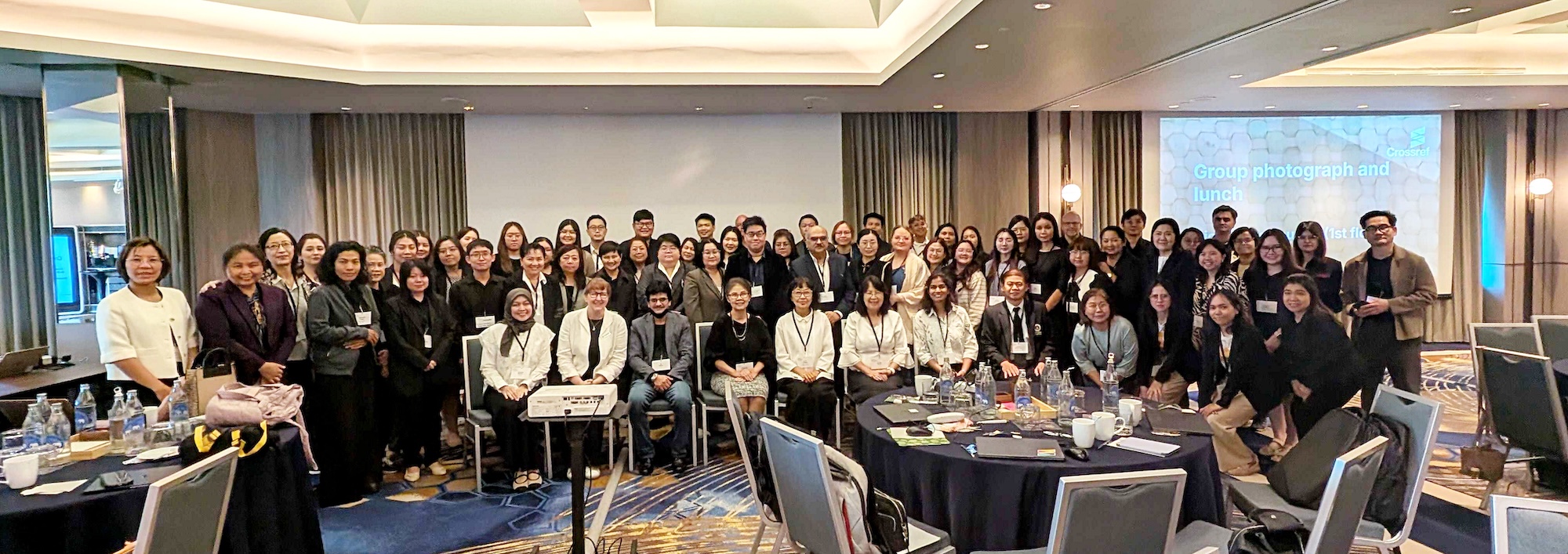
Immediately following the Charleston Asia conference, Crossref hosted its dedicated "Crossref Bangkok" event, drawing approximately 75 attendees. This one-day gathering further reinforced the immense value of direct interaction with members, providing a crucial forum to understand the specific challenges faced in scholarly publishing within Thailand and to collectively explore solutions. The event benefited significantly from the support of Crossref ambassadors Guo Xiaofeng, Amber Osman, and Prof. M.I. Subhani, as well as Prof. Dr. Namtip Wipawin and her team from the National Research Council of Thailand, who served as a key sponsor organization. Mark Husskison from PKP also contributed valuable assistance, particularly in addressing complex OJS-related queries from attendees.
The majority of attendees represented universities, constituting existing Crossref members in Thailand, alongside a notable delegation from the National Library of Thailand. The day commenced with an interactive session to learn about the participants’ backgrounds, their geographical origins within Thailand, and their expectations for the event. This was followed by a comprehensive introduction to Crossref and DOI metadata records, serving as a vital refresher on the benefits and obligations of Crossref membership and underscoring the critical role of rich metadata in enhancing discoverability and safeguarding research integrity.
Attendees then engaged in small group discussions, sharing insights into the challenges and opportunities prevalent in scholarly publishing in Thailand. A singular, pervasive theme emerged from these discussions: "visibility." Participants consistently identified visibility as both a significant challenge and a powerful opportunity. They recognized that registering rich metadata records with Crossref, which are then disseminated across the global scholarly ecosystem, offers a potent mechanism to enhance the visibility of their content. However, they also acknowledged the inherent complexities in achieving this. The in-person meeting was widely appreciated, with attendees expressing a strong desire for increased training and support from Crossref, particularly concerning content registration. In response, Crossref highlighted its regular "Getting Started at Crossref" webinars for new members and "Metadata Health Checks" for long-term members, committing to explore and develop more targeted training initiatives for its Asian members.
The afternoon session featured an insightful presentation by Prof. Dr. Namtip Wipawin, who elaborated on the critical importance of metadata in elevating the visibility of Thai research on the global stage. This was followed by practical, hands-on sessions. Participants received guidance on how to add and update metadata records using Crossref’s new Metadata Manager, as well as instructions for those utilizing the widely adopted OJS (Open Journal Systems) platform. A subsequent practical session allowed attendees to explore their own Participation Reports, identifying and discussing strategies to address any gaps in their metadata. The newly introduced CSV download for metadata gaps proved particularly useful, enabling live support for members in adding missing references through proper activation of the OJS references plugin.
Prof. Dr. Namtip Wipawin, speaking on behalf of the National Research Council of Thailand, articulated the profound impact of the workshop: "Attending the Crossref Bangkok Workshop made it clear that being a part of Crossref goes far beyond simply assigning DOIs; it is about contributing to a global research community. The sessions highlighted how rich metadata, such as references, abstracts, ORCID iDs, and funding information, play a vital role in making Thai research more visible and accessible worldwide. There was also a strong emphasis on the importance of English metadata and standard identifiers in overcoming language and name-related challenges. Overall, the workshop showed how high-quality metadata can help bring Thai research onto the global stage and strengthen its international recognition."
Visiting the National Library of Thailand: A Testament to Stewardship and Digital Future
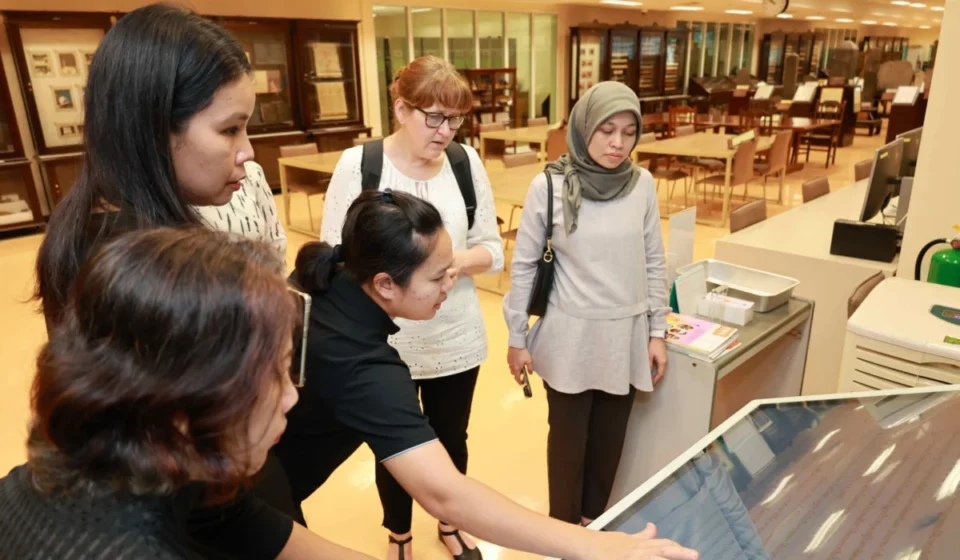
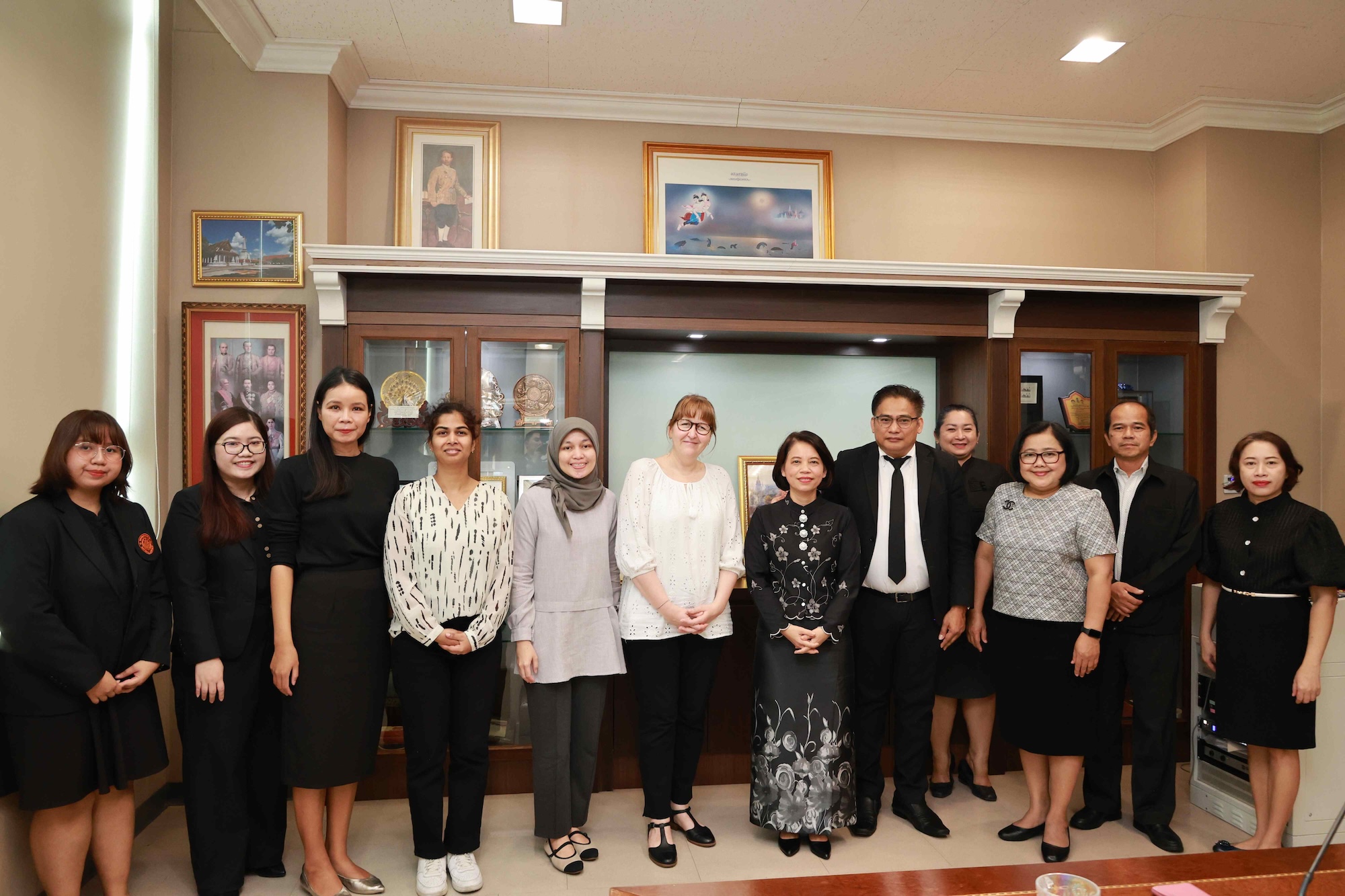
The Crossref delegation’s final day in Bangkok included a deeply enriching visit to the National Library of Thailand, an institution with a pivotal role in the country’s scholarly publishing ecosystem. As the official Thai ISSN Centre, the National Library is responsible for assigning International Standard Serial Numbers, a crucial component of scholarly identification. Beyond this, the library serves as a custodian of an immense trove of Thailand’s cultural heritage, preserving invaluable artifacts and historical documents. The Crossref team was granted the honor of viewing some of these meticulously preserved cultural treasures, gaining a deeper appreciation for the institution’s profound responsibility.
The visit included discussions on the library’s ongoing digitization efforts, which are aimed at preserving ancient manuscripts and rare materials while simultaneously making them accessible to a wider audience. Ms. Bubphar Chuchat, Director of the National Library of Thailand, reflected on the visit’s implications: "The role of DOI metadata in enhancing the visibility and accessibility of digital resources is vital. This experience has provided the National Library with a clearer strategic roadmap for establishing a DOI Center dedicated to rare materials and digital ancient manuscripts. This initiative aims to broaden the reach of these invaluable heritage resources, ensuring they are easily discoverable and accessible to a global audience." This vision underscores a progressive approach, marrying traditional stewardship with cutting-edge digital infrastructure to safeguard and disseminate Thailand’s rich intellectual and cultural legacy globally.
The visit concluded with the Crossref team feeling profoundly inspired by the National Library of Thailand’s unwavering dedication to preserving rare manuscripts while enthusiastically embracing digital tools. This harmonious blend of heritage preservation and technological innovation served as a powerful reminder that stewardship encompasses not only looking after the past but also actively ensuring that knowledge and culture continue to thrive and remain accessible for future generations.
Broader Implications and Future Outlook
Crossref’s strategic engagements in Bangkok signify a pivotal moment for scholarly communication in Asia and for the organization itself. The rapid growth of Crossref membership in the region, now exceeding half of its global total, underscores Asia’s emergence as a powerhouse of research output. This shift necessitates a deeper, more localized understanding of the challenges and opportunities unique to Asian scholarship, from multilingual content to varying levels of infrastructural development.
The success of the first Charleston Conference in Asia and the enthusiastic reception of the Crossref Bangkok event highlight a strong demand for international collaboration, best practices, and direct support. Crossref’s commitment to addressing specific issues like multilingual metadata through its Metadata Advisory Group and planning for enhanced regional training initiatives demonstrates a responsive and member-centric approach. The potential establishment of a DOI Center at the National Library of Thailand for rare materials and digital ancient manuscripts could serve as a model for other national libraries seeking to leverage persistent identifiers for cultural heritage preservation and global discoverability.
Ultimately, these engagements reinforce Crossref’s mission to build a more connected and equitable Research Nexus. By actively listening to, learning from, and supporting its Asian members, Crossref is not only strengthening scholarly communication in a vital region but also contributing to a more inclusive, discoverable, and trustworthy global research ecosystem. The Bangkok visit serves as a powerful reminder that while the pursuit of knowledge is universal, its effective dissemination and preservation require tailored solutions and unwavering collaborative effort.