
Cambridge Men Secure Historic Fourth Consecutive Boat Race Victory Amidst Challenging Thames Conditions

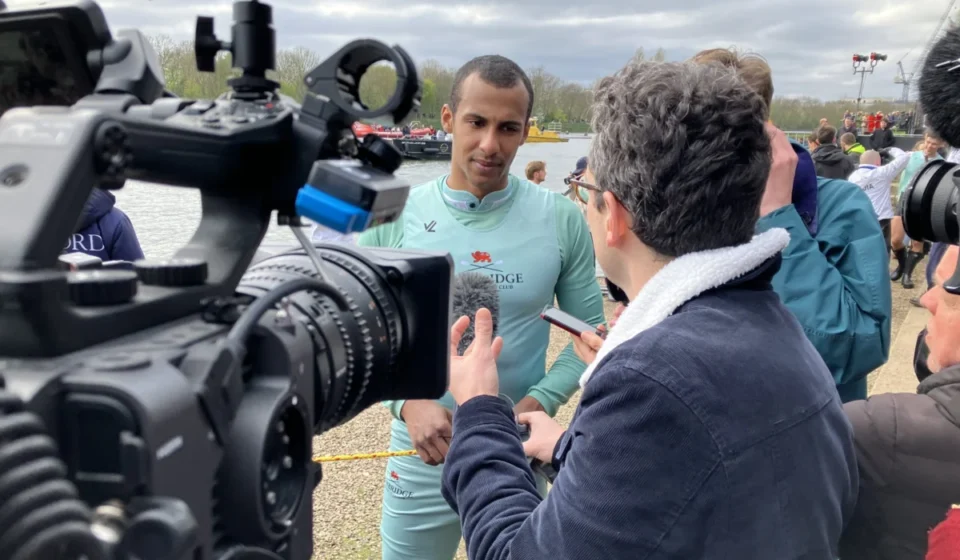
London, UK – On Easter Saturday, April 4, 2026, Cambridge University’s Men’s Blue Boat etched its name further into the annals of sporting history, clinching its fourth consecutive victory in The Boat Race against fierce rivals Oxford. The Light Blues’ dominant performance unfolded before an estimated 200,000 spectators lining the banks of the River Thames, marking the latest chapter in a rivalry spanning nearly two centuries. Despite facing formidable opposition and exceptionally turbulent waters, Cambridge demonstrated superior strength and strategic acumen, extending their impressive record to seven wins in the last eight years. This momentous win was particularly significant for Cambridge Men’s President Noam Mouelle, who achieved the rare distinction of winning four consecutive Boat Races, a feat not seen from a Cambridge man in over half a century.
A Grueling Contest on the Championship Course
The 172nd running of The Men’s Boat Race, and the 79th Women’s Boat Race, presented conditions that were as much a test of endurance as they were of skill. A strong south-westerly wind whipped the Thames into a formidable, choppy expanse, particularly challenging towards the latter stages of the iconic 4.2-mile Championship Course stretching from Putney to Mortlake. Known for its demanding bends and variable currents, the Tideway course demands not only immense physical power but also precise steering and tactical intelligence from the coxes.
In the Men’s Race, the coin toss, a crucial precursor to the contest, saw Oxford win and elect the Surrey station. Historically, the Surrey station is often considered advantageous, particularly in the second half of the race, offering a more direct line around the bends. However, it was Cambridge, starting from the Middlesex station, who seized the initiative from the outset. Their powerful start saw them quickly establish a lead, a critical move given the anticipated worsening conditions further down the course.
The race unfolded as a relentless battle. Oxford, determined to break Cambridge’s formidable streak, mounted several strong challenges throughout the first two-thirds of the course, often pushing the Light Blues to their limits. The crews passed under Fulham Football Club’s Craven Cottage, then through the challenging stretch towards Hammersmith Bridge, where the river narrows and conditions can become particularly fierce. Despite Oxford’s persistent efforts to close the gap, Cambridge maintained their composure and rhythm. The strategic prowess of Cambridge’s cox, Sammy Houdaigui, became evident as he navigated the treacherous waters, making calculated moves to position his crew advantageously, even when it meant risking close encounters with the Dark Blues.
As the race progressed into its final third, past Barnes Bridge and towards the finish line at Mortlake, the Light Blues found an extra gear. They decisively pulled clear of Oxford, transforming a hard-fought lead into a commanding margin. Crossing the finish line, Cambridge secured their victory by a significant 11.02 seconds, a testament to their sustained power and effective race execution under pressure.
Mouelle’s Unprecedented Achievement and Strategic Insights
The victory was a personal triumph for Noam Mouelle (Hughes Hall), the Cambridge Men’s President, marking his fourth consecutive win in The Boat Race. This achievement places him in an elite group, making him the first Cambridge man to win four consecutive races in the 21st century and the first since the legendary Christopher Baillieu MBE, who achieved the feat in 1970, 1971, 1972, and 1973. Intriguingly, both Mouelle and Baillieu rowed in the 2 seat, a position that demands both strength and technical precision, contributing to the boat’s balance and power.
Mouelle reflected on the grueling nature of the race, stating, "This was the most difficult race we’ve had in years. In these conditions, we knew we had to get the job done early on in the race, which we did, but Oxford put some very good pushes in and made it as hard as possible so props to them for that." His immediate feeling was one of "relief," underscoring the immense pressure on the crew to perform in such demanding circumstances. "We didn’t make any mistakes in such rough water and now I’m just going to relax and enjoy the moment," he added, looking forward to celebrating the monumental achievement.
Cox Sammy Houdaigui (Fitzwilliam) provided insight into the strategic thinking behind Cambridge’s performance, particularly given their Middlesex station. "We talked a lot before the race about what that first half would look like," he explained. "Given that we were on the Middlesex [station], and given the way the race was playing out – and knowing the conditions were going to get biblical in the second half – we really wanted to make sure we had a margin and that we could be in the water we wanted to be in the second half and not be forced to stay wide into the rougher water." Houdaigui’s confidence in his crew was unwavering, even during "risky moments" when Oxford pressed hard. "I had to put the bow ball where it needed to be for these guys to drive us out and ahead. It just feels fantastic." His leadership was pivotal in navigating the challenging conditions and executing the pre-planned strategy.
Oxford Women Triumph While Cambridge Reserve Crews Shine
Earlier in the afternoon, the Women’s Boat Race unfolded with its own share of drama and challenging conditions. Cambridge Women’s President Gemma King (St John’s) won the toss and chose the Surrey station. However, it was Oxford who made a powerful start in the tricky conditions, quickly establishing a lead. Despite the best efforts of Cambridge Women’s Blue Boat cox Matt Moran (Emmanuel), who had honed his skills on the Tideway during his time with Thames Rowing Club, Oxford managed to hold onto their advantage throughout the course. Moran’s experience on the river was evident as he tried various tactics to bridge the gap, but Oxford’s early lead proved insurmountable. The Dark Blues crossed the finish line victorious, demonstrating their strength and resilience.
While the main women’s race did not go Cambridge’s way, there was cause for celebration in the reserve races. Both of Cambridge’s reserve crews delivered outstanding performances. Blondie, the women’s reserve boat, dominated their race, winning by an impressive nine lengths. Not to be outdone, Goldie, the men’s reserve boat, secured a massive victory with a staggering margin of 58 seconds. These results underscore the depth of talent and the robust training programs within Cambridge University Boat Club, ensuring a strong pipeline of rowers for future Blue Boat campaigns.
Adding to Cambridge’s comprehensive success over the weekend, Friday saw further triumphs. Both the Women’s and Men’s Lightweight Crews won their respective races, showcasing excellence across different weight categories. Furthermore, both the Women’s and Men’s Veterans Crews also emerged victorious in their races, demonstrating the enduring passion and skill of alumni rowers.
A Spectacle of Tradition and Sporting Excellence
The Boat Race, an event deeply ingrained in British sporting tradition, always draws a massive crowd, and the 2026 edition was no exception. Despite the challenging weather, spectators lined the 4.2-mile course, from the picturesque start at Putney Bridge, past the iconic landmarks of Hammersmith Bridge and Barnes Bridge, to the finish line just before Chiswick Bridge at Mortlake. The atmosphere was electric, a blend of fervent rivalry, camaraderie, and appreciation for the sheer athletic prowess on display. Families, students, and rowing enthusiasts gathered, many having arrived hours in advance to secure prime viewing spots, adding to the festive Easter Saturday ambiance.
The conditions, described by some as "biblical" in the latter half of the race, significantly elevated the challenge for all crews. A strong south-westerly wind against the tide creates notoriously difficult water, making it harder for rowers to maintain a consistent rhythm, apply power effectively, and keep the boat stable. For the coxes, it means constant adjustments to steer clear of the roughest patches and capitalize on any subtle advantages offered by the river’s flow and bends. The ability of the Cambridge Men’s crew to not only endure but thrive in these conditions speaks volumes about their training, cohesion, and mental fortitude.
Official Reactions and the Enduring Legacy
University of Cambridge Vice-Chancellor Professor Deborah Prentice lauded the efforts of all participants. "It was brilliant. It was rough out there on the water, it was really crazy in the middle of the course, and I’m so impressed with what both sides did," she commented, acknowledging the extraordinary physical and mental demands placed on the athletes. She expressed immense pride in Cambridge’s overall performance: "It’s delightful that Cambridge have won the Men’s race again, as well as both reserve races. The women in the Blue Boat rowed well, it was a tough course, they did everything they could to win. They rowed with real heart and we are proud of them." Her words encapsulate the spirit of the university, celebrating success while also recognizing the valiant efforts of all its representatives.
The results of the 2026 Boat Races further solidify Cambridge’s historical advantage in this iconic rivalry. Following these races, the overall records now stand at 49-31 in favour of Cambridge Women, and 89-81 in favour of Cambridge Men. These figures underscore the depth and consistency of Cambridge University’s rowing programme over the decades. The men’s four-year winning streak, and seven victories in eight years, represent a golden era for Cambridge rowing, a period of sustained excellence that will undoubtedly inspire future generations of Light Blue athletes.
The Boat Race is more than just a competition; it is a profound cultural event, a symbol of academic and athletic pursuit, and a testament to the enduring rivalry between two of the world’s most prestigious universities. Each year, it showcases not only the pinnacle of amateur rowing but also the spirit of dedication, teamwork, and resilience required to compete at the highest level. The 2026 edition will be remembered for Cambridge Men’s historic fourth consecutive victory, the challenging conditions, and the vibrant spectacle that continues to captivate audiences worldwide, cementing its place as a cornerstone of the British sporting calendar. The legacy of Noam Mouelle and his crew will resonate for years to come, setting a new benchmark for excellence on the Thames.