
Benchmarking Deterministic 3-Tiered Graph-RAG vs Standard Vector RAG on Fact-Dense Queries

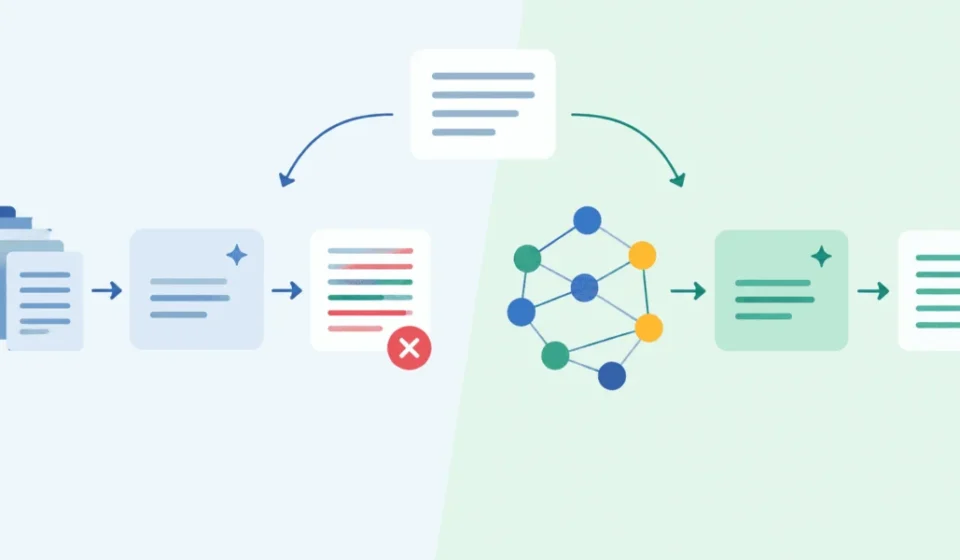
The evolution of Retrieval-Augmented Generation (RAG) has reached a critical juncture where the limitations of semantic similarity are becoming increasingly apparent in production environments. While standard Vector RAG pipelines have revolutionized how large language models (LLMs) interact with unstructured data, they frequently falter when tasked with retrieving and processing "atomic facts"—specific numeric data, historical statistics, or precise entity relationships. This phenomenon, often referred to as "lossiness," occurs because vector databases rely on latent space proximity, which can inadvertently conflate similar but distinct entities or data points. To address these shortcomings, a new architectural paradigm known as the 3-Tiered Graph-RAG system has been proposed, aiming to introduce determinism into the retrieval process.
The Architectural Shift: From Semantic Proximity to Deterministic Retrieval
The fundamental challenge in modern AI engineering is the "hallucination" problem, particularly in fact-dense domains like finance, sports analytics, and medical records. In a traditional RAG setup, an embedding model converts text chunks into high-dimensional vectors. When a user asks a question, the system retrieves chunks that are mathematically "close" to the query. However, in a dataset containing dozens of basketball players with similar scoring averages, the vector search may return a paragraph about "Player A" when the user asked about "Player B," simply because the linguistic context of their performance is similar.
The 3-Tiered Graph-RAG architecture seeks to mitigate this by layering retrieval methods:
- Tier 1 (The Knowledge Graph): A deterministic layer where facts are stored as subject-predicate-object triples. This layer provides "absolute truths" that bypass the ambiguity of vector search.
- Tier 2 (Metadata/Structured Data): A middle layer, often utilizing SQL or specialized metadata filters, to narrow the search space.
- Tier 3 (Unstructured Vector Fallback): The traditional vector search layer, used only when the first two tiers fail to provide a definitive answer.
By prioritizing the Knowledge Graph, the system attempts to anchor the LLM’s response in verified data before allowing it to interpret broader, potentially messy, unstructured text.
Chronology of RAG Development and the Emergence of Graph Integration
The journey toward Graph-RAG began shortly after the mainstream adoption of LLMs in 2022.
- Late 2022 – Early 2023: The "Naive RAG" era. Developers focused on simple PDF-to-Vector pipelines using frameworks like LangChain and LlamaIndex.
- Mid 2023: The "Advanced RAG" era. Introduction of techniques like re-ranking, query expansion, and hybrid search (combining keyword and vector search) to improve precision.
- Late 2023: The "Lost in the Middle" discovery. Researchers identified that LLMs struggle to extract information from the middle of long context windows, highlighting the need for more precise retrieval rather than just "more" context.
- 2024: The "Graph-RAG" era. Microsoft and other industry leaders began publishing research on using knowledge graphs to provide global context and structural integrity to retrieved information, leading to the development of deterministic multi-tiered systems.
Experimental Methodology: The Sports Statistics Benchmark
To quantify the efficacy of the 3-Tiered approach, a controlled benchmark was conducted using a synthetic dataset of 50 professional basketball players. The goal was to simulate a "noisy" real-world environment where a database contains both official truths and contradictory narrative text.
Data Preparation:
The experiment utilized a synthetic generator to create two distinct data streams:
- The Truth Stream: Exact "Points Per Game" (PPG) figures were ingested into a
SimpleQuadStore(the Graph DB). - The Noisy Stream: For every player, a paragraph was generated containing three different numbers: a poor single-game score, a historical career average, and the actual current season average. This "messy" text was ingested into a ChromaDB vector collection.
The Comparison:
- Standard Vector RAG: The system queried the vector database for the top three similar chunks and asked the LLM to identify the "official season average" from the resulting text.
- 3-Tiered Graph-RAG: The system first queried the Graph DB. If a fact was found, it was presented to the LLM as "Context 1 (Absolute Truth)," while the vector result was labeled "Context 2 (Fallback)." The LLM was strictly instructed to prioritize Context 1.
The model chosen for this benchmark was google/flan-t5-base, a 250-million parameter model. This choice was intentional, aimed at testing how smaller, more efficient models handle complex instruction-following in RAG pipelines.
Data Analysis: The Counter-Intuitive Result
The results of the benchmark provided a surprising revelation for AI engineers. After 50 queries—one for each player in the dataset—the performance metrics were as follows:
| System Architecture | Accuracy Rate |
|---|---|
| Standard Vector RAG | 96.0% |
| 3-Tiered Graph-RAG | 92.0% |
In this specific configuration, the "superior" 3-Tiered Graph-RAG system actually underperformed the standard pipeline by 4 percentage points. While a 92% accuracy rate is high, the drop in performance when provided with "absolute truth" context warrants a deep dive into model behavior and prompt engineering.
Analysis of Implications: Model Capacity vs. Prompt Complexity
The primary takeaway from the 4% performance gap is not that Graph-RAG is ineffective, but rather that there is a critical "mismatch" between prompt complexity and model capacity.
The flan-t5-base model is highly optimized for standard reading comprehension. In the Vector RAG pipeline, the prompt was straightforward: "Here is some text; find the number." However, the 3-Tiered Graph-RAG required the model to perform "conflict resolution." The model was given two different contexts and told to ignore parts of the second context in favor of the first.
Industry analysts suggest that for models with fewer than 1 billion parameters, complex logic instructions can act as "noise." The cognitive load of weighing different sources of truth can overwhelm the model’s reasoning capabilities, leading it to default to the most "semantically resonant" number in the text rather than the one designated as the "Absolute Truth."
Industry Reactions and Expert Perspectives
Data engineers and AI architects have reacted to these findings with a mix of caution and validation. "These results confirm what we’ve seen in edge deployment," says one senior machine learning engineer. "If you are using a lightweight, local LLM to save on latency and API costs, you cannot expect it to handle the same level of logical branching as a GPT-4 or a Llama 3 70B. You have to match your RAG architecture to the ‘IQ’ of your model."
The consensus among practitioners is that the 3-Tiered Graph-RAG remains the gold standard for enterprise-grade accuracy, but it requires a "reasoning-heavy" model to act as the final arbiter. In larger models, the accuracy for the 3-Tiered system typically nears 100% because those models possess the parameter density required to strictly follow hierarchical instructions.
Broader Impact on Enterprise AI Strategy
The benchmark highlights a significant trade-off in the design of RAG systems: the "Complexity Tax." Implementing a Graph-RAG system involves significant overhead, including the extraction of triples, the maintenance of a graph database, and more sophisticated prompt engineering. If an organization is using a small model for speed, this complexity might actually degrade the user experience.
Key Strategic Recommendations for Organizations:
- Assess Data Density: If your data is primarily narrative and conceptual, standard Vector RAG is likely sufficient. If your data is heavily numeric or relational, a Graph-RAG is necessary, but must be paired with a capable model.
- Model Selection: Use "frontier" models (GPT-4o, Claude 3.5 Sonnet) if the RAG pipeline involves multi-source verification or conflict resolution.
- Evaluation is Local: As shown by the basketball player benchmark, global assumptions about "best practices" may not hold true for specific datasets and model combinations. Developers must run localized benchmarks before committing to a specific RAG architecture.
Conclusion
The experiment comparing Standard Vector RAG and 3-Tiered Graph-RAG serves as a vital reminder that in the world of AI, more architecture is not always better. While the 3-Tiered approach provides the necessary infrastructure to eliminate hallucinations by providing deterministic data, the "last mile" of the process—the LLM’s interpretation—remains the bottleneck. As the industry moves toward more specialized, smaller models for on-device and private cloud applications, the challenge will be to simplify these advanced RAG architectures so they provide clarity rather than confusion to the underlying intelligence. The path to 100% accuracy lies not just in how we store the data, but in how effectively we ask the model to respect it.