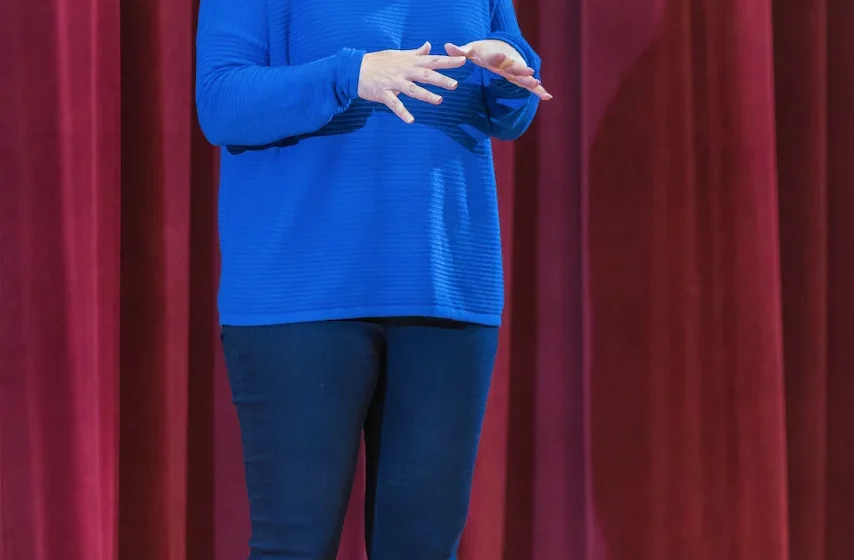
An Academic’s Odyssey: Crafting a TEDx Talk to Bridge Scholarship and Public Engagement

The journey of an academic translating profound sociological research into a concise, compelling TEDx talk illustrates the rigorous demands of public communication, requiring an unprecedented investment of time, collaborative effort, and a fundamental shift in narrative approach. This demanding process, culminating in a highly anticipated presentation, underscores the evolving role of scholars in making complex societal issues accessible and impactful for a broad audience.
The Genesis of an Idea: Bridging Academia and Public Discourse
The decision to embark on a TEDx talk, a platform renowned for "ideas worth spreading," represented a deliberate venture for the academic into a new rhetorical landscape. Unlike the detailed, evidence-based presentations common in academic conferences, a TEDx talk mandates a succinct, engaging, and often personal narrative designed to captivate a general audience within a strict time limit—typically 12 to 18 minutes. For this particular scholar, the chosen topic was deeply personal yet broadly systemic: the interconnectedness of racial segregation, mass incarceration, and gentrification, viewed through the lens of their upbringing in Washington D.C.
The initial impulse was to anchor the talk in established academic frameworks and policy analyses. The speaker’s early drafts contained detailed explanations of historical policies such as redlining, White flight, and slum clearance, and referenced seminal works like Richard Rothstein’s The Color of Law, Michelle Alexander’s The New Jim Crow, and Peter Moskowitz’s How to Kill a City. These texts, foundational in understanding systemic racial inequality and urban transformation, provided a rigorous intellectual scaffolding. However, the TEDx format demands a departure from traditional academic exposition, prioritizing emotional resonance and relatable storytelling over exhaustive factual enumeration. The core challenge became distilling decades of research and complex interdependencies into an accessible, impactful narrative that resonated with lived experience.
The TEDx Imperative: Conciseness and Connection
The speaker opted to write a full script rather than relying on an outline, a strategic choice to ensure adherence to the stringent 12-minute time constraint. This method, while labor-intensive, provided granular control over pacing and content. The average TEDx talk, delivered at a speaking rate of approximately 130-150 words per minute, necessitates a script of around 1,500 words for a 12-minute duration. This numerical reality highlights the immense challenge of condensing complex sociological analyses into such a limited word count, a stark contrast to the often extensive and nuanced discourse typical of academic papers and lectures. The objective was clear: to move beyond simply presenting facts to crafting a story that could elicit empathy and inspire reflection.
Crafting the Narrative: A Rigorous Iterative Process
The development of the TEDx talk script was characterized by an intensive, iterative process of drafting, feedback, and revision—a testament to the commitment required to master this distinct form of communication. This was not merely an act of writing but a profound re-education in public address.
The initial script, predictably, mirrored the academic talks the scholar was accustomed to delivering. It contained dense historical and place-based references, dissecting policies that created racial segregation and their subsequent impacts. The speaker’s early attempt to articulate the novelty of their argument was also framed academically: "If you read The Color of Law, then you know that federal policies created racial segregation. If you read The New Jim Crow, then you know that Black communities were devastated by mass incarceration. And, if you read How to Kill a City, then you know that gentrification has led to the displacement of working class and Black people from cities. Now, what you might not know is that segregation, incarceration, and gentrification are connected. My research into the neighborhood where I grew up has taught me that policies that created segregation laid the groundwork for mass incarceration, which in turn made gentrification possible."
The Transformative Power of Expert Feedback
The initial feedback loop proved pivotal. Recognizing the specialized nature of TEDx delivery, the academic engaged a professional speaking coach. This was an unprecedented step for the scholar, accustomed to independent writing and peer review within academic circles. The coach’s assessment of the first draft was direct: while "a fascinating academic lecture," it lacked the storytelling and emotional depth characteristic of a TEDx presentation. The directive was clear: reduce policy descriptions to create space for narratives, slow down the delivery, and avoid referencing books that most of the general audience would not have read. This intervention marked the beginning of a significant pivot from academic exposition to public storytelling.
Further refinement came from Audra Wolfe, a developmental editor experienced in podcast and radio editing. Wolfe emphasized the necessity of evoking senses and emotions, pushing the speaker beyond purely intellectual engagement. While invoking smells proved challenging, the speaker focused on sounds and visuals, deciding to vividly describe a bus ride from their predominantly Black neighborhood to a school in a predominantly White area. This concrete, sensory detail was a direct response to the call for more evocative language, a departure from the abstract conceptualizations common in scholarly writing.
A subsequent presentation to a group of humanities colleagues reinforced this direction. Their collective advice underscored the need for even greater emphasis on personal narrative, advocating for more detailed and textured stories about the speaker’s own experiences and those of friends. This meant further pruning of the policy discussions, a difficult but necessary sacrifice for the sake of narrative power.
The Art of Subtraction: Prioritizing Story Over Statistics
As a sociologist, the speaker grappled with the inherent tension between structural analysis and personal storytelling. The academic impulse is to provide comprehensive context and data, demonstrating the systemic nature of inequality. However, the TEDx format demanded a ruthless simplification, prioritizing a compelling narrative arc over an exhaustive factual account. This required cutting what felt like crucial information.
Specific examples of the detailed policy discussions that were ultimately excised included: how the Washington Real Estate Board’s code of ethics actively promoted racial segregation; the historical context of White individuals accessing federally-backed loans for business in the 1940s; and the stark statistic that only 2% of loans insured by the Federal Housing Administration (FHA) went to Black borrowers. Also omitted was the staggering wealth gap in Washington D.C., where White residents possess 81 times the wealth of their Black counterparts. These cuts were made not because the information was unimportant, but because there was insufficient space within the 12-minute framework to fully explain their complexities and implications. Presenting facts without adequate contextualization, it was determined, would be counterproductive.
Navigating the Sociological Dilemma

This process of "cutting" highlighted a fundamental dilemma for academics entering public discourse: how to maintain intellectual rigor and structural analysis while adopting an accessible, narrative-driven style. Sociology, by its nature, seeks to uncover and explain the societal structures that shape individual lives. Reducing these complex structures to brief mentions risks oversimplification. However, for a TEDx audience, personal stories serve as entry points, making abstract concepts tangible and relatable. The speaker’s resolution was to weave the structural implications through the stories rather than detailing them separately, allowing the personal narratives to implicitly illustrate the broader systemic forces at play.
Forging a Call to Action: Confronting Systemic Injustice
The conclusion of the talk presented another significant challenge: crafting a meaningful call to action. After discussing the profound violence of disinvestment, lives lost, and people displaced and imprisoned, the speaker struggled to articulate policy suggestions that felt adequate to the gravity of the issues. Initial thoughts of proposing "more affordable housing," "changing lending laws," or "providing jobs to formerly incarcerated people" felt insufficient, failing to fully address the systemic roots of the problems.
This quandary led the speaker to consult trusted, non-academic voices—their brothers. This external perspective proved transformative. When the speaker presented a conclusion focused on "lessons learned" and the encoding of White supremacy in laws, the feedback was sharp and decisive. One brother, Sean, challenged: "Why just acknowledge the harms? Why not abolish the police?" Another, Ian, drew a powerful analogy: "You wouldn’t end a talk enumerating the harms of chattel slavery by vaguely talking about profits over people and the deep roots of White supremacy, right?"
The Ethical Imperative of a Powerful Close
These interventions forced the speaker to confront the ethical imperative of their message. The brothers’ insights underscored that a call to action must align with the profound implications of the structural injustices discussed, moving beyond incremental reforms to challenge foundational systems. This feedback was critical in shaping a conclusion that resonated with the speaker’s core values and the urgent nature of the topic. The revised conclusion, further refined with suggestions from a colleague, Crystal, strategically called back to the personal stories shared earlier in the talk, creating a cohesive and emotionally resonant ending.
The Collaborative Crucible: A Network of Support
The journey from initial concept to polished performance was remarkably collaborative, involving an extensive network of friends and colleagues. The speaker estimates engaging at least 27 individuals to read scripts or listen to spoken drafts, far exceeding typical academic peer review. This diverse group offered invaluable perspectives:
- Colleague Anthony: Provided detailed tips on phrasing and pacing for maximum impact.
- Mother: Advised on narrowing down the talk’s main points.
- Friend Christina: Emphasized the need for a clearer argument.
- Non-academic friends from D.C.: Suggested incorporating an uplifting story, leading to a further revision.
- Brother Justin and his girlfriend Tina: Identified points requiring additional explanation.
This collective feedback mechanism highlights the often-unseen labor behind impactful public communication, demonstrating that even seemingly individual presentations are products of extensive communal effort and diverse perspectives.
From Script to Stage: The Performance Dimension
Beyond the writing, the performance aspect demanded significant attention. One particular segment of the script, laden with emotional intensity, proved challenging to deliver effectively. Recognizing the need for specialized guidance, the speaker consulted Nicole, a theatre professor and colleague, who provided invaluable tips on vocal delivery, stage presence, and emotional modulation. This interdisciplinary collaboration, leveraging expertise from performance arts, was crucial in ensuring the talk’s emotional resonance translated effectively to the audience.
The university provided professional recording facilities, allowing the talk to be delivered on a stage rather than through a virtual platform. A student assisted with graphics, and the university’s media team handled the video production, resulting in a polished, high-quality presentation that significantly enhanced the talk’s visual appeal and impact.
Quantifying Dedication: The Investment of Time and Effort
The commitment of time and effort to this TEDx talk was extraordinary. While precise tabulation was not kept, the speaker estimates at least 80 hours dedicated to writing and revising the script over an eight-week period, averaging 10 hours per week. This was complemented by an additional 40 hours spent on practice, involving daily rehearsals during afternoon walks, listening to the script, and refining its spoken delivery. This level of dedication underscores the profound personal and professional investment required to achieve the high standards of TEDx.
Implications and Legacy: A Model for Engaged Scholarship
The experience of crafting this TEDx talk offers significant implications for academics seeking to engage with broader publics. It provides a compelling model for translating complex scholarly research into accessible and impactful narratives, demonstrating the necessity of:
- Interdisciplinary Collaboration: Leveraging expertise from public speaking coaches, editors, and performance artists.
- Radical Simplification: Ruthlessly prioritizing core messages and emotional resonance over comprehensive detail.
- Extensive Feedback Loops: Engaging diverse audiences, both academic and non-academic, for iterative refinement.
- Personal Narrative as a Bridge: Using individual stories to illuminate systemic issues and foster empathy.
- Ethical Commitment in Advocacy: Crafting calls to action that align with the gravity of the issues discussed.
This rigorous process transforms not just the content but also the academic’s approach to communication, fostering a deeper understanding of how to connect with and inspire audiences beyond the ivory tower. Such efforts are vital for enriching public discourse on critical societal challenges and empowering informed engagement. The speaker’s TEDx talk stands as a testament to the power of committed scholarship, transformed through dedicated effort and collaborative spirit, to illuminate enduring truths and provoke meaningful action.