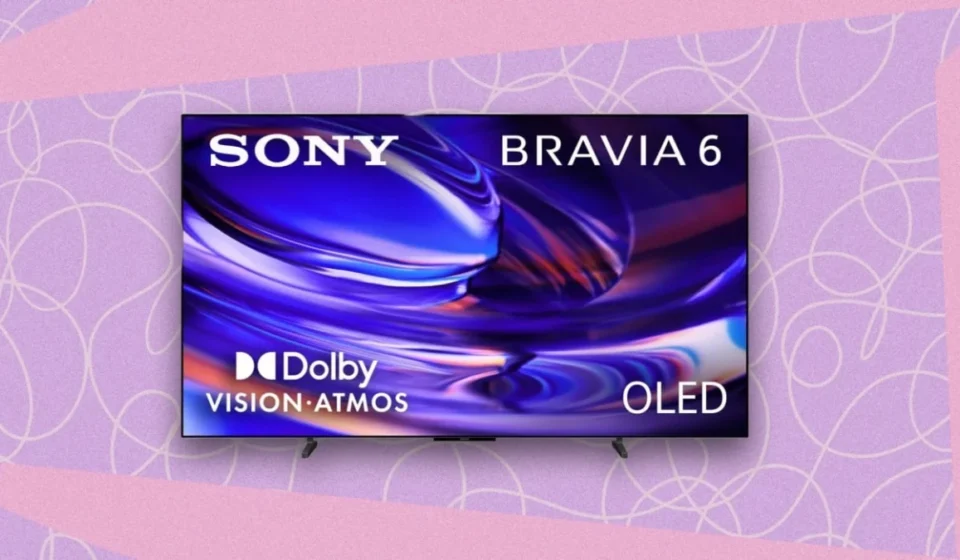
Sony Bravia 6 OLED TV Sees Significant Price Reduction in Summer 2026 Launch with Up to 40% Discount

Sony’s highly anticipated Bravia 6 OLED TV, a model that has rapidly established itself as a frontrunner in the budget-friendly OLED television market since its summer 2026 debut, is now available at a compelling price point. This latest iteration of Sony’s acclaimed Bravia line is designed to directly challenge established competitors such as LG and Samsung, offering a unique blend of advanced hardware capabilities and sophisticated picture processing technology at a more accessible price. The current promotional period sees select models of the Bravia 6 receiving discounts of up to 40%, a significant incentive for consumers looking to upgrade their home entertainment systems.
The most notable offer currently available features the 55-inch Sony Bravia 6 OLED TV, now priced at $998, a substantial reduction from its original retail price of $1,499.00. This represents a saving of over $500, making premium OLED technology more attainable for a broader audience. This attractive pricing extends to larger screen sizes as well, with the 65-inch, 77-inch, and 83-inch variants of the Bravia 6 all benefiting from the same 40% discount. This aggressive pricing strategy underscores Sony’s commitment to capturing a larger share of the competitive mid-range television market.
Advanced Features and Gaming Prowess
The Bravia 6 is engineered with a focus on delivering a superior viewing experience, particularly for gamers and cinephiles. The television boasts support for 120Hz refresh rates at 4K resolution, ensuring exceptionally smooth motion clarity essential for fast-paced video content and gaming. Furthermore, it incorporates DTS:X surround sound technology, aiming to provide an immersive audio landscape that complements its visual prowess. For gamers, the inclusion of Variable Refresh Rate (VRR), Auto Low Latency Mode (ALLM), and enhanced Audio Return Channel (eARC) is a significant advantage. These features collectively work to minimize input lag, reduce screen tearing, and ensure a responsive gaming experience.
A key differentiator for the Bravia 6 is its integration of MediaTek’s latest Pentonic 800 chipset. This powerful processor is instrumental in enabling the TV’s robust connectivity options, including four HDMI 2.1 ports. This is a noteworthy feature, as many competing OLED models, even those in Sony’s higher-tier lineups, often feature only two full-bandwidth HDMI 2.1 ports. The abundance of high-bandwidth ports on the Bravia 6 offers greater flexibility for users with multiple next-generation gaming consoles, PCs, and other high-resolution source devices, eliminating the need for constant cable switching.
While the Bravia 6 offers a compelling package of features at its price point, it’s important to acknowledge the trade-offs inherent in its budget-oriented positioning. The primary compromise appears to be in peak brightness levels compared to some mid-range or premium OLED televisions. However, this limitation is mitigated by Sony’s sophisticated picture processing, which aims to optimize image quality across various content types and viewing conditions. For the average consumer, the brightness offered is expected to be more than sufficient for most living room environments, and the increased flexibility for gamers due to the input selection remains a significant draw.
Picture Quality and User Experience
Despite not reaching the peak brightness figures of some more expensive models, the Bravia 6 is still expected to deliver exceptional picture quality. OLED technology is renowned for its ability to produce perfect blacks and infinite contrast ratios, characteristics that are fundamental to the Bravia 6’s visual appeal. This ensures that scenes with deep shadows and bright highlights are rendered with remarkable detail and depth, providing a truly cinematic viewing experience. Even in well-lit rooms, the TV is anticipated to perform admirably, maintaining its visual integrity without significant washout.
The inclusion of Dolby Vision support further enhances the HDR (High Dynamic Range) experience. Dolby Vision is a dynamic HDR format that optimizes brightness, contrast, and color on a scene-by-scene basis, allowing for a more lifelike and vibrant picture. Coupled with the Google TV operating system, the Bravia 6 offers a user-friendly and intuitive interface for accessing a vast array of streaming services and applications. Google TV provides a personalized content discovery experience, aggregating recommendations from various platforms, making it easier for users to find their next binge-worthy show or movie.
For consumers in the market for an affordable OLED television that doesn’t compromise on essential features like pristine color reproduction, deep black levels, and a seamless user interface, the current deal on the Sony Bravia 6 OLED TV presents an opportune moment to invest. The availability of various screen sizes at a significant discount further broadens its appeal, catering to different room sizes and user preferences.
Market Context and Competitive Landscape
The introduction and subsequent pricing strategy for the Sony Bravia 6 OLED TV occur within a highly competitive television market. The OLED segment, once a premium-only domain, has seen increased segmentation, with manufacturers like Sony, LG, and Samsung vying for market share across different price tiers. This competition has driven innovation and, crucially, price reductions, making advanced display technologies more accessible to mainstream consumers.
LG, a long-standing pioneer in OLED technology, has historically dominated the market with its C-series and G-series TVs. Samsung, while primarily known for its QLED technology, has also made significant inroads into the OLED space with its QD-OLED offerings. Sony, with its Bravia line, has consistently aimed to differentiate itself through superior image processing, sound quality, and integration with its own ecosystem of audio-visual products.
The Bravia 6’s positioning as a "budget OLED" or "mid-range OLED" is a strategic move to capture consumers who desire the core benefits of OLED – perfect blacks, infinite contrast, and wide viewing angles – without the premium price tag associated with flagship models. The emphasis on gaming features, such as multiple HDMI 2.1 ports, also targets a growing demographic of gamers who are investing in high-end consoles like the PlayStation 5 and Xbox Series X, both of which are capable of outputting 4K at 120Hz.
Analysis of Implications

The aggressive discounting of the Sony Bravia 6 OLED TV has several implications for both consumers and the broader television industry. For consumers, it signifies an opportunity to acquire a high-performance television at a significantly reduced cost, potentially leading to increased adoption of OLED technology. This could drive further demand for OLED panels and related components, potentially leading to further cost efficiencies in production down the line.
For manufacturers, the pricing strategy reflects a dynamic market where product segmentation and competitive positioning are key to success. Sony’s move suggests a strategy to broaden its appeal beyond the high-end market, aiming to compete more directly with rivals in the more volume-driven mid-range segment. This could lead to a more intense price war, benefiting consumers in the long run.
The focus on gaming features also highlights the increasing convergence of home entertainment and gaming. As consoles and PCs become more powerful, the demand for displays that can fully leverage these capabilities grows. The Bravia 6’s ample HDMI 2.1 connectivity positions it as an attractive option for this demographic.
The success of the Bravia 6 will likely depend on its ability to balance its price-performance ratio effectively. While the discount is substantial, the perceived value of its picture quality, features, and reliability will ultimately determine its market reception. Reviews and consumer feedback will play a crucial role in shaping its long-term impact.
Background on Sony’s Bravia Lineage
Sony’s Bravia brand has been a cornerstone of its television offerings for many years. The name, an acronym for "Best Resolution Audio Visual Integrated Architecture," has consistently been associated with a commitment to image quality and advanced display technologies. Over the years, Bravia TVs have evolved from traditional LCD panels to sophisticated LED, Full Array LED, and most recently, OLED displays.
The introduction of OLED technology into the Bravia lineup marked a significant step forward, allowing Sony to compete directly with the superior contrast and black levels that OLED panels inherently provide. The company has invested heavily in developing its own proprietary image processing engines, such as the Cognitive Processor XR, which aims to intelligently analyze and enhance picture and sound in real-time. While the specific processor in the Bravia 6 is the MediaTek Pentonic 800, Sony’s expertise in image processing is still a critical component of the overall viewing experience.
The Bravia 6’s position as a more accessible OLED model signifies a strategic shift in Sony’s product portfolio. Historically, Sony’s OLED offerings, such as the A95L or A80L series, have been positioned at the premium end of the market. By introducing the Bravia 6, Sony is aiming to democratize OLED technology, making its benefits available to a wider audience. This strategy is crucial for maintaining market relevance and capturing a larger segment of consumers who may have previously been priced out of OLED ownership.
The Evolving TV Market and Consumer Expectations
The television market has undergone a dramatic transformation over the past decade. The shift from standard definition to high definition, and subsequently to 4K and HDR, has fundamentally changed consumer expectations for picture quality. Furthermore, the rise of streaming services has made content accessibility a primary consideration, leading to the widespread adoption of smart TV platforms.
OLED technology, with its inherent advantages in contrast and color accuracy, has become the benchmark for premium picture quality for many enthusiasts. However, its higher manufacturing costs have historically kept it out of reach for a significant portion of the market. The emergence of more affordable OLED models, such as the Sony Bravia 6, is a direct response to this market dynamic. Manufacturers are now seeking to offer the core benefits of OLED at price points that are competitive with high-end LED and QLED televisions.
Consumers are increasingly sophisticated in their purchasing decisions, armed with more information than ever before through online reviews, comparison sites, and tech publications. They are looking for a balance of picture quality, features, smart functionality, and value for money. The Bravia 6 appears to be engineered to meet these evolving demands, offering a compelling proposition for those seeking a significant upgrade without breaking the bank.
Looking Ahead: The Future of Affordable OLEDs
The current trend of price reductions in the OLED market suggests that this technology is becoming increasingly mature and cost-effective to produce. As manufacturing processes improve and economies of scale are realized, it is likely that even more affordable OLED televisions will become available in the coming years. This could further blur the lines between different display technologies and elevate the baseline expectation for picture quality across the entire television market.
Sony’s strategy with the Bravia 6 OLED TV is indicative of this broader market shift. By offering a feature-rich, high-performance OLED television at a significantly reduced price, Sony is not only aiming to capture immediate sales but also to establish a strong foothold in a growing segment of the market. The success of this initiative will likely influence future product development and pricing strategies across the industry, potentially ushering in an era where top-tier display technology becomes more accessible than ever before. The ongoing promotions and the continued evolution of OLED technology promise an exciting future for home entertainment enthusiasts.